
India’s Rail Revolution: RVNL Divestment & Modernization
The Indian government’s recent divestment of a 15% stake in Rail Vikas Nigam Limited, offering an equity stake with a green shoe option and a floor price of $0.38 (Rs 27.50) per share, is aimed at raising approximately $103 million to support India’s ambitious railway modernization and electrification plans while attracting private investment into public sector undertakings.
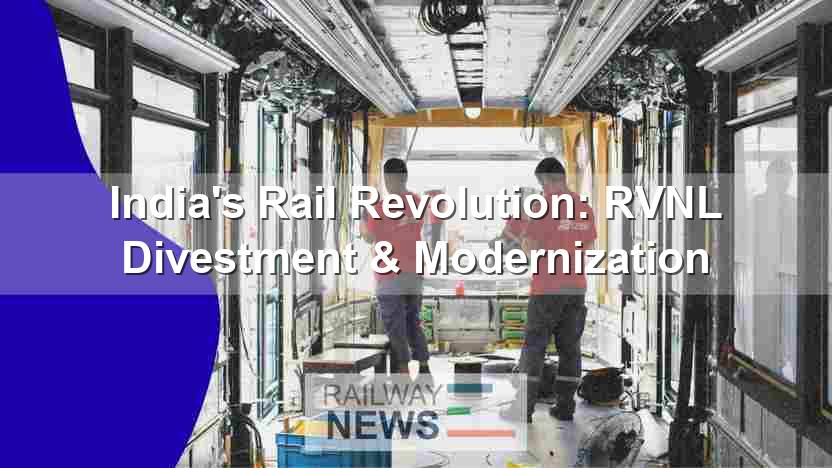
The Indian railway system, a vast and intricate network, is undergoing significant transformation. This article explores the recent strategic decision by the Indian government to divest a 15% stake in Rail Vikas Nigam Limited (RVNL) (Rail Vikas Nigam Limited), a pivotal player in India’s railway infrastructure development. This move, aiming to raise approximately $103 million (Rs 7.5 billion), is analyzed within the broader context of the Indian Railways’ ambitious modernization and electrification plans. We will explore the implications of this divestment, its potential impact on RVNL’s operational capacity, and its alignment with the overarching goals of enhancing India’s railway infrastructure and promoting environmental sustainability. The government’s strategy, the current state of the Indian railway network, and the future direction of investment in this critical sector will be examined in detail. The article will also consider the role of technology, such as centralized train control systems and sustainable HVAC systems (Heating, Ventilation, and Air Conditioning systems), in driving the modernization and efficiency of the network.
RVNL’s Role in Indian Railway Modernization
Established in January 2003 as a fully owned public sector undertaking (PSU) under the Indian Ministry of Railways, RVNL plays a crucial role in accelerating railway infrastructure projects. Its mandate includes raising extra-budgetary resources and executing projects aimed at expanding rail capacity and enhancing network efficiency. The company has been instrumental in several fast-track projects, demonstrating its ability to deliver complex infrastructure developments swiftly and effectively. The successful trial run of an electric locomotive in Assam, a significant step towards electrifying the northeastern region, showcases RVNL’s capacity for innovation and strategic implementation in challenging geographical areas. This project is particularly important given the goal of providing electric rail connectivity to previously isolated regions of the country.
The Government’s Divestment Strategy and its Implications
The Indian government’s decision to divest a 15% stake in RVNL, offering a 10% equity stake with a 5% green shoe option, reflects a broader strategy of attracting private investment into public sector undertakings. The offer, open to both retail and non-retail investors, with a floor price of $0.38 (Rs 27.50) per share, aims to generate significant capital for further infrastructure development. While the divestment may result in a diluted government stake, the infusion of private capital could provide RVNL with increased resources to manage its ambitious project pipeline and potentially attract greater expertise in areas such as project finance and management.
Electrification and Environmental Sustainability in the Indian Railway Network
The Indian Railways’ commitment to electrifying its entire broad-gauge network by 2023 is a key component of its modernization strategy. As of November 2020, approximately 66% of the network had been electrified. This initiative aims not only to improve operational efficiency and reduce reliance on imported fossil fuels but also to significantly reduce the railway’s carbon footprint, aligning with the broader national goal of environmental sustainability. The adoption of technologies such as heat recycling HVAC systems further demonstrates the Indian Railways’ dedication to environmentally responsible practices.
Technological Advancements: Centralized Train Control Systems and Sustainable Practices
The Indian Railways’ modernization efforts extend beyond electrification. The implementation of centralized train control systems offers significant potential to enhance operational efficiency, safety, and capacity. These systems, often reliant on sophisticated cloud-based technologies, provide real-time monitoring and control of train movements, optimizing schedules and minimizing delays. Coupled with initiatives like heat recycling HVAC systems, these technological advancements showcase a commitment to both operational excellence and environmental responsibility.
Conclusion
The Indian government’s decision to divest a 15% stake in RVNL is a significant step in its broader strategy to modernize and expand India’s railway network. This strategic move, coupled with the ambitious electrification project and the adoption of advanced technologies, reflects a commitment to both infrastructure development and environmental sustainability. While the divestment may dilute government ownership, the infusion of private capital can potentially strengthen RVNL’s operational capabilities and accelerate the delivery of crucial infrastructure projects. The successful trial run of an electric locomotive in Assam underscores the tangible progress being made in electrifying previously isolated regions. The implementation of centralized train control systems and sustainable HVAC technologies promises further improvements in efficiency, safety, and environmental performance. The ongoing modernization of the Indian railway system represents a significant investment in the nation’s future, promoting economic growth, connectivity, and environmental responsibility. The long-term success of these initiatives will depend on effective project management, strategic partnerships, and continuous technological innovation. The future of the Indian railway system appears bright, poised to become a more efficient, sustainable, and technologically advanced transportation network.

Railway infrastructure, rolling stock and transport technologies specialist focused on global rail industry developments, high-speed rail systems, signaling technologies and freight transportation. Covering railway investments, public transport modernization, rail operations and international mobility projects across Europe, Asia and North America.
RELATED POSTS

October 8, 2026 1:15 pm
Alstom secured a €1bn contract to build 13 automated trains,...

October 1, 2026 7:09 am
United States regulators confirmed a September 30 deadline for the...

October 8, 2026 12:18 pm
Siemens Mobility signed an agreement with VinSpeed to supply 350...

October 4, 2026 5:14 pm
Alstom secured a CA$4.7 billion order from VIA Rail Canada...

October 5, 2026 6:12 pm
AECOM and Jacobs secured a contract in September 2026 to...

October 4, 2026 11:08 pm
Sound Transit confirmed the September 30 opening of Seattle Pinehurst...