
India’s Electric Rail Revolution: Assam’s Green Milestone
The successful trial run of an electric locomotive in Assam marks a pivotal step towards extending electrification to Northeast India, enhancing operational efficiency, reducing environmental impact, and stimulating regional economic growth.
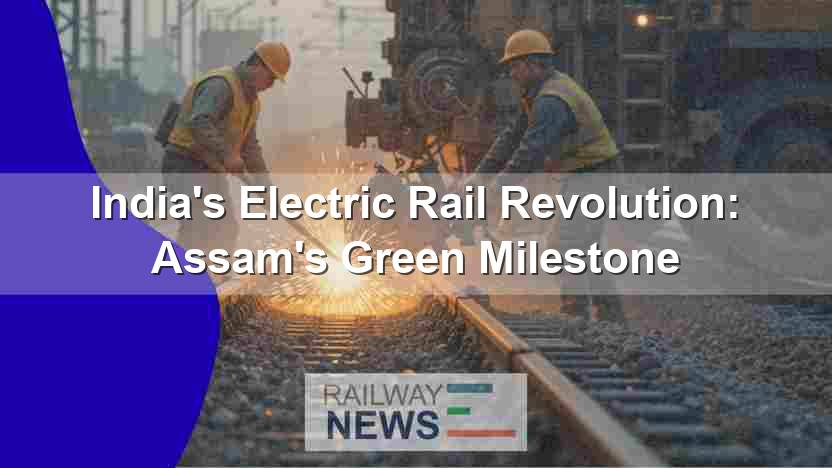
The electrification of the Indian Railways network represents a significant undertaking with far-reaching implications for the nation’s economic development, environmental sustainability, and energy security. This article will explore the successful trial run of an electric locomotive in Assam, a crucial step in extending electrification to the previously isolated northeastern region. We will delve into the strategic importance of this project, the technical challenges overcome, the economic benefits anticipated, and the broader context of India’s ambitious goal of a fully electrified and environmentally responsible railway system. The analysis will highlight the pivotal role of organizations like Rail Vikas Nigam Limited (RVNL) and the Ministry of Railways in achieving this national objective. The successful trial run marks not merely a technological advancement, but a significant milestone in India’s commitment to sustainable and efficient transportation, impacting both regional connectivity and the national drive towards decarbonization.
Electrification in Northeast India: Breaking New Ground
The successful trial run of a WAG9 (Wide-gauge AC locomotive, 9000 HP) electric locomotive between Bongaigaon and Sorupeta in Assam signifies a major breakthrough in railway infrastructure development in Northeast India. This region, previously characterized by limited rail connectivity and reliance on diesel locomotives, now stands poised for a transformation. The electrification project addresses several long-standing challenges. Firstly, it enhances operational efficiency. Electric locomotives offer superior power-to-weight ratios and reduced maintenance compared to diesel counterparts, resulting in cost savings and improved reliability. Secondly, electrification significantly reduces the environmental impact of rail operations, mitigating air and noise pollution. Finally, it enhances the region’s economic potential by improving the speed, reliability, and capacity of freight and passenger services, thereby stimulating trade and economic growth.
Technological and Logistical Hurdles
Extending electrification to the challenging terrain of Northeast India presented significant technological and logistical hurdles. The region’s diverse topography, including hilly areas and dense forests, required careful planning and execution of the electrification infrastructure. The project involved the construction of new substations, overhead lines, and signaling systems, often under demanding environmental conditions. RVNL (Rail Vikas Nigam Limited), a crucial player in this initiative, leveraged its expertise in railway infrastructure development to overcome these challenges. The coordination between various stakeholders, including the Ministry of Railways, local authorities, and contractors, was crucial for timely completion.
Economic and Environmental Benefits
The electrification of the Northeast India rail network offers substantial economic and environmental benefits. The reduced reliance on diesel fuel translates into significant cost savings for Indian Railways, estimated to be nearly $2 billion annually. This reduction in fuel costs also contributes to India’s energy security, lessening dependence on imported fossil fuels. From an environmental perspective, the shift to electric traction drastically reduces greenhouse gas emissions, aligning with India’s commitment to a greener and more sustainable future. The project contributes directly to the national goal of becoming a net-zero carbon emitter by 2030. The improved efficiency and reliability of electric trains also lead to better service quality for passengers and freight operators.
National Electrification Strategy and Future Outlook
The Assam trial run is part of a larger national strategy to fully electrify the Indian Railways broad-gauge network by 2023. Significant progress has already been made, with electrification rates substantially increasing in recent years. This ambitious project showcases India’s commitment to modernizing its railway infrastructure and transitioning to sustainable transportation. The successful completion of this electrification drive will not only enhance the operational efficiency and environmental performance of the railways but also contribute significantly to India’s economic development and its global commitments to climate change mitigation. Additionally, advancements in technology, such as the deployment of higher capacity locomotives and improved energy management systems, will further optimize the efficiency and sustainability of the electrified network in the years to come.
Conclusions
The successful trial run of an electric locomotive in Assam marks a significant milestone in the electrification of the Indian Railways network. This achievement, spearheaded by RVNL and supported by the Ministry of Railways, addresses critical infrastructural gaps in Northeast India, opening up new avenues for economic development and regional connectivity. The project underscores the broader national strategy of transitioning to a fully electrified railway system by 2023, driven by both economic and environmental imperatives. The substantial cost savings from reduced fuel consumption, alongside the significant reduction in greenhouse gas emissions, directly contribute to India’s economic and environmental sustainability goals. The project’s success showcases the potential of strategic planning, technological expertise, and collaborative efforts to overcome logistical challenges and achieve ambitious national objectives. This initiative is not just about electrification; it represents a commitment to creating a more efficient, environmentally responsible, and economically robust railway system for India.
The long-term implications of this electrification project are substantial. Improved connectivity will boost economic activity in Northeast India, facilitating trade, tourism, and industrial development. The reduction in operational costs will allow Indian Railways to allocate more resources to further infrastructure improvements and service enhancements. The environmental benefits, including reduced air pollution and greenhouse gas emissions, contribute to a cleaner and healthier environment. Looking ahead, the continuous improvement of railway infrastructure and the integration of innovative technologies will further enhance the efficiency and sustainability of India’s rail network, cementing its role as a vital engine for the nation’s economic growth and environmental stewardship. The Assam trial run is a testament to India’s capacity for large-scale infrastructure projects and a significant step towards a greener and more prosperous future.

Railway infrastructure, rolling stock and transport technologies specialist focused on global rail industry developments, high-speed rail systems, signaling technologies and freight transportation. Covering railway investments, public transport modernization, rail operations and international mobility projects across Europe, Asia and North America.
RELATED POSTS

October 8, 2026 1:15 pm
Alstom secured a €1bn contract to build 13 automated trains,...

October 1, 2026 7:09 am
United States regulators confirmed a September 30 deadline for the...

October 8, 2026 12:18 pm
Siemens Mobility signed an agreement with VinSpeed to supply 350...

October 4, 2026 5:14 pm
Alstom secured a CA$4.7 billion order from VIA Rail Canada...

October 5, 2026 6:12 pm
AECOM and Jacobs secured a contract in September 2026 to...

October 4, 2026 11:08 pm
Sound Transit confirmed the September 30 opening of Seattle Pinehurst...