
SMART Awards $190.5M California Rail Extension Contract
SMART awarded a $190.5 million rail contract to Stacy and Witbeck and Herzog to build 4.8 miles of track from Windsor to Healdsburg, California, by late 2028.
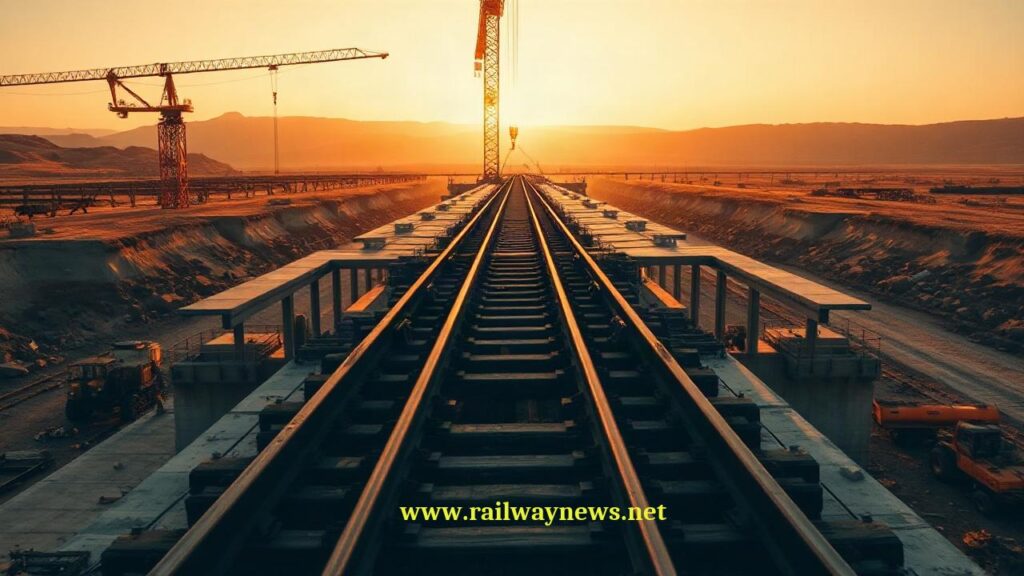
⚡ In Brief: California’s Sonoma-Marin Area Rail Transit awarded a $190.5 million design-build contract to a joint venture of Stacy and Witbeck and Herzog to construct a 4.8-mile line extension between Windsor and Healdsburg by late 2028.
PETALUMA, UNITED STATES – Sonoma-Marin Area Rail Transit (SMART) awarded a $190.5 million infrastructure contract to a joint venture between Stacy and Witbeck and Herzog to build 4.8 miles of rail line between Windsor and Healdsburg, California. The agreement covers track installation, signaling, and two rail bridges, with revenue passenger operations scheduled to begin by late 2028. The procurement advances SMART’s northern rail corridor toward the final terminus in Cloverdale.
What Does This Contract Cover?
The contract covers the final engineering design and civil construction of 4.8 miles of mainline rail infrastructure from the future Windsor station to Front Street in Healdsburg. Civil works encompass new standard-gauge tracks, grade crossings, modern train control and safety systems, a parallel bicycle and pedestrian pathway, and two railroad bridges, including a replacement span across the Russian River. Station facility construction is excluded from this package; the SMART board will select the final station site in December 2024, with subsequent construction north of Front Street beginning in 2027 (Source: The Press Democrat, 2024). Independent verification of the total rolling stock acquisition cost for this segment was not available at time of publication.
Key Contract Data
| Parameter | Value |
|---|---|
| Contract Name | Healdsburg Rail Extension Project (Windsor to Front Street) |
| Total Value | $190.5 million |
| Parties Involved | Sonoma-Marin Area Rail Transit (SMART), Stacy and Witbeck / Herzog JV |
| Timeline / Completion | Passenger service launch by late 2028 |
| Country / Corridor | United States / Sonoma County, California |
How Does This Compare to Similar Contracts?
At approximately $39.7 million per mile, this contract reflects escalating unit costs for regional rail modernisations involving structural bridge replacements across sensitive waterways in North America. By comparison, federal passenger operator Amtrak prioritized heavy terminal contracts in late 2024 by awarding facility upgrades at King Street Yard in Seattle and preparing capital works in Boston, Washington, D.C., and New York City for fiscal year 2025 (Source: Amtrak, 2024). Comparable data for similar regional commuter rail track extensions in California was not publicly available at time of publication.
Editor’s Analysis
Contracting with experienced civil builders Stacy and Witbeck and Herzog limits delivery risks on critical path structures like the Russian River span, but phasing the track extension separately from station construction adds scheduling dependency into 2027. SMART must balance capital outlay against operating revenue, a pressure visible across international passenger rail where operators face capital expansion costs while managing fare yield stability (Source: Railway Gazette International, 2026). Delivering service to Healdsburg by 2028 remains vital for voter support before sales tax renewal votes hit the ballot.
FAQ
Q: Where will the new Healdsburg passenger rail station be built?
A: The SMART governing board plans to officially select the permanent station location in December 2024. Civil works on the station and tracks north of Front Street are scheduled to begin in 2027.
Q: When will passenger trains begin operating between Windsor and Healdsburg?
A: SMART expects revenue passenger service to commence on the new extension by late 2028. Track laying, signal integration, and bridge construction will proceed through mid-2028 ahead of system burn-in testing.
Q: What major bridge structures are included in the $190.5 million award?
A: The contract includes two major railroad bridge replacements, highlighted by a major structure across the Russian River. Both bridges will support mainline passenger trains alongside integrated pedestrian facilities.

Railway infrastructure, rolling stock and transport technologies specialist focused on global rail industry developments, high-speed rail systems, signaling technologies and freight transportation. Covering railway investments, public transport modernization, rail operations and international mobility projects across Europe, Asia and North America.
RELATED POSTS
October 8, 2026 1:15 pm
Alstom secured a €1bn contract to build 13 automated trains,...
October 1, 2026 7:09 am
United States regulators confirmed a September 30 deadline for the...
October 8, 2026 12:18 pm
Siemens Mobility signed an agreement with VinSpeed to supply 350...
October 4, 2026 5:14 pm
Alstom secured a CA$4.7 billion order from VIA Rail Canada...
October 5, 2026 6:12 pm
AECOM and Jacobs secured a contract in September 2026 to...
October 1, 2026 12:13 am
Illinois approved $1.5 billion annually for the Northern Illinois Transit...