
Traxx Electric Locomotive: Powering Europe’s Sustainable Rail Future
Traxx electric locomotive powers European rail’s future, boosting efficiency and sustainability across networks.
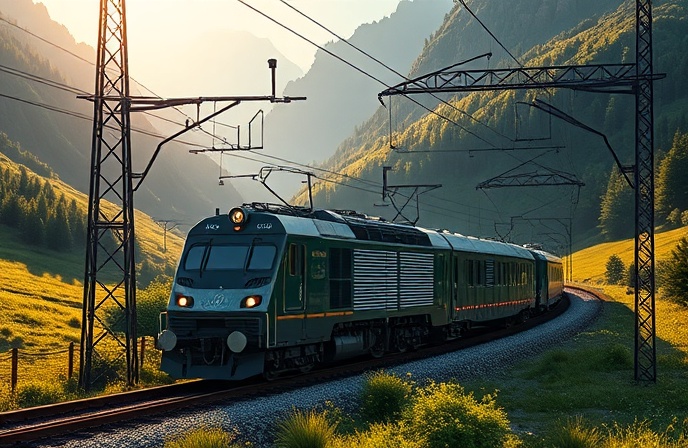
Powering the Future: The Expanding Role of the Traxx Electric Locomotive in European Rail Transport
The European railway landscape is undergoing a significant transformation, driven by a need for greater efficiency, sustainability, and capacity. At the forefront of this revolution sits the Traxx electric locomotive, a workhorse increasingly deployed across the continent. This article explores the critical role of the Traxx electric locomotive in modernizing European rail networks, investigating its technical specifications, operational benefits, and the future it promises for freight and passenger services. We’ll delve into why this locomotive is gaining prominence, analyzing its impact on various aspects of railway operations, and looking at its future prospects. This focus will cover the ‘who’ (key operators), ‘what’ (locomotive characteristics), ‘when’ (current deployment), ‘where’ (European networks), ‘why’ (environmental and economic advantages), and ‘how’ (technological innovations) that make the Traxx a central piece in the European railway puzzle.
Advanced Technology: The Core of the Traxx Electric Locomotive’s Performance
The performance of the Traxx electric locomotive is rooted in its sophisticated technological design. Built by Bombardier Transportation, now part of Alstom, these locomotives utilize a range of advanced features. They typically employ asynchronous traction motors, known for their reliability and efficiency in converting electrical energy into mechanical power. Modern Traxx electric locomotive variants are often equipped with advanced control systems, facilitating precise speed control and enhanced operational safety. These systems include features such as Automatic Train Protection (ATP) and remote diagnostics, which improve reliability and minimize downtime. The use of regenerative braking is another key feature, converting kinetic energy back into electrical energy during deceleration, reducing energy consumption and braking wear. Additionally, the modular design of the Traxx allows for easy adaptation to different voltage systems and operating environments, enabling its use across a vast range of European rail networks and contributing to interoperability.
Cross-Border Operations: Facilitating Seamless Freight and Passenger Transport
A crucial advantage of the Traxx electric locomotive lies in its ability to operate across multiple national borders with minimal disruption. Many models are designed to be multi-system locomotives, capable of operating on various voltage systems (AC and DC) common in Europe. This capability significantly streamlines international freight transport, eliminating the need to change locomotives at border crossings, which saves time and reduces operational costs. This flexibility is particularly beneficial for connecting major industrial centers and ports across different countries. In the passenger sector, the Traxx electric locomotive is also used for regional and intercity services, providing comfortable and efficient transport options. Its compatibility with different signaling systems further contributes to seamless operations. These features allow rail operators to offer more streamlined services, increasing the attractiveness of rail travel compared to other transport modes.
Economic and Environmental Advantages: Driving the Shift to Rail
The Traxx electric locomotive plays a pivotal role in promoting sustainable rail transport. Electric locomotives, in general, produce zero direct emissions, contributing significantly to reducing greenhouse gas emissions and air pollution. They are also often quieter than diesel locomotives, reducing noise pollution, particularly in urban environments. Economically, the Traxx electric locomotive offers several advantages. Electric traction often results in lower operating costs compared to diesel, due to lower energy prices and reduced maintenance needs. The regenerative braking capabilities further enhance efficiency. Moreover, promoting rail transport over road transport alleviates traffic congestion, potentially lowering infrastructure maintenance costs for roads. All of these advantages position the Traxx electric locomotive as a key driver in supporting a cleaner and more cost-effective railway network, vital for a sustainable European transport system.
Future Developments: Advancements in Traxx Locomotive Technology
The future of the Traxx electric locomotive is promising, with ongoing developments set to improve its capabilities further. Alstom, the current manufacturer, continues to invest in research and development. This includes advancements in areas like battery-electric propulsion, which could enable locomotives to operate on non-electrified lines, expanding network coverage. The integration of smart technologies and data analytics is another key trend. This allows for predictive maintenance, real-time monitoring, and optimization of operations. Further developments in energy efficiency and autonomous operations are also on the horizon, promising to make the Traxx electric locomotive even more competitive and versatile. The evolution of the Traxx will likely involve an increasing focus on sustainability, interoperability, and performance, maintaining its position as a major player in European rail transport for years to come.
Conclusion
The Traxx electric locomotive represents a cornerstone of modern European railway infrastructure. Its advanced technology, cross-border capabilities, and economic and environmental advantages have made it a critical component for rail operators across Europe. The locomotive’s modular design and multi-system compatibility have facilitated efficient transport across borders, promoting connectivity and driving down operating costs. The adoption of this technology also contributes to sustainable transportation, reducing carbon emissions and promoting a greener future for the railway sector. Continued advancements in technology, including battery-electric propulsion and smart operations, are expected to further enhance the Traxx electric locomotive’s performance and versatility. As European rail networks continue to modernize and expand, the role of the Traxx electric locomotive will only grow more vital, ensuring a future of efficient and sustainable rail transport. Its ongoing success will be closely linked to the broader growth of rail transport across Europe.

Railway infrastructure, rolling stock and transport technologies specialist focused on global rail industry developments, high-speed rail systems, signaling technologies and freight transportation. Covering railway investments, public transport modernization, rail operations and international mobility projects across Europe, Asia and North America.
RELATED POSTS

October 8, 2026 1:15 pm
Alstom secured a €1bn contract to build 13 automated trains,...

October 1, 2026 7:09 am
United States regulators confirmed a September 30 deadline for the...

October 8, 2026 12:18 pm
Siemens Mobility signed an agreement with VinSpeed to supply 350...

October 4, 2026 5:14 pm
Alstom secured a CA$4.7 billion order from VIA Rail Canada...

October 5, 2026 6:12 pm
AECOM and Jacobs secured a contract in September 2026 to...

October 1, 2026 12:13 am
Illinois approved $1.5 billion annually for the Northern Illinois Transit...