
HS2 Green Corridor: UK Rail’s Sustainability Challenge
HS2’s green corridor: ambitious plan or greenwash? Discover how this massive railway project balances environmental impact with progress.
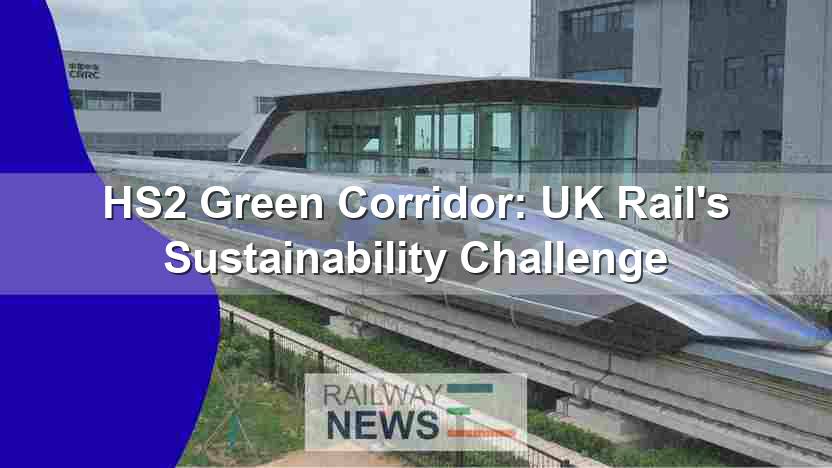
The High Speed 2 (HS2) project, a high-speed rail network planned for the United Kingdom, aims to significantly improve intercity travel times. A key component of the HS2 strategy is the creation of a “green corridor,” encompassing new wildlife habitats, native woodlands, and community spaces alongside the railway line. This initiative, intended to mitigate the environmental impact of the railway’s construction, has sparked considerable debate. While HS2 promotes the green corridor as a landmark achievement in sustainable infrastructure development, environmental groups, particularly the Woodland Trust, strongly criticize the plan, arguing it’s insufficient to compensate for the significant ecological damage caused by the project. This article will delve into the conflicting perspectives surrounding the HS2 green corridor, examining the ecological implications, the adequacy of mitigation efforts, and the broader context of balancing infrastructural development with environmental protection.
The HS2 Green Corridor Proposal
HS2’s proposal involves creating a green corridor spanning approximately nine square kilometers alongside Phase 1 of the railway line connecting London and the West Midlands. This corridor incorporates over 220 new ponds, public parks, open spaces, and nature reserves. HS2 presents this as an unprecedented endeavor in UK infrastructure, setting a new standard for environmental integration in large-scale projects. The initiative also includes a dedicated woodland fund, recently expanded with government investment to support woodland creation and restoration along Phase 2a (West Midlands to Crewe).
Environmental Concerns and Criticisms
The Woodland Trust, a prominent British conservation charity, vehemently opposes the HS2 project and its proposed green corridor. Their central criticism revolves around the irreversible loss of ancient woodland, a critical habitat supporting high biodiversity and possessing irreplaceable ecological value. The Trust highlights the destruction of approximately 40 hectares of ancient woodland (at least 1600 years old) during Phase 1, and an additional 10.2 hectares during Phase 2a. They contend that while new tree planting is positive, it cannot replace the unique ecological functions and biodiversity of ancient woodland. The Trust argues that HS2’s mitigation efforts, including the woodland fund, are inadequate to compensate for this irreplaceable loss, characterizing them as “greenwash,” a deceptive practice of making environmentally damaging activities appear sustainable.
Balancing Development and Conservation: A Complex Equation
The HS2 project exemplifies the inherent challenges in balancing crucial infrastructural development with the imperative to protect the environment. While the need for improved transportation infrastructure is undeniable, the ecological consequences of large-scale projects like HS2 are significant. The debate centers on whether the benefits of high-speed rail outweigh the environmental costs, and whether adequate mitigation measures are in place. The effectiveness of the proposed green corridor hinges on several factors, including the type and quality of habitats created, the long-term management and protection of these areas, and their ability to support the lost biodiversity. The creation of new habitats, although valuable, will not immediately replace the centuries-old ecosystems destroyed.
The Role of Government Policy and Regulatory Frameworks
The HS2 project highlights the need for robust environmental impact assessments (EIAs) and regulatory frameworks capable of effectively evaluating and mitigating the ecological effects of major infrastructure projects. A crucial aspect is ensuring that mitigation measures are truly compensatory and not merely superficial gestures. Government policies should incentivize sustainable practices within infrastructure projects while also acknowledging the potential for irreversible environmental damage. Independent oversight and monitoring of mitigation efforts are also critical to ensuring transparency and accountability.
Conclusions
The HS2 green corridor plan represents a complex interplay between ambitious infrastructure goals and the urgent need for environmental protection. While HS2 presents the green corridor as a significant initiative toward sustainable development, criticism from groups like the Woodland Trust underscores the considerable ecological costs associated with the project. The debate highlights the critical need for rigorous, transparent environmental impact assessments, the development of truly compensatory mitigation strategies that go beyond mere replacement planting, and the strengthening of regulatory frameworks that ensure the protection of ecologically sensitive areas. The core issue is whether the economic and social benefits of HS2 truly outweigh the long-term environmental consequences. The ultimate success of the green corridor will depend on its ability to effectively mitigate the project’s ecological impact, not just by creating new habitats, but by genuinely conserving and enhancing biodiversity in ways that compensate for irreplaceable losses such as the destruction of ancient woodland. This case highlights the ongoing challenge of achieving a sustainable balance between societal needs and environmental stewardship, emphasizing the need for open and evidence-based discussions about the tradeoffs inherent in major infrastructure projects.

Railway infrastructure, rolling stock and transport technologies specialist focused on global rail industry developments, high-speed rail systems, signaling technologies and freight transportation. Covering railway investments, public transport modernization, rail operations and international mobility projects across Europe, Asia and North America.
RELATED POSTS

October 8, 2026 1:15 pm
Alstom secured a €1bn contract to build 13 automated trains,...

October 4, 2026 5:14 pm
Alstom secured a CA$4.7 billion order from VIA Rail Canada...

October 5, 2026 6:12 pm
AECOM and Jacobs secured a contract in September 2026 to...

October 1, 2026 12:13 am
Illinois approved $1.5 billion annually for the Northern Illinois Transit...
October 5, 2026 1:13 pm
New York MTA confirmed a late 2026 DEIS release for...

October 4, 2026 11:08 pm
Sound Transit confirmed the September 30 opening of Seattle Pinehurst...