
Metra Launches 41 Safety Blitzes Throughout 2024 in Chicago
Metra launched 41 Operation Lifesaver safety blitzes throughout 2024 in Chicago to promote public safety near railway tracks.
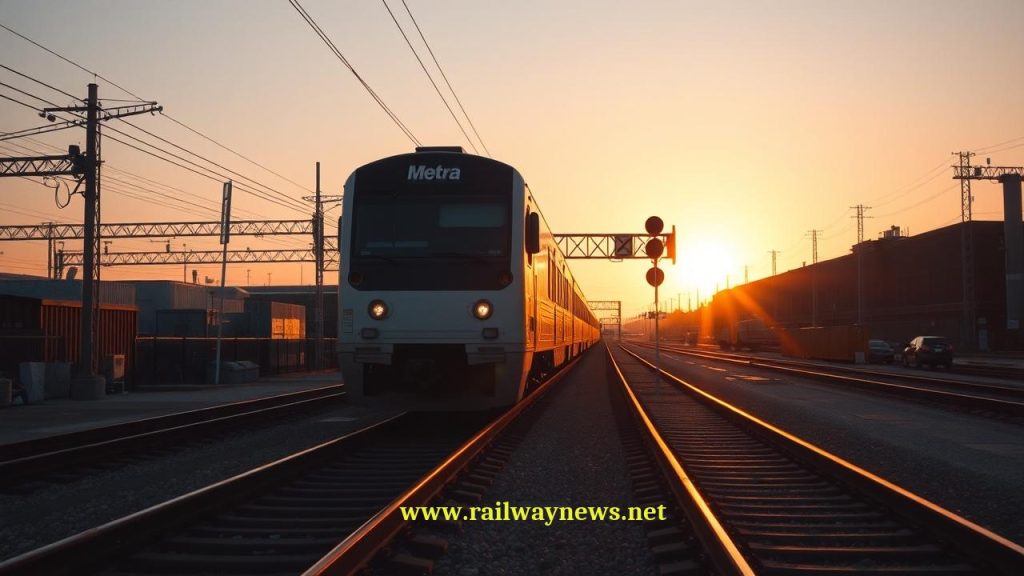
⚡ In Brief: Chicago’s Metra commuter rail will conduct 41 “safety blitzes” in 2024 to promote public safety near tracks, an approach that mirrors a broader security enhancement strategy recently launched by the Chicago Transit Authority (CTA).
CHICAGO, USA – The Metra commuter railroad will execute 41 Operation Lifesaver “safety blitzes” throughout 2024. The campaign aims to educate the public on safe behavior at grade crossings and near railway lines across its six-county service area. The initiative involves distributing materials at 243 Metra stations during peak morning hours.
What Does This Regulation Cover?
The program is a public awareness and enforcement campaign focused on grade crossing and trackside safety. Metra employees will distribute educational materials at stations, while a safety video plays for waiting passengers. The campaign extends to schools near Metra tracks and includes invitations for local emergency responders and public officials to participate. In parallel, Metra Police will conduct enforcement blitzes, issuing citations and warnings to individuals who disregard safety gates and warning signals.
Key Regulatory Data
| Parameter | Value |
|---|---|
| Regulation / Policy Name | Metra Operation Lifesaver Safety Blitzes 2024 |
| Total Value | Not disclosed |
| Parties Involved | Metra, Metra Police, local emergency responders, public officials |
| Timeline / Completion | Throughout 2024 |
| Country / Corridor | USA / Chicago Metropolitan Area |
How Does This Compare to Global Standards?
Metra’s campaign focuses specifically on educational outreach for grade crossing safety, a common practice for commuter and freight rail. In contrast, the region’s other major transit operator, the Chicago Transit Authority (CTA), recently launched a much broader security plan in response to a Federal Transit Administration (FTA) directive. The CTA’s program includes a 75% increase in monthly system policing hours, enhanced collaboration with the Chicago Police and Cook County Sheriff’s Office, and a $1.65 million investment to fund social outreach teams and shelter beds for unhoused individuals on the system (Source: Axios, 2024). This highlights the different safety challenges: Metra’s is primarily operational and behavioral, while the CTA’s addresses wider public security and social issues within its network.
Editor’s Analysis
These heightened safety initiatives in Chicago reflect a wider North American trend where transit operators are visibly addressing public safety perceptions to rebuild passenger trust. While Metra focuses on its specific operational risks, the broader context shows that passenger security is a critical factor for ridership recovery. For instance, Metro Transit in the Twin Cities saw a 14% drop in light rail ridership despite ongoing safety efforts, indicating that public perception can lag behind implemented measures (Source: Axios, 2024). Metra’s proactive, educational approach aims to prevent incidents before they happen, which may prove to be a cost-effective strategy for maintaining its distinct safety profile compared to urban metro systems.
FAQ
Q: What is the main difference between Metra’s and the CTA’s safety programs?
A: Metra’s program is an educational campaign focused on preventing accidents at grade crossings and on tracks. The CTA’s plan is a detailed security overhaul involving a significant increase in law enforcement presence and social service outreach.
Q: Will participants be fined during these events?
A: The educational events themselves are for awareness, but Metra Police will conduct separate enforcement blitzes to issue citations and warnings to drivers and pedestrians who violate safety laws at crossings.
Q: Is this type of safety campaign common for U.S. railroads?
A: Yes, public awareness campaigns like Operation Lifesaver are a standard industry practice for commuter and freight railroads in North America to reduce grade crossing incidents. However, the scale and coordination with enforcement blitzes vary by operator.

Railway infrastructure, rolling stock and transport technologies specialist focused on global rail industry developments, high-speed rail systems, signaling technologies and freight transportation. Covering railway investments, public transport modernization, rail operations and international mobility projects across Europe, Asia and North America.
RELATED POSTS

October 8, 2026 1:15 pm
Alstom secured a €1bn contract to build 13 automated trains,...

October 1, 2026 7:09 am
United States regulators confirmed a September 30 deadline for the...

October 4, 2026 5:14 pm
Alstom secured a CA$4.7 billion order from VIA Rail Canada...

October 5, 2026 6:12 pm
AECOM and Jacobs secured a contract in September 2026 to...

October 1, 2026 12:13 am
Illinois approved $1.5 billion annually for the Northern Illinois Transit...

October 4, 2026 11:08 pm
Sound Transit confirmed the September 30 opening of Seattle Pinehurst...