
Hitachi Rail Wins 13-Station Jakarta Metro Fare Contract
Hitachi Rail secured a contract to modernize fare systems at 13 Jakarta Metro stations, replacing 200 gate validators to accept bank cards and QR codes.
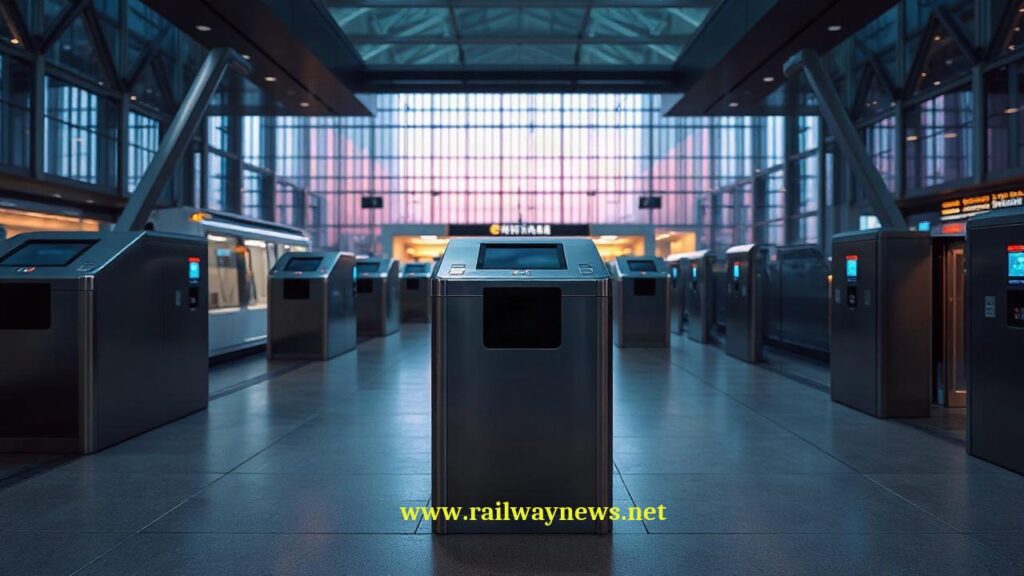
⚡ In Brief: Hitachi Rail and PT Softorb Technology Indonesia have secured a contract from PT Mass Rapid Transit Jakarta to modernize the fare collection system across 13 stations, replacing over 200 gate validation devices.
JAKARTA, INDONESIA – PT Mass Rapid Transit Jakarta awarded an Automatic Fare Collection modernization contract to a consortium of Hitachi Rail and PT Softorb Technology Indonesia. The agreement covers all 13 operational stations along Phase 1 of the Jakarta Metro, requiring the direct replacement of more than 200 gate validation devices. Implementation will take place during revenue service hours without halting passenger operations.
What Does This Contract Cover?
Hitachi Rail and local partner PT Softorb Technology Indonesia will replace over 200 validation and turnstile mechanisms across the entire 15.7-kilometer Phase 1 corridor between Lebak Bulus and Bundaran HI. The upgraded hardware introduces an account-based ticketing architecture that transfers fare calculation from physical smart cards to back-office digital accounts. Commuters will be permitted to pay via open-loop contactless EMV bank cards, mobile e-wallets, and dynamic QR code tickets directly at the gate line. The contract also integrates back-end software designed to support future fare interoperability with regional transit networks across the Greater Jakarta metropolitan area.
Key Contract Data
| Parameter | Value |
|---|---|
| Contract Name | Jakarta Metro Phase 1 Automatic Fare Collection (AFC) Modernisation |
| Total Value | Not disclosed |
| Parties Involved | PT Mass Rapid Transit Jakarta (Client); Hitachi Rail, PT Softorb Technology Indonesia (Consortium) |
| Timeline / Completion | Not disclosed |
| Country / Corridor | Indonesia / Jakarta Metro North-South Line (Phase 1, 13 stations) |
How Does This Compare to Similar Contracts?
Transit systems worldwide are retrofitting legacy closed-loop fare gates with open-loop, software-driven ticketing to lower cash-handling overhead and match post-pandemic ridership gains. While major rolling stock and systems suppliers frequently bundle ticketing into megaprojects—such as Alstom securing a €1.0 billion systems share for Melbourne’s Suburban Rail Loop East and an estimated €700 million rail systems package in the Africa, Middle East, and Central Asia (AMECA) region (Source: Alstom, 2026)—Hitachi Rail’s Jakarta assignment is a focused digital brownfield upgrade. Comparable Southeast Asian metro retrofits typically budget between $15 million and $40 million for network-wide AFC hardware migrations of this station count. However, the financial terms and deployment schedule for the Jakarta contract were not publicly disclosed by either party at time of award.
Editor’s Analysis
This award reflects an industry-wide prioritization of brownfield digital modernization over high-risk greenfield civil projects in Southeast Asia, especially as alternative capital-intensive schemes face reassessment, such as the suspended Bali light rail plan (Source: Railway Gazette, 2026). Rail technology suppliers are increasingly competing on software integration and account-based ticketing architectures rather than traditional proprietary gate hardware. By transitioning to bank-card and QR-code validation, MRT Jakarta aligns with global ticketing standards while capturing valuable passenger-flow analytics needed for subsequent network extensions.
FAQ
Q: What payment options will Jakarta Metro riders gain under the new system?
A: Passengers will be able to tap contactless EMV bank cards, scan dynamic mobile QR codes, and use standard e-wallets at station gates. Entitlements will be processed through a centralized account-based backend rather than stored strictly on physical transit cards.
Q: How much is the Hitachi Rail Jakarta AFC contract worth?
A: The total financial value of the contract was not disclosed by PT Mass Rapid Transit Jakarta or Hitachi Rail. A formal completion deadline has also not been made public.
Q: Will metro service be suspended during the gate replacement process?
A: No, the consortium is contracted to replace all 200 gate validation mechanisms while keeping stations open. Installation work will occur without interrupting scheduled train runs or daily station operations.

Railway infrastructure, rolling stock and transport technologies specialist focused on global rail industry developments, high-speed rail systems, signaling technologies and freight transportation. Covering railway investments, public transport modernization, rail operations and international mobility projects across Europe, Asia and North America.
RELATED POSTS

October 8, 2026 1:15 pm
Alstom secured a €1bn contract to build 13 automated trains,...

October 1, 2026 7:09 am
United States regulators confirmed a September 30 deadline for the...

October 8, 2026 12:18 pm
Siemens Mobility signed an agreement with VinSpeed to supply 350...

October 4, 2026 5:14 pm
Alstom secured a CA$4.7 billion order from VIA Rail Canada...

October 5, 2026 6:12 pm
AECOM and Jacobs secured a contract in September 2026 to...

October 1, 2026 12:13 am
Illinois approved $1.5 billion annually for the Northern Illinois Transit...