
Jerusalem Opens €1.8B Green Line Light Rail Section
TransJerusalem J-Net launched a 7-km Green Line light rail section in Jerusalem on August 21, 2026, opening 12 new stations under a €1.8 billion contract.
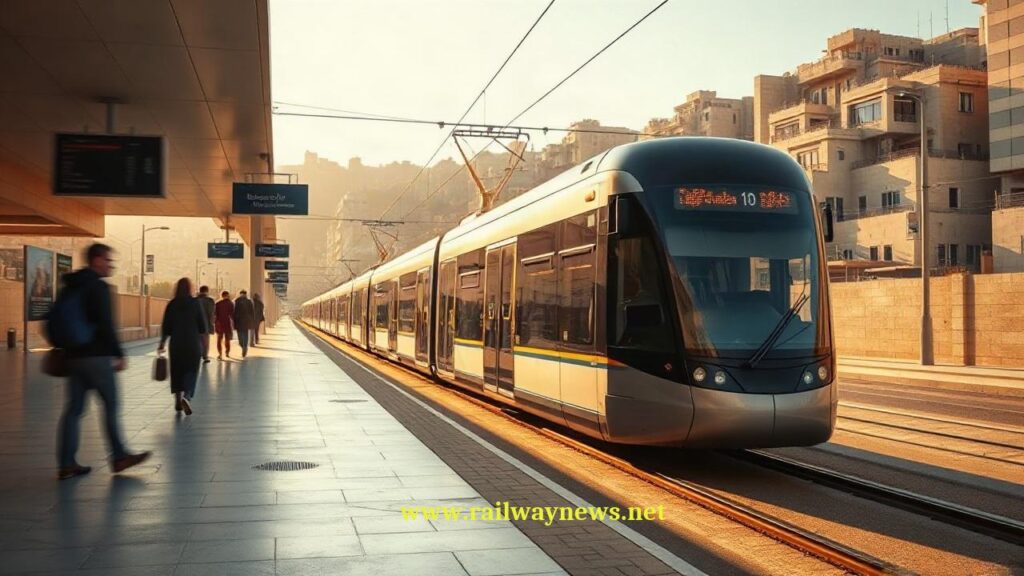
⚡ In Brief: The TransJerusalem J-Net consortium opened the 7-kilometre L3 section of Jerusalem’s Green Line on August 21, 2026, delivering 12 new stations under a €1.8 billion light rail expansion project.
JERUSALEM, ISRAEL – The TransJerusalem J-Net consortium commenced commercial service on the Green Line’s 7-kilometre L3 light rail section on August 21, 2026. Operating between Malha and HaTurim with 12 newly built stations, the line introduces direct interchange with the existing Red Line at eight-minute peak intervals. The opening marks the first operational phase of the wider €1.8 billion municipal light rail contract awarded in 2019.
What Is the Full Scope of This Project?
The operational L3 section spans 7 kilometres and 13 total stations between southern Malha and HaTurim, forming the first phase of the planned 20-kilometre Green Line. Upon completion of all three build phases by 2027, the line will operate 41 stations serving 250,000 daily passenger trips with a fleet of 114 CAF Urbos light rail vehicles. The overall €1.8 billion J-Net infrastructure program covers 27 kilometres of newly constructed alignment, the retrofit of 46 existing Red Line vehicles, and depot facilities executed by CAF and Shapir (Source: Railway Pro, 2026). Civil works encountered severe disruptions in the northern Bar-Ilan corridor, where protest-related vandalism generated over 400 million shekels (€115 million) in infrastructure damage and deferred subsequent branch deliveries into 2027.
Key Project Data
| Parameter | Value |
|---|---|
| Project / Contract Name | Jerusalem Green Line (J-Net Project) |
| Total Value | Exceeds €1.8 billion |
| Parties Involved | TransJerusalem J-Net Consortium (CAF, Shapir), Jerusalem Transport Master Plan Team |
| Timeline / Completion | First section opened August 2026; full network completion projected for 2027 |
| Country / Corridor | Israel / Malha–HaTurim (Jerusalem Urban Corridor) |
How Does This Compare to Similar Projects?
Jerusalem’s €1.8 billion turnkey delivery model reflects a global trend of integrating rolling stock supply, civil works, and digital train control into unified concession frameworks. By comparison, Bybanen in Bergen contracted Stadler Signalling for a €50 million conventional signalling fit-out for its Åsane light rail extension, opting for targeted subsystem procurement ahead of its opening (Source: Stadler Rail, 2024). On capital scale and schedule delivery, the municipal buildout contrasts with long-horizon megaprojects like the Los Angeles County Metropolitan Transportation Authority’s Southeast Gateway Line, which broke ground in October 2024 with full delivery not scheduled until 2036 (Source: LACMTA, 2024). Independent verification of the exact revenue-service launch date for Jerusalem’s final Har Nof–Neve Yaakov corridor was not available at time of publication.
Editor’s Analysis
Phased commissioning allows municipal authorities to capture farebox revenue and relieve surface bus congestion while isolating capital works from corridor sections facing socio-political disruption. Delivering suburban-to-core connectivity before tackling contentious right-of-way zones protects concession cash flows and validates system integration between legacy and incoming rolling stock fleets. Across global transit markets, standardizing on interoperable digital signalling and versatile LRV platforms remains essential to prevent network fragmentation when operators merge dual-era lines (Source: Future Market Insights, 2025).
FAQ
Q: What stations are served on the new Green Line L3 section?
A: The L3 section serves 13 stations between Malha and HaTurim, stopping at Teddy Stadium, the Hebrew University Givat Ram campus, and the Yitzhak Navon railway interchange. Passengers can transfer to the Red Line at HaTurim station.
Q: What caused the project delivery delays on Jerusalem’s Green Line?
A: Construction timelines slipped past the initial 2025 target due to civil works complexity and localized protests in the Bar-Ilan area. These disruptions resulted in over 400 million shekels (€115 million) in physical damage and delayed northern sections into 2027.
Q: How many daily passengers will use the completed light rail corridor?
A: Municipal authorities project approximately 250,000 daily passenger trips once the complete 20-kilometre Green Line network enters service. Trains have a design capacity of 500 passengers and run at eight-minute intervals during peak operations on the initial branch.

Railway infrastructure, rolling stock and transport technologies specialist focused on global rail industry developments, high-speed rail systems, signaling technologies and freight transportation. Covering railway investments, public transport modernization, rail operations and international mobility projects across Europe, Asia and North America.
RELATED POSTS

October 8, 2026 1:15 pm
Alstom secured a €1bn contract to build 13 automated trains,...

October 1, 2026 7:09 am
United States regulators confirmed a September 30 deadline for the...

October 4, 2026 5:14 pm
Alstom secured a CA$4.7 billion order from VIA Rail Canada...

October 8, 2026 12:18 pm
Siemens Mobility signed an agreement with VinSpeed to supply 350...

October 1, 2026 12:13 am
Illinois approved $1.5 billion annually for the Northern Illinois Transit...

October 6, 2026 2:14 am
Union Pacific launched export rail shipments with Ferromex to deliver...