
Metro de Madrid Tests 48 Autonomous CAF Trains For Line 6
Metro de Madrid launched night testing of 48 autonomous CAF trains under a €531 million contract before commercial driverless service begins on Line 6 in 2027.
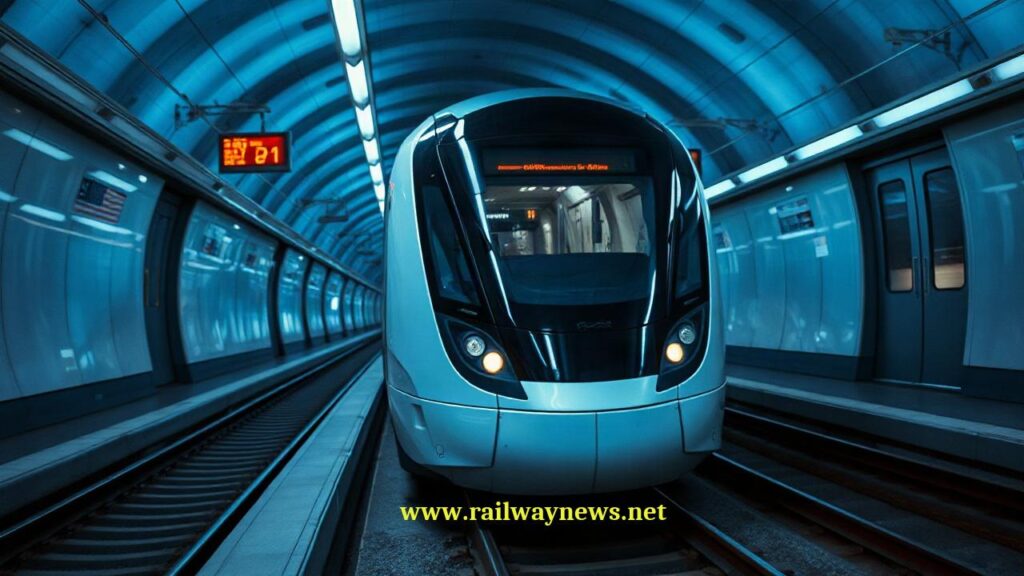
⚡ In Brief: Metro de Madrid has started nighttime dynamic testing on Lines 10 and 11 for 48 autonomous trains built by CAF under a €531 million fleet renewal ahead of full driverless operation on Line 6 in 2027.
MADRID, Spain – Metro de Madrid has deployed the first of 48 new autonomous trainsets manufactured by CAF for dynamic night testing across Lines 10 and 11 as part of a €531 million fleet procurement. The 109-metre, six-car trainsets will enter commercial automated service on the 28-station Circular Line (Line 6) in 2027. Commercial operations will increase passenger capacity per train to 1,385 riders while lowering headways to two minutes.
What Is the Full Scope of This Project?
Metro de Madrid is converting Line 6 into its first fully automated rapid transit route through rolling stock replacement, civil works, and platform safety installations across 28 stations. Initial testing is underway with human drivers during non-revenue night hours on Lines 10 and 11, with secondary validation scheduled on Line 12 before units transfer to Line 6 for driverless trials. Manufactured by Construcciones y Auxiliar de Ferrocarriles (CAF), the 48 six-car trains reach maximum operational speeds of 110 km/h—a 33 percent increase over legacy stock—while consuming 20 percent less traction energy. The elimination of conventional driver cabs expands usable passenger space to accommodate 1,385 riders per train, yielding a 17 percent capacity increase. Line infrastructure modifications require the installation of platform screen doors, necessitating weekend closures such as the service suspension between Sainz de Baranda and Laguna.
Key Project Data
| Parameter | Value |
|---|---|
| Project / Contract Name | Line 6 Automation and Fleet Modernisation |
| Total Value | Over €531 million (rolling stock contract; station retrofit costs not disclosed) |
| Parties Involved | Metro de Madrid, Community of Madrid, Construcciones y Auxiliar de Ferrocarriles (CAF) |
| Timeline / Completion | Testing began in 2025; passenger automation scheduled for 2027 |
| Country / Corridor | Spain / Madrid Metro Line 6 (Circular Line) |
How Does This Compare to Similar Projects?
Madrid’s circular metro conversion reflects a broader global shift toward high-capacity Grade of Automation 4 (GoA4) systems to resolve urban bottlenecks without expanding surface footprints. Across international networks, operators are turning to high-capacity automation to relieve surface roads; in China, transit agencies had 3,125.28 kilometres of high-capacity rail lines under construction in 2025 across an operating network exceeding 10,000 metro route-kilometres (Source: East is Read, 2025). By contrast, North American heavy rail transit systems like the Los Angeles Metro maintain driver-operated fleets on the B and D lines despite ongoing expansion programs and ridership gains, where alternative modes like bus networks operate at a fraction of heavy rail capital costs (Source: Independent Institute, 2025). Regional systems such as Phoenix’s Valley Metro logged 45,000 daily weekday riders on surface light rail in 2025, operating without the capital outlay required for complete platform separation (Source: Valley Metro, 2025). The total expenditure for Madrid’s accompanying platform screen doors and trackside signalling upgrades was not disclosed at the time of publication.
Editor’s Analysis
Automating circular heavy-rail routes delivers distinct operational advantages because loop lines eliminate terminal turnaround delays and yield maximum headway consistency under GoA4 control. Madrid’s capital deployment proves that brownfield metro retrofits remain capital-intensive due to platform door installations and power upgrades, yet they offer operators an essential 20 percent drop in traction energy demand. The move aligns with a broader global push toward high-capacity grade-separated transit as the primary mechanism to curb urban road congestion without claiming surface land (Source: Independent Institute, 2025).
FAQ
Q: When will autonomous trains enter commercial service on Madrid Metro Line 6?
A: Automated commercial service on Line 6 is scheduled to launch in 2027 following multi-line testing on Lines 10, 11, and 12. Full deployment will lower operational intervals between trains to two minutes.
Q: What are the primary technical specifications of the new CAF trains?
A: Each six-car trainset spans over 109 metres, accommodates up to 1,385 passengers, and achieves a maximum operating speed of 110 km/h. The design eliminates the driver cab to raise capacity by 17 percent while reducing energy consumption by 20 percent.
Q: Why does the Madrid Line 6 upgrade require temporary track closures?
A: Track closures are necessary to install platform screen doors across all 28 stations, which cannot be mounted during normal train operations. The operator concentrates these infrastructure works during low-demand summer periods and provides free replacement bus routes.

Railway infrastructure, rolling stock and transport technologies specialist focused on global rail industry developments, high-speed rail systems, signaling technologies and freight transportation. Covering railway investments, public transport modernization, rail operations and international mobility projects across Europe, Asia and North America.
RELATED POSTS

October 8, 2026 1:15 pm
Alstom secured a €1bn contract to build 13 automated trains,...

October 1, 2026 7:09 am
United States regulators confirmed a September 30 deadline for the...

October 8, 2026 12:18 pm
Siemens Mobility signed an agreement with VinSpeed to supply 350...

October 4, 2026 5:14 pm
Alstom secured a CA$4.7 billion order from VIA Rail Canada...

October 1, 2026 12:13 am
Illinois approved $1.5 billion annually for the Northern Illinois Transit...

October 5, 2026 6:12 pm
AECOM and Jacobs secured a contract in September 2026 to...