
EU Standard EN 15220: Ensuring Rail Safety & Interoperability
EN 15220 standardizes railway brake indicators, ensuring clear visual status (red/green) for critical safety, efficiency, and interoperability across European networks.
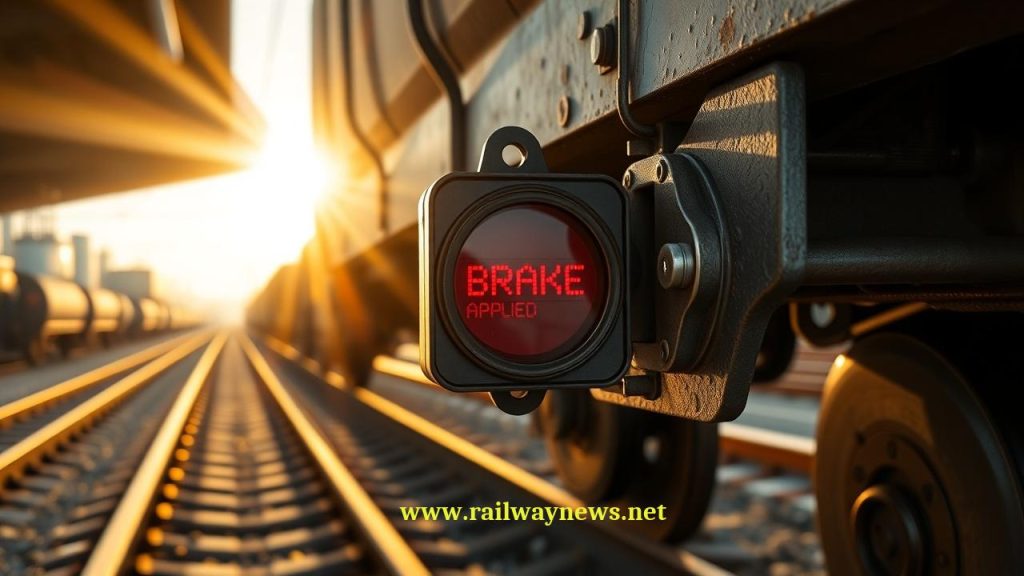
Introduction to EN 15220: Brake Indicators
EN 15220 is a European Standard that specifies the requirements for brake indicators used on all types of railway vehicles. The primary function of these indicators is to provide a clear, unambiguous, and reliable visual status of the braking system on an individual vehicle. This information is critical for the safety and efficiency of railway operations, enabling train crew, shunting staff, and maintenance personnel to quickly assess whether a vehicle’s brakes are applied, released, or isolated.
By standardizing the design, location, and visual characteristics of these indicators, EN 15220 plays a vital role in ensuring interoperability across the European railway network. It ensures that staff can correctly interpret the brake status of any vehicle, regardless of its origin or manufacturer, thereby minimizing risks associated with incorrect brake handling during train preparation, shunting, and maintenance activities.
Core Objectives and Scope of EN 15220
The standard is built around several key objectives that directly contribute to the safety and operational integrity of railway systems. Its scope applies to main-line vehicles, freight wagons, passenger coaches, and other rolling stock operating on the trans-European network.
- Standardization: To establish a uniform set of requirements for the visual representation (colors and symbols), performance, and location of brake indicators, ensuring consistency across different vehicle types and operators.
- Safety Enhancement: To reduce the risk of accidents caused by misinterpretation of the brake status. A clear indication prevents attempts to move a train with brakes applied (leading to wheel flats or derailment) or leaving a vehicle unsecured with brakes unintentionally released.
- Operational Efficiency: To allow for faster and more reliable train preparation and inspection procedures. Staff can perform a walking inspection of an entire train and confirm the status of each vehicle’s brake system without the need for complex diagnostic tools.
- Clear Communication: To provide a simple and effective communication tool for all personnel interacting with the rolling stock, from the driver in the cab to the shunter in the yard.
Key Technical Requirements of Brake Indicators under EN 15220
EN 15220 details specific technical requirements that brake indicators must meet. These are categorized into their visual representation, physical characteristics, and system integration.
Indicator States and Visual Representation
The standard defines the main states that an indicator must be able to display. The visual representation is designed to be intuitive and instantly recognizable, even in adverse conditions.
- Brake Applied: This state indicates that the brakes are active and providing a braking force. The standard color for this state is RED. This universally recognized color for ‘stop’ or ‘danger’ immediately alerts personnel that the vehicle is not free to move.
- Brake Released: This state indicates that the brakes are inactive and the vehicle is free to roll. The standard color for this state is GREEN. This signals an ‘all clear’ or ‘go’ status.
- Isolated / Out of Service: This state indicates that the brake on the vehicle has been deliberately disabled or is faulty. The standard does not mandate a single color for this, but it must be clearly distinguishable from red and green. Often, this is shown through a specific symbol, a mixed color pattern (e.g., yellow/black), or a physical flag that covers the main indicator.
Physical and Performance Characteristics
To be effective, brake indicators must be robust and reliable under the harsh operating conditions of a railway environment.
- Visibility: Indicators must be clearly visible from the trackside on both sides of the vehicle from a specified distance and a wide range of viewing angles, during both day and night conditions.
- Location: They must be installed in a standardized position on the vehicle’s underframe or bogie, ensuring they are easy to locate during inspections.
- Durability: The indicator housing and components must be resistant to mechanical shocks, vibrations, extreme temperatures (-40°C to +70°C), UV radiation, and exposure to contaminants like brake dust, oil, and aggressive cleaning agents used in train washes.
- Fail-Safe Operation: The indicator’s design should be inherently fail-safe. For many pneumatic systems, the indicator is directly actuated by brake cylinder pressure. A loss of pressure (brake release) mechanically causes the indicator to show green, while the presence of pressure (brake applied) causes it to show red. This direct mechanical link enhances reliability.
Comparison of Brake Indicator States
The following table summarizes the different states defined by EN 15220 and their operational meaning, providing a quick reference for railway personnel.
| Indicator Status | Standard Color | Operational Meaning | Action for Personnel |
|---|---|---|---|
| Brake Applied | RED | Braking force is being exerted on the wheels. The vehicle is secured. | Do not attempt to move the vehicle. Confirm the brake is intentionally applied. |
| Brake Released | GREEN | No braking force is being exerted. The vehicle is free to move. | Ensure the vehicle is properly secured by other means (e.g., handbrake) if stabled. Vehicle is ready to be moved as part of a train. |
| Isolated / Out of Service | Varies (e.g., Yellow, Symbol, or a physical flap) | The vehicle’s braking system is not functional or has been manually disabled. It provides no braking force. | Acknowledge the fault. The vehicle may have restricted operational conditions (e.g., speed limit, position in train). Report for maintenance. |
Significance in Railway Operations and Maintenance
The implementation of EN 15220 has a direct impact on daily railway activities. During train formation, a quick visual check confirms that the brakes on all wagons have released correctly after charging the brake pipe. Conversely, when securing a train, staff can confirm that the brakes have applied on every vehicle. For maintenance teams, a brake indicator that fails to change state or shows an incorrect status is a primary diagnostic clue, pointing towards issues such as a sticking brake cylinder, a leak in the pneumatic system, or a faulty control valve. This standardization is a cornerstone of safe and interoperable pan-European rail freight and passenger services.
Conclusion
EN 15220 is much more than a specification for a simple colored indicator; it is a critical safety standard that underpins the reliability and interoperability of the European railway system. By mandating a clear, consistent, and durable method of communicating brake status, the standard empowers railway staff to make safe and efficient operational decisions, preventing costly damage and potentially catastrophic accidents. Its requirements ensure that this vital piece of information is accurately conveyed in all operating conditions, making the brake indicator an indispensable component on modern rolling stock.

Railway infrastructure, rolling stock and transport technologies specialist focused on global rail industry developments, high-speed rail systems, signaling technologies and freight transportation. Covering railway investments, public transport modernization, rail operations and international mobility projects across Europe, Asia and North America.