
EN 15313: Europe’s Standard For Rail Wheelset Safety
Discover EN 15313, the essential standard for railway wheelset maintenance. Learn how it ensures safety, reliability, and interoperability through detailed inspections and comprehensive procedures.
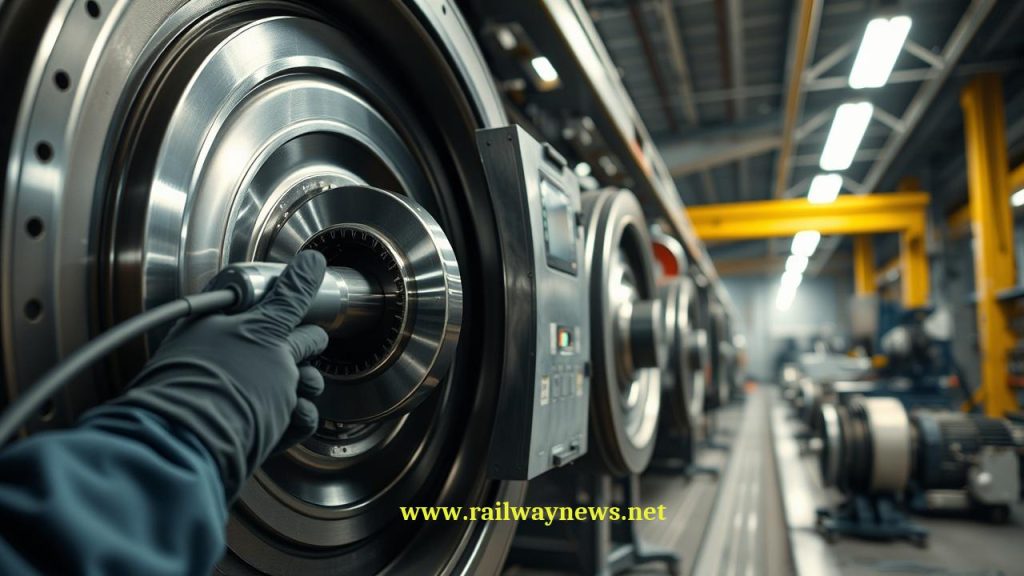
Understanding EN 15313: A Detailed Guide to Railway Wheelset Maintenance
EN 15313 is a crucial European Standard that specifies the requirements for the maintenance of railway wheelsets. It provides a structured framework for operations, covering both in-service inspections performed on the vehicle and more detailed maintenance activities conducted when the wheelset is removed (off-vehicle). The standard’s primary goal is to ensure the safety, reliability, and interoperability of rolling stock across the European rail network.
This standard is fundamental for railway undertakings, infrastructure managers, and maintenance entities (Entities in Charge of Maintenance – ECMs). It defines the processes, criteria, and documentation necessary to manage the lifecycle of a wheelset from its entry into service until its withdrawal, ensuring it consistently meets operational safety parameters.
Scope and Core Objectives of EN 15313
The scope of EN 15313 is detailed, addressing all maintenance activities related to wheelsets after they have been manufactured and assembled. It does not cover the design or manufacturing process itself, which are detailed in other standards like the EN 13260 series. The core objectives of EN 15313 include:
- Standardizing Maintenance Procedures: To create a common, harmonized approach to wheelset maintenance across different operators and countries, enhancing interoperability.
- Defining Safety-Critical Limits: To establish clear condemnation limits and intervention criteria for key wheelset parameters, such as wheel profile wear, flange thickness, and surface defects.
- Ensuring Traceability: To mandate a robust system for documenting maintenance history, allowing for complete traceability of each wheelset throughout its service life.
- Differentiating Maintenance Levels: To clearly distinguish between routine in-service checks and detailed off-vehicle overhauls, defining the scope and requirements for each.
Key Technical Aspects and Inspection Criteria
EN 15313 provides detailed technical guidance on what to inspect and the acceptable limits. Maintenance personnel must assess several critical parameters to determine the operational fitness of a wheelset. These checks are fundamental to preventing catastrophic failures like derailments or axle fractures.
In-Service Inspection Parameters
These are checks typically performed while the wheelset is still fitted to the vehicle, often during routine turnarounds or scheduled maintenance stops. Key criteria include:
- Wheel Profile and Wear: Measuring the flange height (Sh), flange thickness (Sd), and flange gradient (qr). Deviations from the nominal profile can affect ride stability and interaction with the track.
- Wheel Diameter: Measuring the diameter of the wheels on the same axle to ensure they are within the specified tolerance. A significant difference can cause hunting oscillation and excessive wear.
- Visual Inspection for Defects: Checking for visible cracks, shelling, spalling, flat spots (skid flats), and thermal cracks on the wheel tread and plate.
- Axle Box and Bearings: Monitoring the temperature of the axle boxes (using trackside hot box detectors or handheld devices) and checking for signs of grease leakage or unusual noise.
Off-Vehicle Maintenance Procedures
When an in-service inspection reveals a defect exceeding intervention limits, or as part of a scheduled heavy maintenance plan, the wheelset is removed from the vehicle for a more thorough overhaul. This process includes:
- Cleaning and Disassembly: The wheelset is thoroughly cleaned to allow for detailed inspection. Components like axle boxes and bearings may be disassembled.
- Non-Destructive Testing (NDT): Advanced inspection techniques are employed to detect defects that are not visible to the naked eye. Common NDT methods include:
- Ultrasonic Testing (UT): Used to detect internal flaws within the axle body and wheel seats.
- Magnetic Particle Inspection (MPI): Used to find surface-breaking cracks on ferromagnetic components like the axle and wheels.
- Reprofiling: The wheels are turned on a wheel lathe to restore the correct profile, removing surface defects and wear. This process is carefully controlled to ensure the final diameter remains within acceptable limits.
- Component Replacement: Worn or damaged components, such as bearings or brake discs, are replaced according to manufacturer specifications and the maintenance plan.
- Reassembly and Final Checks: The wheelset is reassembled, bearings are lubricated, and final dimensional and geometric checks are performed before it is certified for return to service.
Comparison: In-Service vs. Off-Vehicle Maintenance
A key contribution of EN 15313 is its clear distinction between the two primary maintenance philosophies. Understanding this difference is essential for creating an effective and efficient maintenance regime.
| Feature | In-Service Maintenance | Off-Vehicle Maintenance |
|---|---|---|
| Location | Performed while the wheelset is on the vehicle, often in a depot or stabling siding. | Performed in a dedicated, specialized workshop after the wheelset is removed from the vehicle. |
| Scope of Work | Primarily inspection, measurement, and minor corrective actions (e.g., lubrication). Focused on identifying deviations from operational limits. | Detailed overhaul, including disassembly, NDT, component replacement, and heavy repairs like wheel reprofiling. |
| Tools & Equipment | Handheld gauges (for profiles), ultrasonic flaw detectors for spot checks, thermal cameras, and visual inspection aids. | Heavy machinery such as wheel lathes, bearing presses, large-scale NDT equipment (e.g., automated UT/MPI rigs), and precise measuring instruments. |
| Objective | To monitor the condition of the wheelset during its operational life and detect emerging issues before they become critical. | To restore the wheelset to its full operational specification, extending its service life and ensuring it meets all safety criteria. |
| Trigger | Scheduled intervals (time or distance-based), or observations during daily checks. | Exceeding in-service condemnation limits, reaching a pre-defined operational threshold (e.g., mileage), or as part of a major vehicle overhaul. |
The Importance of Documentation and Traceability
EN 15313 places a strong emphasis on documentation. Every wheelset must have a unique identifier, and all maintenance activities—from a simple visual check to a complete overhaul—must be recorded. This creates a complete “life-cycle passport” for the component, which is critical for:
- Safety Audits: Providing evidence of compliance with regulatory requirements and the entity’s own maintenance plan.
- Failure Analysis: In the event of an incident, the maintenance history provides invaluable data for investigators to determine the root cause.
- Asset Management: Allowing operators to track the performance and cost of their wheelset fleet, optimizing maintenance schedules and inventory.
Conclusion: A Foundation for Railway Safety
EN 15313 is more than just a set of rules; it is a foundational pillar of modern railway safety and operational management. By providing a clear, detailed, and standardized framework for wheelset maintenance, it ensures that one of the most safety-critical components of any rail vehicle is kept in a reliable and verifiable condition. For any entity involved in the operation and maintenance of rolling stock in Europe, adherence to EN 15313 is not only a matter of compliance but a fundamental commitment to the safety of the railway system.
Frequently Asked Questions (FAQ) about EN 15313

Railway infrastructure, rolling stock and transport technologies specialist focused on global rail industry developments, high-speed rail systems, signaling technologies and freight transportation. Covering railway investments, public transport modernization, rail operations and international mobility projects across Europe, Asia and North America.