
EN 50124-2: Securing European Rail from Electrical Surges
EN 50124-2 is crucial for railway safety. Understand overvoltages and protection strategies against lightning, switching, and temporary surges, ensuring robust electrical system reliability.
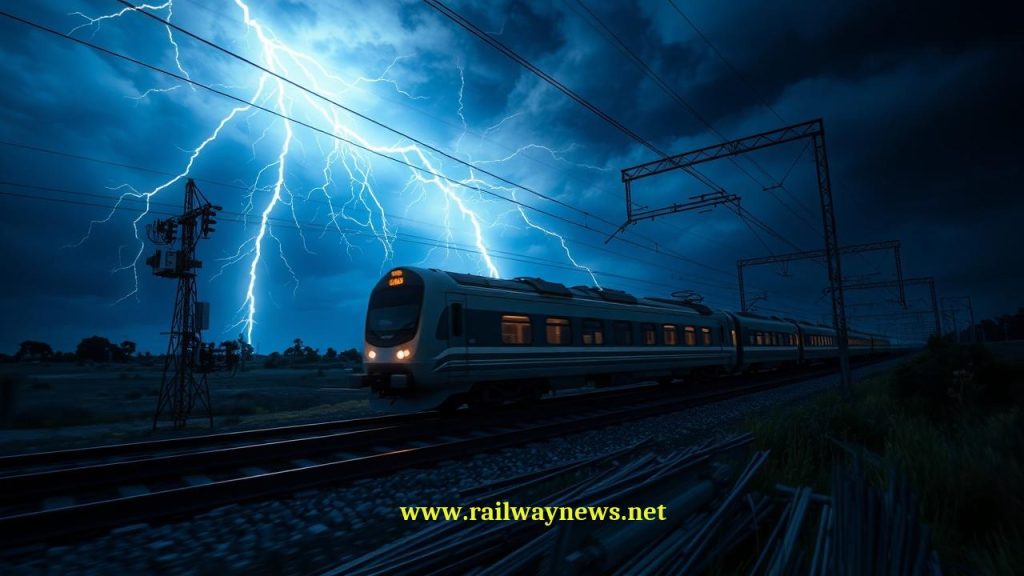
Understanding EN 50124-2: Overvoltages and Protection in Railway Applications
EN 50124-2 is a crucial European standard within the CENELEC framework for railway applications. It specifically addresses insulation coordination by defining the characteristics of overvoltages that can occur in railway systems and outlining the requirements for protective measures against them. This standard is fundamental to ensuring the safety, reliability, and operational integrity of both rolling stock and fixed installations.
As Part 2 of the EN 50124 series, it works in direct conjunction with EN 50124-1, which specifies the required clearance and creepage distances for electrical equipment. In essence, EN 50124-1 defines the physical insulation dimensions, while EN 50124-2 defines the electrical stresses (overvoltages) that this insulation must withstand, thereby providing a complete framework for robust electrical design.
Core Principles and Scope of EN 50124-2
The primary goal of EN 50124-2 is to provide a standardized method for managing the risks associated with overvoltages in the unique environment of railway networks. This includes traction power supply systems, signalling circuits, and onboard electronic equipment.
Key Objectives of the Standard:
- Characterizing Overvoltages: To classify and define the origins, shapes, and amplitudes of temporary, switching, and lightning overvoltages prevalent in railway systems.
- Defining Protective Strategies: To specify the principles for selecting and applying protective devices, such as Surge Protective Devices (SPDs), to mitigate the effects of these overvoltages.
- Establishing Voltage Levels: To provide reference values for rated impulse voltages that equipment must be able to withstand, based on its location and exposure within the system.
- Ensuring System Compatibility: To ensure that different components within the railway electrical system have a coordinated level of insulation and protection, preventing weak points that could lead to failure.
Types of Overvoltages Addressed in EN 50124-2
The standard meticulously categorizes overvoltages based on their duration and origin, as each type poses a different threat and requires a distinct protection philosophy.
Temporary Overvoltages (TOV)
Temporary overvoltages are power-frequency oscillatory overvoltages of relatively long duration, lasting from several milliseconds to several seconds or even longer. They are typically caused by system faults or major switching events. In railway systems, common causes include earth faults in the traction supply network or load rejection scenarios. Their long duration can cause significant thermal stress on components and degrade insulation over time.
Switching Overvoltages (SOV)
Switching overvoltages are short-duration, transient overvoltages generated by the operation of switching devices within the electrical network. Their duration is typically in the range of a few microseconds to a few milliseconds. Key sources in railways include the operation of circuit breakers in substations, pantograph bouncing on the overhead contact line, and the switching of inductive loads on rolling stock.
Lightning Overvoltages (LOV)
Lightning overvoltages are extremely high-energy, very short-duration transients caused by atmospheric lightning strikes. They represent the most severe threat to railway electrical systems. The standard considers both direct strikes to overhead lines or structures and indirect strikes, where the electromagnetic field from a nearby strike induces a powerful surge into the system. These can cause catastrophic failure of electronic and power equipment if not properly mitigated.
Overvoltage Categories (OV) and Their Application
A cornerstone of EN 50124-2 is the classification of equipment into four Overvoltage Categories (OV I to OV IV). This categorization is based on the equipment’s location within an installation, which determines its exposure to transient overvoltages. Equipment in a higher category must have a higher dielectric strength (impulse withstand voltage).
| Category | Description | Typical Railway Application |
|---|---|---|
| OV I | Equipment connected to circuits where overvoltages are controlled to a very low level. This typically applies to circuits that are electronically protected. | Highly sensitive electronic components inside a protected control unit, such as microprocessors on a control board that is downstream of multiple levels of protection. |
| OV II | Energy-consuming equipment supplied from the fixed installation. This is the standard level for equipment connected to the final sub-circuits. | Onboard passenger cabin lighting, power outlets for cleaning equipment, and auxiliary systems connected to the train’s low-voltage distribution network. |
| OV III | Equipment in fixed installations and for which a higher degree of availability and reliability is expected. These are components that are part of the main distribution network. | Main circuit breakers on rolling stock, traction converters, auxiliary power supply units, and fixed equipment within substations and trackside cabinets. |
| OV IV | Equipment used at the origin of the installation. This category is exposed to the highest potential overvoltages, often directly from overhead lines. | The primary side of the main transformer on rolling stock, equipment directly connected to the pantograph, and components at the power feed-in points of a substation. |
Protective Measures and Devices
EN 50124-2 does not just define the problem; it also outlines the solution. The primary method of protection is the coordinated application of Surge Protective Devices (SPDs). These devices are designed to detect a transient overvoltage and divert the associated surge current safely to earth, thereby clamping the voltage to a safe level for the downstream equipment.
Other key protective measures specified or implied by the standard include:
- Proper Earthing and Bonding: Creating a low-impedance path to ground is essential for SPDs to function effectively and for managing fault currents.
- Shielding: Using shielded cables and metallic enclosures to protect sensitive circuits from induced overvoltages caused by nearby lightning or switching events.
- System Design: Careful routing of cables and strategic placement of equipment to minimize exposure and the coupling of transients.
- Insulation Coordination: Ensuring that the insulation withstand voltage of a component is always higher than the let-through voltage of its associated protective device.
Relationship with Other Key Railway Standards
EN 50124-2 is part of a tightly integrated family of CENELEC standards for railways. Its requirements are referenced and relied upon by other major standards:
- EN 50124-1: As mentioned, this standard provides the physical clearance and creepage distance rules that are dimensioned based on the voltage levels and environmental conditions defined in Part 2.
- EN 50155: This standard covers electronic equipment used on rolling stock. It directly references the Overvoltage Categories from EN 50124 to specify the required dielectric strength and transient immunity for electronic devices.
- EN 50121 Series: This series of standards on Electromagnetic Compatibility (EMC) is also related, as large electrical transients (overvoltages) are a major source of electromagnetic interference. Proper overvoltage protection is a key aspect of achieving EMC.
Conclusion: The Importance of EN 50124-2
To summarize, EN 50124-2 is an indispensable technical standard for engineers and designers in the railway industry. By providing a clear and detailed framework for understanding, classifying, and protecting against overvoltages, it plays a fundamental role in guaranteeing the electrical safety of personnel and passengers, the operational reliability of critical systems like traction and signalling, and the longevity of high-value railway assets. Adherence to this standard is essential for building a robust and resilient railway network fit for modern demands.

Railway infrastructure, rolling stock and transport technologies specialist focused on global rail industry developments, high-speed rail systems, signaling technologies and freight transportation. Covering railway investments, public transport modernization, rail operations and international mobility projects across Europe, Asia and North America.