
EN 13481-5: Europe’s Crucial Standard for Slab Track Performance
EN 13481-5 defines critical performance and testing for slab track fastening systems. It ensures safety, reliability, and durability for modern high-speed and metro railways.
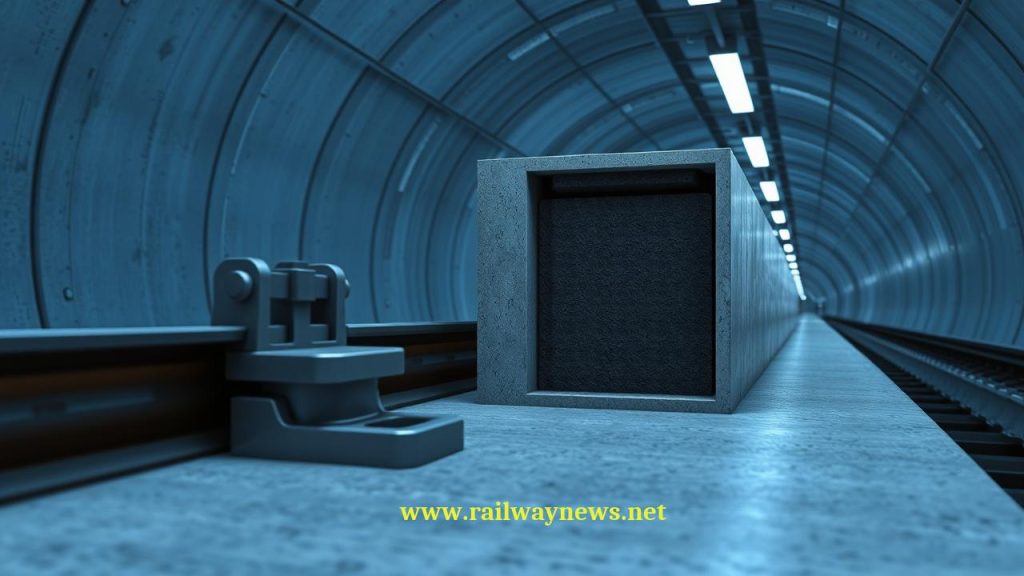
Understanding EN 13481-5: Performance Requirements for Slab Track Fastening Systems
EN 13481-5 is a crucial European Standard within the EN 13481 series that outlines the specific performance requirements and laboratory test procedures for fastening systems designed for slab track. This standard is critical for ensuring the safety, reliability, and interoperability of modern railway infrastructure, particularly in high-speed, metro, and tunnel applications where slab track is prevalent.
Unlike traditional ballasted track, slab track uses a solid concrete base to support the rails. The fastening system, therefore, plays an essential role in securing the rail to this rigid foundation while providing necessary elasticity, electrical insulation, and adjustability. EN 13481-5 specifically addresses two primary configurations: systems where the rail is mounted on the surface of the slab and systems where the rail is embedded within a channel in the slab.
The Scope of the Standard: Slab Track Configurations
The standard’s requirements are tailored to the unique challenges posed by slab track, which offers high stability and reduced maintenance at the cost of lower initial elasticity compared to ballasted track. The fastening system must compensate for this rigidity.
Two Main Configurations Covered by EN 13481-5
EN 13481-5 distinguishes between two fundamental design philosophies for slab track fastenings, each with distinct characteristics and applications.
- Surface-Mounted Systems: In this configuration, the rail sits on a baseplate or individual supports which are anchored directly onto the top surface of the concrete slab. This is a common arrangement for high-speed lines and conventional railways using slab track. It allows for easier inspection, adjustment, and replacement of components.
- Embedded Channel Systems: Here, the rail is placed within a pre-formed trough or channel within the concrete slab. The space around the rail is then filled with a resilient, often polymeric, material. This design offers superior vibration and noise damping, making it ideal for urban environments, tramways, and areas where acoustic performance is critical.
Comparison of Slab Track Fastening Configurations
| Feature | Surface-Mounted System | Embedded Channel System |
|---|---|---|
| Installation | Components (baseplates, clips, pads) are installed and anchored onto the finished slab surface. Requires precise alignment. | Rail is placed in a channel and encapsulated with a pourable, resilient material. |
| Maintenance & Adjustment | Relatively easy access to all components for inspection, adjustment of gauge/alignment, and replacement. | More complex to access and adjust. Rail replacement often requires removal of the encapsulating material. |
| Vibration & Noise Damping | Good, provided by the resilient pad and other components. Performance is dependent on the system’s dynamic stiffness. | Excellent, as the entire rail web is surrounded by a damping material, providing superior noise and vibration isolation. |
| Visual Profile | Traditional appearance of rail on a solid base. | Low-profile, seamless integration with surrounding pavement, often used in street-running tramways. |
| Common Applications | High-speed lines, tunnels, bridges, heavy-haul railways on slab. | Urban light rail, tramways, depots, and acoustically sensitive areas. |
Key Performance Requirements and Testing Procedures
To be compliant with EN 13481-5, a fastening system must pass a series of rigorous laboratory tests designed to simulate decades of operational loads and environmental exposure. These tests verify the following key performance parameters:
- Longitudinal Rail Restraint: This measures the system’s ability to resist the longitudinal movement of the rail caused by thermal expansion/contraction and train acceleration/braking. It is critical for the stability of continuously welded rail (CWR).
- Clamping Force: The force exerted by the clips or other components to hold the rail securely to the baseplate or support. Adequate clamping force is essential to prevent rail rollover and maintain track geometry.
- Torsional Resistance: This test assesses the assembly’s ability to resist the twisting moment exerted on the rail head by eccentric wheel loads, ensuring the rail remains upright.
- Dynamic Stiffness (Attenuation of Impact Loads): This measures how effectively the fastening system’s resilient components (e.g., rail pads) absorb and dampen the high-frequency impact loads from passing wheels. A lower dynamic stiffness generally indicates better vibration isolation.
- Fatigue Life: The system is subjected to millions of repeated load cycles that simulate the passage of trains to ensure no failure or significant degradation of performance occurs over its intended service life.
- Electrical Resistance: The test verifies the system’s ability to provide sufficient electrical insulation between the rail and the ground (concrete slab). This is vital for the correct operation of track-based signalling and train detection systems.
- Effect of Severe Environmental Conditions: The fastening system’s components are tested under exposure to water, freezing temperatures, and high temperatures to ensure their performance remains stable across a wide range of operational climates.
Significance and Application in the Railway Industry
Adherence to EN 13481-5 provides a benchmark for quality and ensures that fastening systems for slab track are fit for purpose. For infrastructure managers and engineers, specifying a compliant system guarantees a certain level of performance and long-term durability, which is paramount for slab track due to the high cost and disruption associated with corrective maintenance.
The standard facilitates interoperability across European rail networks by establishing a common set of technical requirements. It is universally applied in the design and procurement stages of major infrastructure projects, including:
- High-Speed Rail Lines
- Underground Metro Systems
- Railway Tunnels and Bridges
- Urban Tram and Light Rail Networks
Conclusion
EN 13481-5 is a highly technical and indispensable standard that underpins the safety and performance of modern slab track railways. By defining stringent requirements for both surface-mounted and embedded channel systems, it provides a clear framework for manufacturers to design robust products and for railway authorities to procure reliable solutions. Its focus on long-term performance through rigorous testing ensures that these critical components can withstand the demanding conditions of railway operation for decades.

Railway infrastructure, rolling stock and transport technologies specialist focused on global rail industry developments, high-speed rail systems, signaling technologies and freight transportation. Covering railway investments, public transport modernization, rail operations and international mobility projects across Europe, Asia and North America.