
EN 16839: Unifying Europe’s Rail Headstock Layout for Safety
EN 16839 standardizes railway headstock layouts, guaranteeing interoperability, safety, and efficiency for coupling rolling stock across the European network.
What is EN 16839: Railway Applications – Rolling Stock – Head Stock Layout?
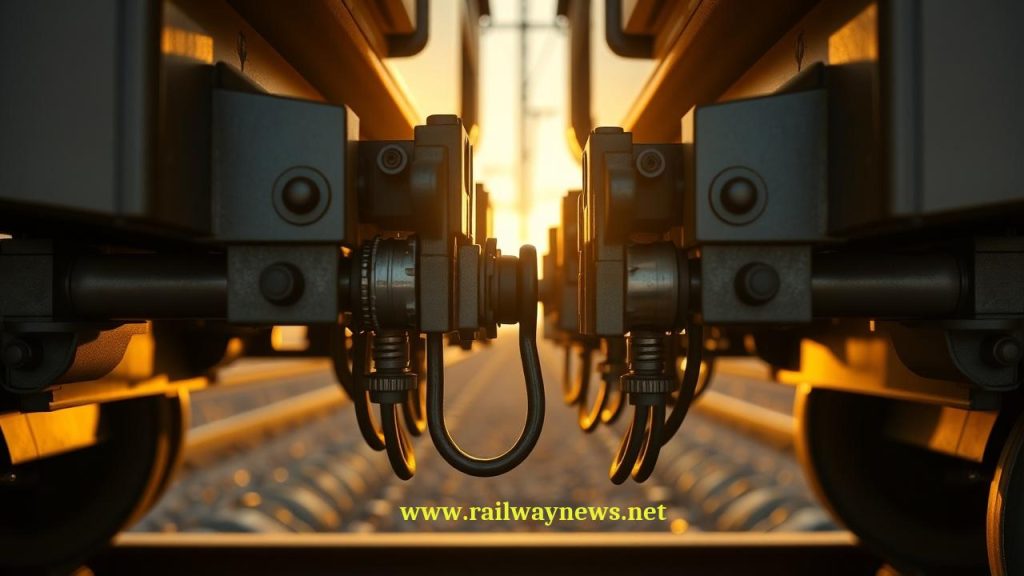
EN 16839 is a critical European Standard that specifies the geometric layout and arrangement of components on the headstocks of railway rolling stock. The headstock is the main transverse structural beam at the front and rear of a vehicle’s underframe. This standard defines the precise positioning of key interfacing equipment, such as buffers, draw gear, and pneumatic/electrical connections, to ensure mechanical and operational compatibility between different vehicles across the European railway network.
The primary goal of EN 16839 is to achieve interoperability. By mandating a standardized layout, the standard guarantees that locomotives, wagons, and passenger coaches from various manufacturers and operators can be safely and efficiently coupled together, forming a coherent train consist.
Purpose and Scope of the Standard
The scope of EN 16839 is to establish a uniform framework for the physical arrangement of the headstock. It does not define the performance characteristics of the individual components (e.g., the energy absorption capacity of a buffer) but rather their location and the space reserved for them. Key objectives include:
- Ensuring Mechanical Compatibility: To define the standard positions for buffers and draw gear, preventing geometric mismatches during coupling that could lead to derailment or equipment damage.
- Defining Spatial Envelopes: To specify the required free space (clearance envelope) around the coupling equipment to allow for safe manual or automatic coupling and uncoupling operations.
- Standardizing Connection Points: To allocate specific locations for pneumatic brake pipes (main brake pipe, main reservoir pipe) and electrical connections, ensuring they can be connected without interference.
- Enhancing Safety: By creating a predictable and consistent interface, the standard minimizes risks for shunting yard personnel and ensures secure mechanical coupling between vehicles.
Key Technical Requirements of EN 16839
EN 16839 provides detailed geometric constraints and dimensions for the headstock layout. These technical specifications are fundamental to its function.
Buffer Configuration
The standard precisely defines the geometry for the installation of buffers, which are the primary energy-absorbing devices used in conventional European coupling systems.
- Buffer Height: It specifies a nominal height for the buffer centerline above the top of the rail. This is crucial to ensure that buffers on adjacent vehicles align correctly under various load and track conditions.
- Buffer Spacing: The standard mandates the transverse distance between the centerlines of the two buffers on a headstock. This fixed dimension ensures that buffers make proper contact and distribute forces evenly during train operation.
- Buffer Face: While the design of the buffer face (e.g., flat or convex) is covered by other standards, EN 16839 ensures their placement is consistent.
Draw Gear and Coupling Systems
The draw gear is the system used to transmit traction and braking forces between vehicles. EN 16839 defines the spatial requirements for its installation.
- Draw Hook Position: It specifies the height of the draw hook centerline, aligning it with the buffers to ensure forces are transmitted along a consistent horizontal plane.
- Free Space for Coupler Head: A critical aspect of the standard is the definition of a “free space envelope” or “clearance box” around the draw gear. This reserved space must be kept clear of any obstructions to accommodate the movement of the coupler head during curving, negotiation of vertical gradients, and the physical act of coupling.
- Compatibility with Automatic Couplers: The defined free space is also designed to facilitate the future migration to, or current use of, automatic coupling systems by ensuring sufficient room is available for their larger mechanical heads and associated connections.
Connections (Pneumatic and Electrical)
To operate a train as a single unit, pneumatic and electrical lines must be connected between vehicles. EN 16839 allocates standardized positions for these connections to prevent entanglement and ensure accessibility.
- Brake Pipes: The standard defines the locations for the air brake pipe couplings (e.g., main brake pipe and main reservoir pipe), typically specifying their position relative to the vehicle’s centerline and height from the rail.
- Electrical Jumper Cables: Locations for electrical connectors, such as those for train line control, communication, or head-end power (HEP), are also designated to avoid interference with the mechanical and pneumatic systems.
Comparison Table: Standardized vs. Non-Standardized Headstocks
The impact of applying EN 16839 becomes clear when comparing a compliant layout with a non-standardized one.
| Feature | EN 16839 Compliant Layout | Non-Standardized Layout |
|---|---|---|
| Interoperability | Guaranteed compatibility with all other compliant rolling stock across the European network. | Limited or impossible interoperability; vehicles may only be compatible with a specific fleet or operator. |
| Safety | High level of safety due to predictable alignment of buffers and couplers, preventing buffer-locking and overriding. | Increased risk of accidents during coupling, buffer mismatch, and potential for derailment under compressive loads. |
| Operational Efficiency | Fast and efficient train formation and shunting operations, as personnel work with a consistent interface. | Slow and complex operations, often requiring specific adapter vehicles or facing restrictions on train composition. |
| Maintenance & Design | Simplified design for manufacturers and straightforward component replacement for maintainers. | Custom, bespoke designs for each vehicle type, leading to higher manufacturing costs and complex spare parts logistics. |
Conclusion
EN 16839 is more than just a dimensional document; it is a foundational pillar of railway interoperability in Europe. By creating a unified and predictable layout for the vehicle headstock, the standard ensures that the vast and diverse fleets of rolling stock can operate together as a seamless, safe, and efficient system. It underpins the flexibility of rail freight and passenger transport, allowing for the free movement of trains across national borders and promoting a more integrated and competitive railway sector.

Railway infrastructure, rolling stock and transport technologies specialist focused on global rail industry developments, high-speed rail systems, signaling technologies and freight transportation. Covering railway investments, public transport modernization, rail operations and international mobility projects across Europe, Asia and North America.