
Safety in the Dark: UIC IF 4 Tunnel Risks
Safety in the dark. A technical guide to UIC IF 4 (IF 4/91), the foundational report on managing fire risks, dangerous goods, and evacuation strategies in underground railway lines.
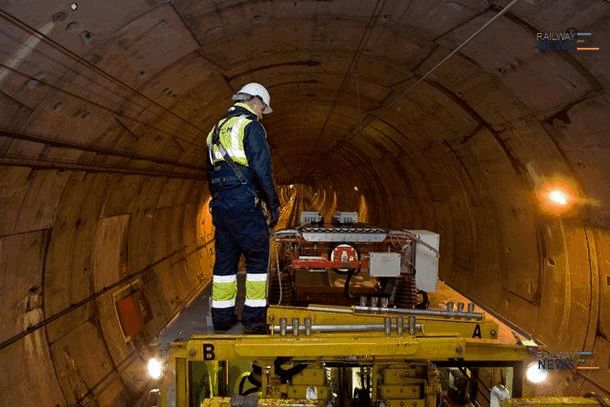
Introduction to UIC IF 4
Before the modern European laws (TSI SRT) governed tunnel safety, the UIC IF 4 report (specifically IF 4/91) was the “bible” for handling disasters underground. Titled “Measures to limit and reduce the risk of accidents in underground railway installations,” it addressed the nightmare scenario of every railway operator: a fire or derailment in a confined, inaccessible tube deep underground.
While modern standards like EN 45545 (Fire Safety) and TSI SRT have superseded parts of it, UIC IF 4 remains a critical reference for understanding the holistic “System Safety” approach—combining infrastructure (exits), rolling stock (materials), and operations (rules)—especially regarding the transport of Dangerous Goods through tunnels.
Snippet Definition: What is UIC IF 4?
UIC IF 4 (often cited as IF 4/91) is a technical document/report issued by the UIC focusing on safety in underground railway installations. It provides recommendations for reducing the probability and consequences of accidents, with a specific focus on Fire Protection and the transport of Dangerous Goods. It established early principles for evacuation routes, emergency lighting, and ventilation strategies that influenced later European standards.
The Three Pillars of Tunnel Safety
UIC IF 4 structured the safety logic into three layers, a concept still used today:
1. Prevention (Don’t let it happen)
The best accident is the one that never occurs.
- Rolling Stock: Using non-flammable materials (precursor to modern fire standards).
- Maintenance: Detecting hot axle boxes (hot box detectors) before the train enters the tunnel.
- Dangerous Goods: Restrictions on which chemicals can be transported in passenger tunnels or during peak hours.
2. Mitigation (Limit the damage)
If a fire starts, the tunnel design must stop it from spreading.
- Structure: Fire resistance of the concrete lining to prevent collapse.
- Ventilation: Systems to control smoke flow (e.g., longitudinal vs. transverse ventilation) to keep the escape route clear.
3. Evacuation and Rescue (Get people out)
UIC IF 4 heavily emphasized the “Self-Rescue” principle.
- Walkways: Mandating side walkways with handrails (typically >70cm wide).
- Lighting: Emergency lighting that works even if the main power (catenary) fails.
- Access: Defined distances for emergency exits or cross-passages to a safe parallel tube.
Dangerous Goods in Tunnels
One of the most significant contributions of UIC IF 4 is its guidance on RID (Regulation concerning the International Carriage of Dangerous Goods by Rail) in the context of tunnels. It helps operators assess the risk of allowing a tanker full of chlorine or petrol to pass through a specific urban tunnel versus routing it around the city.
Comparison: UIC IF 4 vs. TSI SRT
The legacy guideline vs. the modern law.
| Feature | UIC IF 4 (Guideline) | TSI SRT (European Law) |
|---|---|---|
| Status | Technical Recommendation / Best Practice. | Mandatory EU Regulation for new tunnels. |
| Scope | Broad (Operational + Infrastructure). | Strictly Subsystem-based (Infra, Energy, Rolling Stock). |
| Fire Safety | General principles on non-flammability. | Strict material testing categories (EN 45545). |
| Running Capability | Encouraged trains to exit the tunnel. | Mandates specific “Running Capability” (e.g., 15 mins) for fire scenarios. |

Railway infrastructure, rolling stock and transport technologies specialist focused on global rail industry developments, high-speed rail systems, signaling technologies and freight transportation. Covering railway investments, public transport modernization, rail operations and international mobility projects across Europe, Asia and North America.