
EN 16586-2: Europe’s New Standard for PRM Boarding Safety
Discover EN 16586-2: the vital standard ensuring safe, accessible train boarding for Persons with Reduced Mobility through robust design and operational requirements.
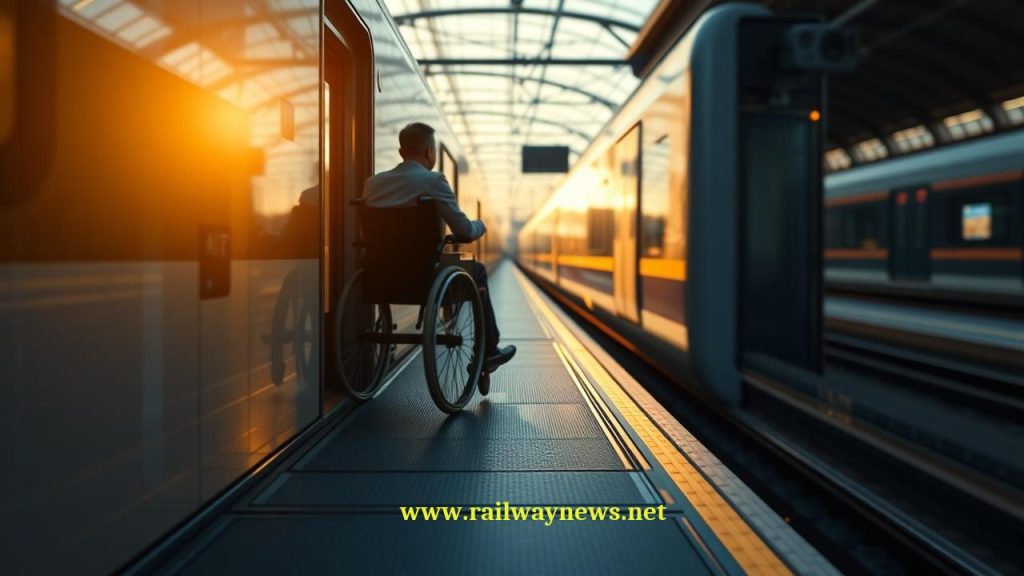
Understanding EN 16586-2: Boarding Aids for PRM Accessibility in Rolling Stock
EN 16586-2 is a European Standard that specifies the technical requirements for boarding aids on railway rolling stock, designed to ensure safe and accessible entry and exit for Persons with Reduced Mobility (PRM). This standard is a crucial part of the broader EN 16586 series, which addresses the overall design for PRM use in railway applications.
What is the Core Purpose of EN 16586-2?
The primary objective of EN 16586-2 is to standardize the design, safety features, and operational characteristics of boarding aids such as ramps and lifts. By establishing uniform requirements, the standard aims to provide a reliable, safe, and consistent boarding experience for PRM across different types of rolling stock and networks, thereby promoting interoperability and independent travel.
Key Technical Objectives
- Safety: To define minimum safety criteria to prevent accidents during the deployment, use, and stowing of boarding aids. This includes load capacity, surface properties, and fail-safe mechanisms.
- Functionality: To ensure that boarding aids can effectively bridge the horizontal and vertical gap between the platform and the train floor under various operational conditions.
- Usability: To specify ergonomic and intuitive control systems for both staff and, where applicable, PRM users, including clear visual and audible signals.
- Interoperability: To align with the requirements set forth in the Technical Specifications for Interoperability for Persons with Reduced Mobility (TSI-PRM), facilitating seamless travel across European rail networks.
Technical Specifications and Design Requirements in EN 16586-2
EN 16586-2 provides detailed technical requirements that manufacturers and operators must adhere to when designing and implementing boarding aids. These requirements cover the entire lifecycle of the equipment, from design and construction to operation and maintenance.
Types of Boarding Aids Covered
The standard applies to various types of boarding aids that are integrated into the rolling stock. The main categories include:
- On-board Ramps: These can be manual, semi-automatic, or fully automatic. The standard dictates their maximum permissible slope (gradient), minimum usable width, and surface characteristics.
- On-board Lifts: Platform lifts designed to vertically transport a PRM user, typically in a wheelchair, from the platform level to the vehicle floor level. The standard covers platform dimensions, lifting capacity, and operational speeds.
- Movable Steps: While less common for wheelchair users, the standard also addresses requirements for movable or bridging steps that can assist ambulatory PRM.
Critical Design and Safety Requirements
- Load Capacity: Boarding aids must be designed to support a specified minimum static and dynamic load, typically accounting for a heavy powered wheelchair and its occupant (e.g., at least 300 kg).
- Slope (Gradient): For ramps, the standard defines maximum slopes depending on the vertical height to be overcome. Steeper slopes are only permissible for very small height differences to ensure user safety and ease of use.
- Surface Properties: The usable surface of any boarding aid must be slip-resistant, even in wet conditions. It should also have a plain colour that contrasts with its surroundings to be clearly visible.
- Edge Protection: Ramps and lift platforms must feature upstands or barriers along the sides to prevent wheelchair casters or walking aids from slipping off the edge. These upstands must have a specified minimum height.
- Operational Safety: Automatic and semi-automatic systems must be equipped with safety features to detect obstructions during deployment and retraction. Additionally, interlock systems are required to prevent the train from moving while the boarding aid is deployed.
- Illumination: The area of operation, including the platform and the vehicle entrance, must be adequately illuminated to ensure visibility during use, particularly at night or in tunnels.
- Controls: Operating controls must be clearly labelled with universal symbols, be easy to use, and be positioned to give the operator a clear view of the entire boarding procedure.
Comparison of Common Boarding Aids under EN 16586-2
The choice between a ramp and a lift often depends on the rolling stock design, typical platform heights, and operational constraints. The following table compares these two primary types of aids based on criteria outlined in the standard.
| Feature | On-board Ramp | On-board Lift |
|---|---|---|
| Primary Application | Best for bridging small to moderate vertical and horizontal gaps. | Necessary for large vertical gaps where a ramp’s slope would be too steep. |
| Mechanical Complexity | Relatively simple, especially manual versions. Fewer moving parts. | More complex, involving hydraulic or electromechanical systems for vertical movement. |
| Deployment Speed | Generally faster, particularly for manual or semi-automatic types. | Slower due to the vertical travel cycle and associated safety checks. |
| Space Requirement | Requires significant longitudinal space on the platform when deployed. | Requires less platform outreach but more structural space within the vehicle for the lifting mechanism. |
| Key EN 16586-2 Focus | Strict limits on slope, minimum width, surface grip, and edge protection height. | Minimum platform dimensions, safe working load, emergency operation, and platform stability. |
| User Interaction | User (or assistant) must propel the wheelchair up/down the slope. | Provides a passive, level transition for the user, requiring no physical effort from them. |
The Role of EN 16586-2 in the Regulatory Framework
EN 16586-2 is a “harmonised standard,” meaning compliance with it provides a “presumption of conformity” with the essential requirements of the relevant European legislation, most significantly the TSI-PRM. For rolling stock manufacturers and rail operators, adhering to this standard is the most direct way to demonstrate that their vehicles meet the legal accessibility mandates, ensuring their products can be certified for use across the EU.
Conclusion: A Standard for Dignity and Independence
In summary, EN 16586-2 is a highly technical and essential standard that translates the principle of accessibility into concrete engineering specifications. By defining robust requirements for the design and operation of boarding aids, it plays a vital role in removing barriers to travel for Persons with Reduced Mobility. It ensures that boarding a train is not an obstacle but a safe, reliable, and dignified process, fostering greater independence and inclusion in public transport.
Frequently Asked Questions (FAQ) about EN 16586-2

Railway infrastructure, rolling stock and transport technologies specialist focused on global rail industry developments, high-speed rail systems, signaling technologies and freight transportation. Covering railway investments, public transport modernization, rail operations and international mobility projects across Europe, Asia and North America.