
EN 16585-3: Key PRM Clearway & Door Specs for EU Rail
Unlock inclusive rail travel with EN 16585-3. This standard details clearway and internal door design, ensuring safe, independent access for all Persons with Reduced Mobility.
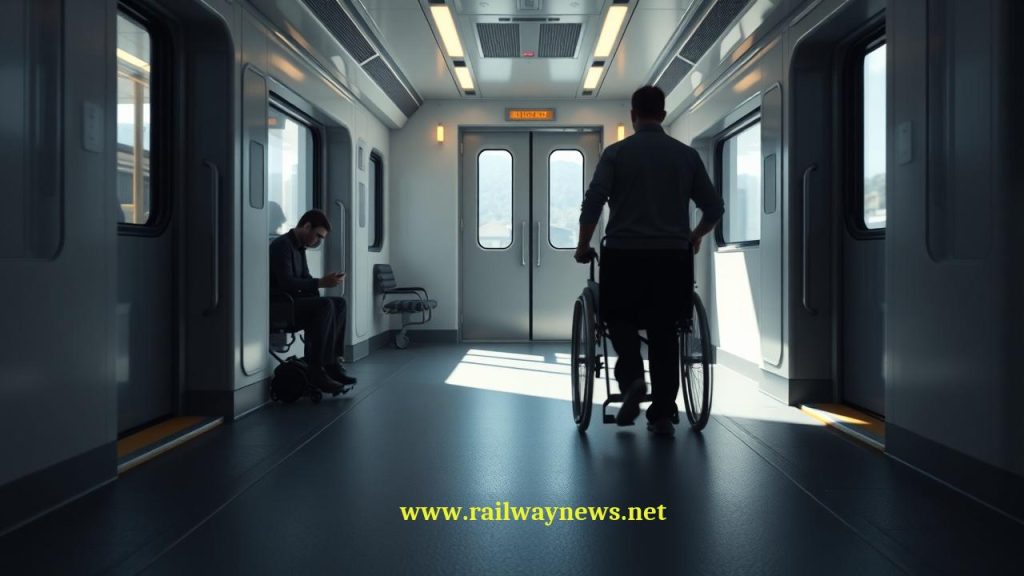
Understanding EN 16585-3: Clearways and Internal Doors for PRM Accessibility in Rolling Stock
EN 16585-3 is a key European Standard within the railway sector that provides detailed technical specifications for the design of clearways and internal doors on board rolling stock. Its primary objective is to ensure safe, independent, and comfortable movement for Persons with Reduced Mobility (PRM), including wheelchair users, individuals with sensory impairments, and those carrying luggage. This standard is a part of the larger EN 16585 series, which addresses various aspects of PRM accessibility on trains.
Compliance with this standard is critical for manufacturers and operators to meet the mandatory requirements set out in the Technical Specifications for Interoperability for Persons with Reduced Mobility (TSI PRM), ensuring a consistent and high level of accessibility across European rail networks.
Core Objectives of the Standard
The standard is built upon several foundational principles aimed at removing barriers to travel for PRM passengers:
- Independence: To enable PRM passengers to navigate the interior of a train, including moving between carriages and accessing facilities like universal toilets, without needing assistance.
- Safety: To define parameters for floor surfaces, door operations, and obstacle-free paths that minimize the risk of accidents, slips, or trips.
- Clarity and Consistency: To standardize dimensions, operational forces, and visual/audible cues, creating a predictable and intuitive environment for all passengers.
- Interoperability: To ensure that rolling stock designed and built in different countries can operate across the European network while providing a uniform level of accessibility.
Technical Requirements for Clearways
A “clearway” refers to the unobstructed path that a passenger, particularly a wheelchair user, must navigate to move through the train. EN 16585-3 sets forth precise requirements for these routes.
Minimum Width Requirements
The width of a clearway is its most critical parameter. The standard specifies different minimum widths depending on the context:
- Standard Clearway Width: The minimum unobstructed width for a straight path, such as a gangway or corridor, must be sufficient to allow a reference wheelchair to pass through without difficulty. This is typically specified at 800 mm.
- Passing Areas: In longer corridors or carriages, areas must be provided where one wheelchair user can pass another or where a wheelchair can turn. These areas require a significantly larger width, often around 1300 mm.
- Manoeuvring Space: Ample space must be provided in front of doors and other facilities to allow a wheelchair user to approach, operate the controls, and pass through.
Height and Overhead Obstructions
The clearway must also be free from low-hanging obstacles. The standard defines a minimum vertical clearance to prevent injury and ensure passage for standing passengers and those in taller powered wheelchairs. This includes considerations for luggage racks, ceiling-mounted displays, and other fixtures.
Floor Surfaces and Gradients
To ensure stability and safety, floor surfaces within clearways must adhere to strict criteria:
- Slip Resistance: Floors must be made of non-slip materials, especially in areas prone to getting wet, such as gangways between carriages.
- Minimal Glare: The surface should have a matt finish to prevent glare, which can be disorienting for visually impaired passengers.
- Gradients: Any ramps or slopes within the clearway must not exceed a specified gradient to ensure they are manageable for manual wheelchair users and do not pose a risk of runaway wheelchairs. Handrails are often required alongside steeper or longer ramps.
Technical Requirements for Internal Doors
Internal doors, whether manual or powered, are critical gateways within the clearway. EN 16585-3 ensures they are easy and safe to use for everyone.
Doorway Dimensions and Operation
The physical characteristics of the doorway and its mechanism are precisely defined:
- Clear Opening Width: The effective clear width of an internal doorway when fully open must be at least 800 mm to match the standard clearway dimension.
- Operating Forces: For manually operated doors, the force required to open them must be minimal (e.g., not exceeding 25 N) so they can be used by people with limited upper body strength.
- Powered Door Controls: For automatic or powered doors, the control buttons must be located at an accessible height (typically between 700 mm and 1100 mm from the floor), be visually contrasted with their background, and provide tactile feedback.
Visual and Audible Indicators
To assist passengers with sensory impairments, doors must provide clear signals:
- Visual Cues: The edges of the door leaves must contrast visually with the surrounding wall to be easily identifiable. Indicators may also signal when the door is opening or closing.
- Audible Signals: Powered doors are required to emit an audible signal before and during their closing cycle to warn passengers who may be in the path of the door.
Safety Features
Safety is paramount in door design, especially for powered systems:
- Obstacle Detection: Powered doors must be equipped with sensitive detection systems (e.g., pressure-sensitive edges or infrared sensors) that immediately stop and reverse the door’s movement if an obstruction is detected.
- Dwell Time: The door must remain fully open for a minimum period before initiating the closing sequence, allowing sufficient time for a PRM passenger to pass through without being rushed.
Comparison Table: Key Requirements of EN 16585-3
| Feature | Clearway Requirements | Internal Door Requirements |
|---|---|---|
| Minimum Width | Minimum 800 mm for straight passage; wider for turning/passing zones. | Minimum 800 mm clear opening width. |
| Surface | Non-slip, non-glare material. Gradients must be within specified limits. | Thresholds must be flush or minimized to avoid being an obstacle. |
| Operation | N/A (describes a passive path). | Low force for manual doors. Accessible, tactile controls for powered doors. |
| Sensory Cues | Good lighting and colour contrast to define the path. | Visual contrast on door edges. Audible and visual signals for powered door movement. |
| Safety | Free of tripping hazards and overhead obstacles. Handrails on ramps. | Obstacle detection systems on powered doors. Defined minimum “dwell time” when open. |
The Importance of EN 16585-3 in Modern Railway Design
EN 16585-3 is more than just a technical document; it is a blueprint for inclusive public transportation. By standardizing the fundamental aspects of onboard circulation, it ensures that rolling stock is genuinely usable by the widest possible range of passengers. For rolling stock manufacturers, adherence to this standard is a mark of quality and a prerequisite for compliance with European regulations. For operators, it fosters a welcoming environment, enhances the passenger experience, and broadens their customer base by making rail travel a viable option for everyone.
Frequently Asked Questions (FAQ) about EN 16585-3

Railway infrastructure, rolling stock and transport technologies specialist focused on global rail industry developments, high-speed rail systems, signaling technologies and freight transportation. Covering railway investments, public transport modernization, rail operations and international mobility projects across Europe, Asia and North America.