
EN 16207: Why Europe’s New Brake Standard Matters for Rail
EN 16207: the standard guaranteeing magnetic track brake safety, reliability, and interoperability for railways. Essential for robust emergency braking and enhanced network security.
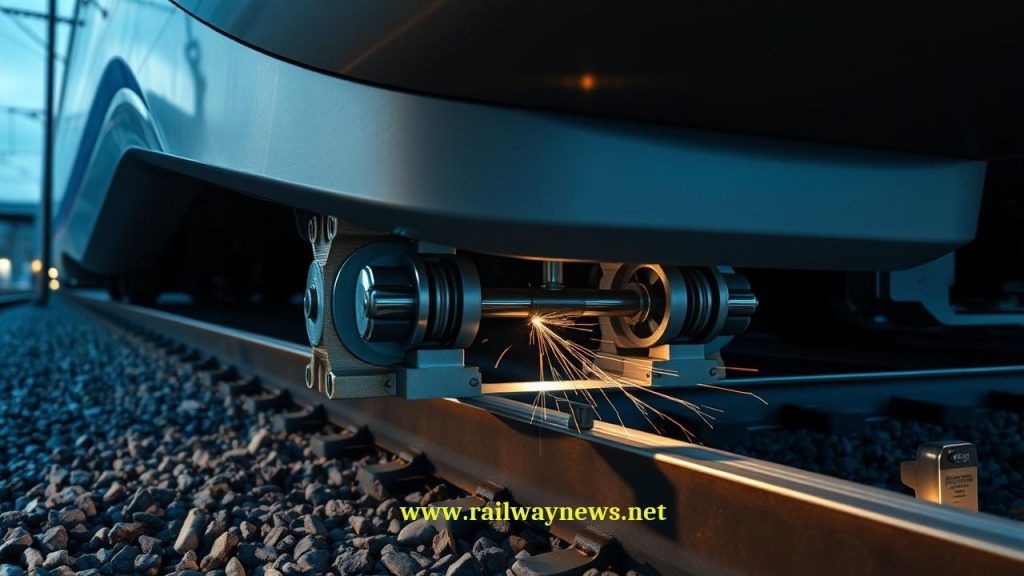
Understanding EN 16207: Functional and Performance Criteria for Magnetic Track Brake Systems
EN 16207 is a European Standard that specifies the functional and performance requirements for magnetic track brake (MTB) systems used in railway rolling stock. The standard’s primary objective is to ensure the safety, reliability, and interoperability of these crucial braking components across different railway networks and vehicle types.
A magnetic track brake is a supplementary braking device that operates independently of the wheel-rail adhesion. It generates braking force by creating a strong magnetic field between an electromagnet and the steel rail, providing significant deceleration capability, especially during emergency braking scenarios where conventional friction brakes may be limited by wheel slide.
Scope and Importance of the Standard
The scope of EN 16207 covers the design, construction, testing, and performance validation of complete magnetic track brake systems. This includes the electromagnets, suspension gear, actuation mechanisms, and control interfaces. The standard is vital for:
- Manufacturers: Providing a clear framework for designing and producing compliant and safe MTB systems.
- Rolling Stock Operators: Ensuring that the braking systems on their vehicles meet established safety and performance benchmarks.
- Approval Bodies: Offering a definitive set of criteria for the homologation and certification of new or modified rolling stock.
- Interoperability: Facilitating the seamless operation of trains across national borders by harmonizing technical requirements, a key principle of the Technical Specifications for Interoperability (TSIs).
Key Technical Aspects Defined by EN 16207
EN 16207 explores specific technical details to ensure every aspect of the MTB system is robust and reliable. These requirements can be broken down into several core areas.
1. System Design and Construction
The standard outlines critical requirements for the physical components of the MTB system. This includes specifications for materials, mechanical strength, and resistance to environmental factors.
- Electromagnets: Requirements cover the coil windings, magnetic core materials, and housing. The design must ensure consistent magnetic flux generation and withstand the significant mechanical and thermal stresses experienced during operation.
- Suspension and Actuation: The mechanism for lowering (deploying) and raising (retracting) the brake magnets is critical. EN 16207 specifies criteria for pneumatic, hydraulic, or electro-mechanical actuators, including their response times and fail-safe behavior (e.g., retracting in case of power loss).
- Environmental Resilience: The system must be designed to operate reliably across a wide range of environmental conditions, including temperature extremes, humidity, ice, snow, and exposure to ballast impacts and vibrations.
2. Functional and Performance Criteria
This is the core of the standard, defining ‘how well’ the brake must perform. It sets quantifiable targets that systems must meet during type testing.
- Braking Force: The standard specifies the minimum braking force the MTB must generate as a function of the vehicle’s speed. This force is a critical parameter for calculating overall vehicle stopping distances.
- Response Times: Clear time limits are set for the deployment and retraction of the brake. This includes the time from the command signal to the magnets making full contact with the rail and generating the required braking force.
- Thermal Capacity: During braking, the magnets and rails generate immense heat. EN 16207 defines requirements for the system’s ability to withstand and dissipate this heat without performance degradation or damage over repeated applications.
- Control System Integration: The standard mandates how the MTB control system must integrate with the train’s overall braking control system (e.g., the Emergency Brake Control). It ensures predictable and safe activation logic.
3. Testing and Validation
To verify compliance, EN 16207 prescribes a rigorous series of tests that must be successfully completed.
- Type Tests: Performed on a new design to validate its performance against all requirements of the standard. This includes static force measurements, dynamic braking tests on a test track, and endurance tests.
- Routine Tests: Simpler tests performed on every manufactured unit to ensure consistent quality and performance, verifying aspects like electrical resistance and actuator functionality.
- Dynamic Testing: Involves installing the system on a test vehicle and performing a series of controlled stops from various speeds to measure the actual braking force and its effect on deceleration.
Comparison of Magnetic Track Brake Types
While EN 16207 applies broadly, MTB designs differ based on their intended application, primarily between high-speed mainline vehicles and lower-speed urban or tramway vehicles.
| Feature | High-Speed Articulated MTB | Low-Speed (Tramway/LRV) MTB |
|---|---|---|
| Primary Application | Mainline passenger trains, high-speed trains. Used for emergency and supplementary braking. | Trams, Light Rail Vehicles (LRVs), and Metros. Often used as a primary emergency brake. |
| Design Principle | Often features multiple articulated magnet segments to maintain better contact with the rail over track imperfections and turnouts at high speed. | Typically a single, rigid magnet pole shoe per bogie. Design is simpler and more robust for urban environments. |
| Braking Force Profile | Optimized for high-energy dissipation from high speeds. Braking force is high and must be consistent across a wide speed range. | Designed for maximum holding force at lower speeds to prevent collisions in dense urban traffic. |
| Actuation & Suspension | Complex suspension to manage high vertical and longitudinal forces. Usually pneumatically actuated. | Simpler, more direct suspension. Can be spring-applied and electromagnetically held off, or electromagnetically applied. |
| Key EN 16207 Consideration | Endurance testing, thermal capacity, and performance consistency at speeds over 160 km/h. | Reliability over a high number of activation cycles and performance in contaminated track conditions (e.g., leaves, grease). |
Conclusion: The Role of EN 16207 in Enhancing Railway Safety
EN 16207 is more than just a technical document; it is a cornerstone of modern railway braking safety. By establishing a unified and demanding set of criteria for magnetic track brake systems, it ensures a high and consistent level of safety performance. The standard guarantees that these adhesion-independent systems can be relied upon during critical emergency situations, significantly reducing stopping distances and mitigating the risk of accidents, especially in adverse weather conditions. For engineers, operators, and regulators, compliance with EN 16207 is a non-negotiable step in the pursuit of a safer and more reliable railway network.

Railway infrastructure, rolling stock and transport technologies specialist focused on global rail industry developments, high-speed rail systems, signaling technologies and freight transportation. Covering railway investments, public transport modernization, rail operations and international mobility projects across Europe, Asia and North America.