
EBRD Boosts Albania Rail: Sustainable Infrastructure & Growth
EBRD loans €30M for Albanian rail electrification, boosting Durrës-Rrogozhinë line, a key EU project.
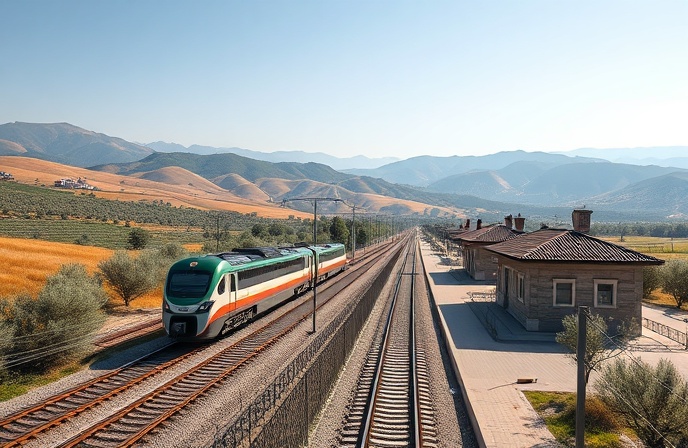
EBRD Bolsters Albania’s Rail Renaissance with EUR 30 Million Loan
The European Bank for Reconstruction and Development (EBRD) is deepening its commitment to Albania’s railway modernization, announcing a EUR 30 million sovereign loan. This investment will fuel the electrification and detailed rehabilitation of the Durrës–Rrogozhinë railway line, a pivotal project in the nation’s transport overhaul. This initiative, unveiled recently, addresses the ‘what’ – infrastructure upgrades; the ‘who’ – EBRD, Albanian government, and Hekurudha Shqiptare (Albanian Railways); the ‘when’ – a timely investment aligning with broader EU goals; the ‘where’ – the crucial line connecting the port city of Durrës to Rrogozhinë, central Albania; the ‘why’ – to foster sustainable transport, bolster regional connectivity, and facilitate a modal shift from road to rail; and the ‘how’ – through strategic financing and collaborative efforts. This article explores the significance of this investment, its impact on Albania’s transportation landscape, and the broader implications for regional infrastructure development and sustainable transport initiatives within the Western Balkans.
Strategic Funding and Collaborative Framework
The EUR 30 million loan from the EBRD forms a crucial component of a larger financial package. It is strategically paired with an additional EUR 30 million loan from the European Investment Bank (EIB) and EUR 60 million in investment and technical assistance grants from the European Union (EU) via the Western Balkans Investment Framework (WBIF). This coordinated approach, with the EIB and EU funding already formalized earlier in the year, underscores a commitment to collaborative financing. This investment strategy ensures sufficient financial resources are available to modernize the Albanian rail infrastructure. The project is part of a larger initiative supporting Albania’s National Strategies for green transport and regional development. This ensures the success of the project, by offering long-term sustainability and aligns with the EU’s Economic and Investment Plan for the Western Balkans.
Transforming the Durrës–Rrogozhinë Line: A Critical Upgrade
The core of this project is the detailed revitalization of the 34 km Durrës–Rrogozhinë railway line. This encompasses a complete reconstruction and electrification of the track, upgrading it to modern standards. Simultaneously, the project provides for the rehabilitation of station buildings along the route, which is essential for a superior customer experience. This is a key element in Albania’s plan to improve rail transport, improve efficiency, and ultimately encourage a modal shift from road to rail, reducing traffic congestion and carbon emissions. The upgraded line is integral to the Pan-European Corridor VIII – a multimodal transport network connecting southern Italy with the Black Sea ports. Upon completion, it will establish Albania’s first rail connection with North Macedonia, enhancing cross-border mobility and driving economic integration across the Western Balkans.
Environmental and Economic Benefits: Driving Sustainable Development
Beyond improved passenger and freight capacity, the project is designed to generate significant environmental dividends. The shift from road to rail will lead to a reduction in road traffic. As a result, there will be lower emissions and the promotion of energy-efficient transport solutions, in line with the EBRD’s Green Economy Transition (GET) approach, which emphasizes climate-resilient infrastructure and sustainability. This investment is aligned with the EU’s Economic and Investment Plan for the Western Balkans. Additionally, it is expected to bolster economic activity. The improved rail infrastructure will facilitate trade, reduce transportation costs, and stimulate overall economic growth in the region.
Industry Implications and Future Outlook
The EBRD’s continued financial support is a demonstration of confidence in Albania’s long-term growth and its commitment to sustainable transport solutions. The Durrës–Rrogozhinë project, therefore, serves as a model for how strategic financing can be leveraged to modernize railway networks and promote regional connectivity. Looking ahead, this project, as well as the previous EBRD-supported rail projects, is a critical investment to the future of Albanian railways. The project is likely to stimulate further investments in railway infrastructure and will benefit the whole Western Balkan region. The successful completion of this project will not only modernize Albania’s railways but also enhance cross-border cooperation, making the region more economically integrated and environmentally sustainable. The focus on sustainability, multimodal transport, and green technologies will benefit Albania.

Railway infrastructure, rolling stock and transport technologies specialist focused on global rail industry developments, high-speed rail systems, signaling technologies and freight transportation. Covering railway investments, public transport modernization, rail operations and international mobility projects across Europe, Asia and North America.
RELATED POSTS
October 1, 2026 10:14 am
HS2 installed a 55-metre steel span in Birmingham, completing phase...
October 1, 2026 11:13 am
Norfolk Southern expanded its 3B Corridor in Alabama in 2025,...
October 1, 2026 1:12 pm
CSX expanded Queensgate Yard in Cincinnati by installing 42 power...
October 1, 2026 9:10 am
Transpennine Route Upgrade launched a £270,000 fund on 28 September,...
October 1, 2026 11:14 pm
CATS confirmed a six-mile streetcar route in Charlotte to add...
October 2, 2026 12:12 am
Maywood Station Museum confirmed the completed cosmetic restoration of its...