
FTA Approves $164M For Broward County Commuter Rail
FTA approved $164 million in federal aid for Broward County Transit to advance a 10.5-mile commuter rail line into engineering on Florida East Coast tracks.
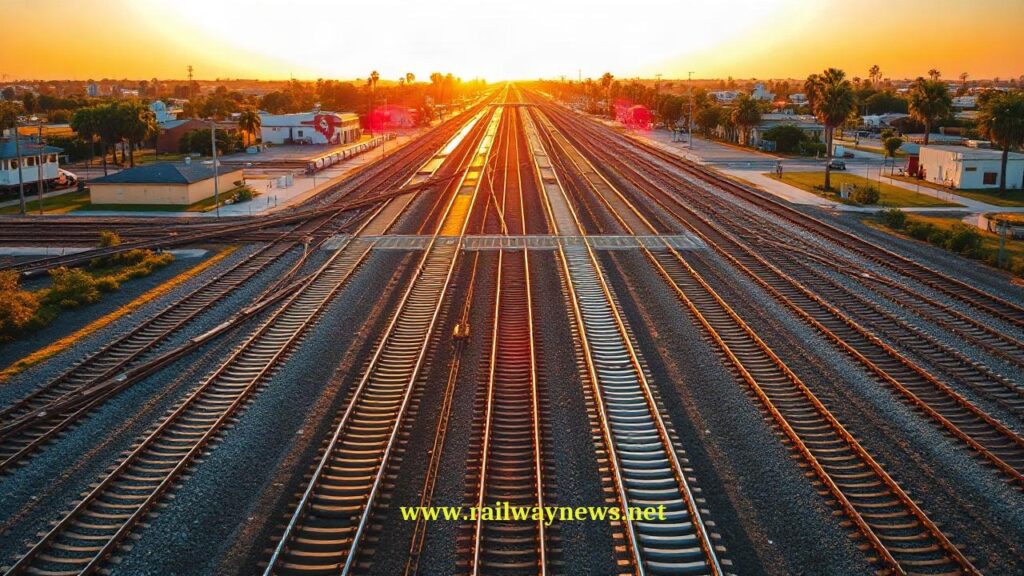
⚡ In Brief: The Federal Transit Administration approved the Broward County Commuter Rail South project in Florida to enter engineering, backed by $164 million in federal Capital Investment Grants funding to develop a 10.5-mile passenger corridor.
FORT LAUDERDALE, USA – The Federal Transit Administration (FTA) approved Broward County Transit’s Commuter Rail South project to enter the engineering phase, allocating $164 million under the Capital Investment Grants (CIG) program. The planned 10.5-mile passenger rail extension will run along the existing Florida East Coast Railway corridor between northeast Miami-Dade County and areas south of downtown Fort Lauderdale. Subject to congressional appropriations, the funding covers pre-construction works including utility relocations, demolition, property acquisition, and vehicle procurement for three planned stations.
What Is the Full Scope of This Project?
The Broward County Commuter Rail South project encompasses 10.5 miles of infrastructure upgrades along the Florida East Coast Railway to introduce scheduled passenger service across five municipal districts. The proposed alignment connects northeast Miami-Dade County to neighborhoods south of downtown Fort Lauderdale, adding dedicated stops at Hallandale Beach, Hollywood, and the Dania Beach/Airport District adjacent to Fort Lauderdale/Hollywood International Airport. Infrastructure works approved under the engineering phase include advanced civil engineering activities, corridor utility relocations, trackside demolition, real estate acquisition, and the procurement of specialized equipment alongside new passenger trainsets. However, the total capital expenditure required to complete construction and the target launch date for passenger service were not disclosed by project sponsors.
Key Project Data
| Parameter | Value |
|---|---|
| Project / Contract Name | Broward County Commuter Rail South |
| Total Value | $164 million (FTA CIG engineering phase commitment; total project cost not disclosed) |
| Parties Involved | Federal Transit Administration (FTA), Broward County Transit, Florida East Coast Railway (FEC) |
| Timeline / Completion | Engineering phase approved; revenue service date not disclosed |
| Country / Corridor | United States / Florida East Coast Railway (Miami-Dade–Broward County) |
How Does This Compare to Similar Projects?
Federal delivery mechanisms for major fixed guideway rail projects frequently encounter procedural and funding friction, as seen across peer North American transit schemes. While Broward County secured $164 million in CIG backing, the federal CIG framework has drawn criticism across the US transit sector for rigid compliance mandates that prioritize procedural sign-offs over dynamic risk mitigation, frequently extending project development timelines (Source: Institute for Progress, 2024). Similar federal funding challenges have affected other major passenger rail undertakings, notably California’s high-speed rail program, which faced prolonged funding shortfalls and procurement complications despite ongoing federal commitments (Source: CBS News, 2024). Across the broader North American market, passenger rail development has accelerated, with the high-speed and modern passenger segment capturing an estimated 47.60% of total rail sector investment by 2025 (Source: Precedence Research, 2025), alongside regional cross-border advances such as Canada’s Alto rail project entering active engineering between Ottawa and Montreal (Source: Railway Association of Canada, 2025).
Note: Independent verification of the total final construction cost and rolling stock contract value for the Broward County project was not available at time of publication.
Editor’s Analysis
Securing entry into the engineering phase marks a decisive transition for commuter rail in South Florida, yet the project’s reliance on discretionary federal appropriations leaves it vulnerable to federal budget cycles and procedural slowdowns. By integrating an airport connection along a shared freight alignment, Broward County Transit follows an expanding North American model of leveraging existing freight corridors to reduce right-of-way costs. This approach reflects a wider continental investment shift toward 200–299 km/h and commuter networks, which have driven North America to lead global rail growth in 2025 (Source: Precedence Research, 2025).
FAQ
Q: What is the Broward County Commuter Rail South project?
A: The Broward County Commuter Rail South project is a planned 10.5-mile passenger line operating on the Florida East Coast Railway corridor between Miami-Dade County and Fort Lauderdale. The service will include three stations, featuring a direct transfer point at Fort Lauderdale/Hollywood International Airport.
Q: What will the $164 million FTA grant fund?
A: The $164 million allocation from the Capital Investment Grants program will finance non-construction development activities, including civil engineering, utility relocation, demolition, and property acquisition. It will also cover the initial procurement of specialized materials and passenger rail vehicles, subject to congressional appropriations.
Q: When will construction start and passenger service begin?
A: Project sponsors have not disclosed an official ground-breaking date or revenue service commencement target. This has not been officially confirmed, as the project must first complete the engineering phase and secure a full funding grant agreement from the federal government.

Railway infrastructure, rolling stock and transport technologies specialist focused on global rail industry developments, high-speed rail systems, signaling technologies and freight transportation. Covering railway investments, public transport modernization, rail operations and international mobility projects across Europe, Asia and North America.
RELATED POSTS
October 8, 2026 1:15 pm
Alstom secured a €1bn contract to build 13 automated trains,...
October 1, 2026 7:09 am
United States regulators confirmed a September 30 deadline for the...

October 8, 2026 12:18 pm
Siemens Mobility signed an agreement with VinSpeed to supply 350...

October 4, 2026 5:14 pm
Alstom secured a CA$4.7 billion order from VIA Rail Canada...
October 5, 2026 6:12 pm
AECOM and Jacobs secured a contract in September 2026 to...
October 4, 2026 11:08 pm
Sound Transit confirmed the September 30 opening of Seattle Pinehurst...