
Albania Rail: Durrës-Rrogozhinë Line Upgrade & Sustainable Transport
EBRD loans €30M for Albanian railway modernization, focusing on Durrës-Rrogozhinë line. Project boosts EU integration and sustainable transport.
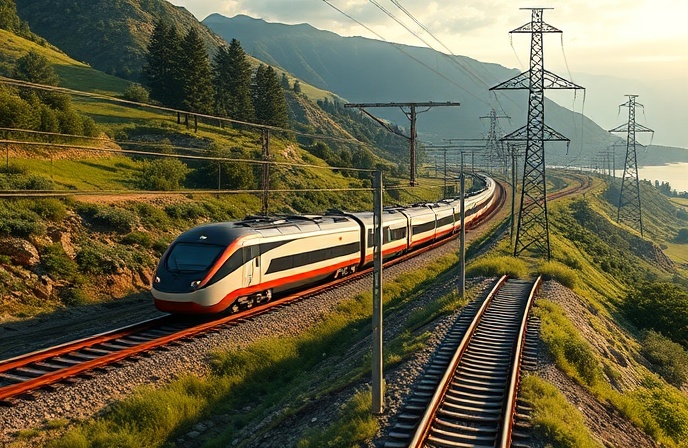
EBRD Fuels Albanian Rail Renaissance with EUR 30 Million Loan for Durrës-Rrogozhinë Line
The European Bank for Reconstruction and Development (EBRD) is bolstering Albania’s railway modernization efforts with a significant financial injection. The EBRD is providing a EUR 30 million sovereign loan to the Albanian government for the electrification and rehabilitation of the critical Durrës–Rrogozhinë railway line. This strategic investment, announced this week, marks a pivotal moment in Albania’s quest to develop a modern, sustainable, and EU-aligned rail network. The project, slated for completion within the next few years, will drastically improve transport efficiency and contribute to Albania’s economic integration within the broader European transport network. The “who” is the EBRD and the Albanian government, the “what” is a loan for railway modernization, the “when” is now, the “where” is the Durrës–Rrogozhinë railway line in Albania, the “why” is to improve rail transport and reduce emissions, and the “how” is through electrification, reconstruction, and integration with EU standards. This article will delve into the specifics of the EBRD’s investment, its broader context within Albania’s railway strategy, and the potential impact on both national and regional transport dynamics.
Strategic Investment: Electrification and Rehabilitation of the Durrës–Rrogozhinë Line
The core of the EBRD’s commitment lies in the complete reconstruction and electrification of the 34-kilometer Durrës–Rrogozhinë railway line. This critical stretch, linking the port city of Durrës with Rrogozhinë in central Albania, forms a vital link within the country’s transport infrastructure. Beyond the electrification component, which will significantly reduce reliance on diesel-powered locomotives and align with environmental sustainability goals, the project encompasses a detailed rehabilitation of the existing track infrastructure. This includes the upgrade and modernization of the signaling systems and other trackside equipment, along with the rehabilitation of station buildings along the route. This investment strategy is central to Albania’s wider strategy to encourage a modal shift from road to rail, aiming to increase the efficiency of freight and passenger transportation, lower traffic congestion, and, ultimately, lower environmental pollution. This is the latest project that builds on previous successful EBRD-supported rail projects in Albania, showing continued commitment to the country.
A Coordinated Funding Approach: Synergies with EU and EIB Financing
The EBRD’s EUR 30 million loan is not an isolated initiative; it strategically complements other key financial contributions. The project is supported by a EUR 30 million loan from the European Investment Bank (EIB), with an additional EUR 60 million in investment and technical assistance grants from the European Union (EU) via the Western Balkans Investment Framework (WBIF). The WBIF is an EU mechanism that supports infrastructure projects across the Western Balkans, by assisting in the development of well-structured, investment-ready projects. The EIB and EU financing agreements were signed earlier this year. This coordinated funding approach underscores the international community’s commitment to enhancing Albania’s transport infrastructure and its integration with the wider European transport network. This multi-faceted financial support is essential for driving transformative infrastructure projects to success.
Pan-European Corridor VIII: Enhancing Regional Connectivity and Integration
The Durrës–Rrogozhinë line is an integral component of the Pan-European Corridor VIII, a vital multimodal transport route that will eventually connect southern Italy with the Black Sea ports of Bulgaria via Albania, North Macedonia, and Bulgaria. Once complete, this project will establish Albania’s first railway connection with North Macedonia, boosting cross-border mobility and enhancing economic integration throughout the Western Balkans. This connection will facilitate increased trade, reduce travel times for passengers and goods, and promote closer collaboration between countries in the region. This railway corridor, will enable easier movement of cargo, and offer significant benefits to Albanian businesses and citizens. Additionally, the alignment with EU standards assures that this railway network will enhance regional access and promote long-term economic growth.
Environmental and Economic Benefits: Green Transport and Sustainable Development
Beyond its operational advantages, the Durrës–Rrogozhinë project promises significant environmental benefits. By encouraging a modal shift from road to rail, the upgraded line will reduce road traffic, thereby lowering emissions, and promoting energy-efficient transport. The project aligns with the EU’s Economic and Investment Plan for the Western Balkans, which seeks to stimulate sustainable development and regional cooperation. Moreover, this is also in accordance with Albania’s national strategies for green transport and regional development. These are all crucial components of the EBRD’s Green Economy Transition (GET) approach, which prioritizes climate-resilient infrastructure and sustainability across all sectors. The project is expected to significantly contribute to Albania’s goal of adopting sustainable transport solutions and reducing its carbon footprint.
Conclusion
The EBRD’s EUR 30 million loan for the Durrës–Rrogozhinë railway line marks a significant step forward in Albania’s rail transport transformation. The project, bolstered by additional funding from the EIB and EU, represents a strategic investment in modernizing and electrifying a critical transport link. This initiative is expected to yield substantial environmental benefits, including lower emissions, and promoting the use of green and efficient transport methods. The focus on completing the Pan-European Corridor VIII highlights a commitment to enhance regional connectivity and integration. This project is a clear signal of Albania’s commitment to upgrade and sustain its infrastructure, while also working with the EU in the country’s push for economic development and integration. As the project progresses, it will be vital to monitor its progress to ensure it fulfills its intended environmental and economic benefits. Future projects could build off these advancements and help create a fully sustainable railway sector that drives both economic success and provides for a healthy environment.

Railway infrastructure, rolling stock and transport technologies specialist focused on global rail industry developments, high-speed rail systems, signaling technologies and freight transportation. Covering railway investments, public transport modernization, rail operations and international mobility projects across Europe, Asia and North America.
RELATED POSTS

October 8, 2026 1:15 pm
Alstom secured a €1bn contract to build 13 automated trains,...

October 1, 2026 7:09 am
United States regulators confirmed a September 30 deadline for the...

October 4, 2026 5:14 pm
Alstom secured a CA$4.7 billion order from VIA Rail Canada...

October 5, 2026 6:12 pm
AECOM and Jacobs secured a contract in September 2026 to...

October 1, 2026 12:13 am
Illinois approved $1.5 billion annually for the Northern Illinois Transit...

October 4, 2026 11:08 pm
Sound Transit confirmed the September 30 opening of Seattle Pinehurst...