
Audi Invests $4B in Rail-Served Georgia Assembly Plant
Audi invested $4 billion in a Georgia assembly plant linked to Norfolk Southern Railway to move up to 200,000 finished vehicles each year by 2031.
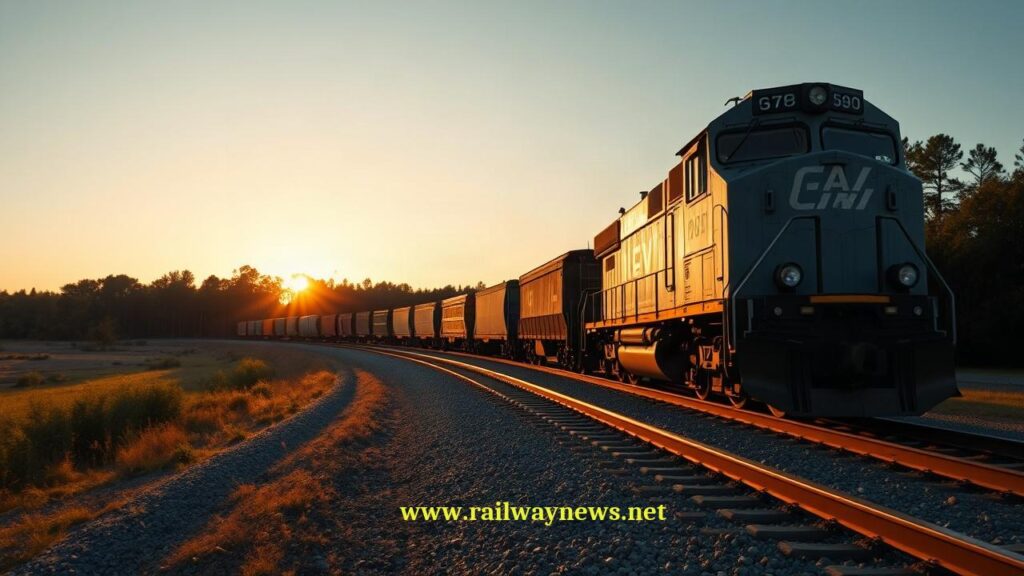
⚡ In Brief: Audi AG will invest $4 billion to construct its first U.S. assembly plant at the Middle Georgia Megasite, linking directly to Norfolk Southern’s rail network to handle up to 200,000 finished vehicles annually.
FORT VALLEY, United States – Audi AG finalized plans in October 2026 to invest $4 billion in its first U.S. assembly plant at the Middle Georgia Megasite in Peach County. Site grading begins in 2027 ahead of primary construction in 2028, leading to an operational launch scheduled for 2031. The facility will create 4,500 manufacturing jobs and rely on Norfolk Southern Railway for direct port and inland intermodal connections.
What Is the Full Scope of This Project?
Audi’s $4 billion manufacturing facility covers an annual assembly capacity of 200,000 vehicles integrated with direct dual-port rail freight service. Site preparation spans the Middle Georgia Megasite, where Norfolk Southern line infrastructure will move components and finished vehicles between the facility and maritime gateways at the Port of Savannah and the Port of Brunswick in under five hours. Total capital allocation covers plant production units, assembly lines, and on-site rail siding tracks connecting directly to the regional Class I main line, with initial earthwork starting in 2027 and target volume operations slated for 2031.
Key Project Data
| Parameter | Value |
|---|---|
| Project / Contract Name | Audi Middle Georgia Manufacturing Facility |
| Total Value | $4 billion |
| Parties Involved | Audi AG, State of Georgia, Peach County, Norfolk Southern Railway |
| Timeline / Completion | Grading 2027; Construction 2028; Full Production 2031 |
| Country / Corridor | United States / Norfolk Southern Georgia Port Corridor (Savannah–Brunswick–Atlanta) |
How Does This Compare to Similar Projects?
Audi’s 200,000-unit facility mirrors recent automotive-rail logistics cluster investments across the southeastern United States that tie inland assembly directly to coastal deepwater terminals. However, direct financial commitments for dedicated rail sidings and yard switching infrastructure inside the Middle Georgia site were not disclosed by project sponsors. The broader rail logistics sector supporting automotive distribution is expanding, with the global rail freight market reaching between $325.0 billion and $370.0 billion in 2025 at an anticipated 4.5% compound annual growth rate driven largely by intermodal expansion (Source: Grandview Research, 2025; Future Market Insights, 2025). Independent verification of comparative freight rate structures between Norfolk Southern and regional competitors along this corridor was not available at time of publication.
Editor’s Analysis
Audi’s selection of a Class I-adjacent megasite reflects automotive original equipment manufacturers prioritizing guaranteed rail port transit times under five hours over lower-cost interior land parcels. Securing direct access to Norfolk Southern tracks gives the carmaker essential capacity to clear finished automobiles to Savannah and Brunswick before highway bottlenecks escalate. This strategy aligns with projections indicating sustained intermodal volume increases across North American freight corridors through 2030 (Source: Future Market Insights, 2025).
FAQ
Q: Which railroad will serve the new Audi assembly plant in Georgia?
A: Norfolk Southern Railway directly serves the Middle Georgia Megasite in Peach County. The carrier provides freight transit times under five hours to both the Port of Savannah and the Port of Brunswick.
Q: What is the production capacity and construction timeline for the site?
A: Site grading will commence in 2027, followed by building construction in 2028 and target commercial production in 2031. At full scale, the $4 billion facility will assemble up to 200,000 vehicles per year.
Q: How much capital is allocated specifically for on-site rail tracks and switches?
A: The specific capital expenditure breakdown for on-site rail infrastructure and spurs has not been officially confirmed. The aggregate investment figure disclosed by Audi and the State of Georgia remains fixed at $4 billion.

Railway infrastructure, rolling stock and transport technologies specialist focused on global rail industry developments, high-speed rail systems, signaling technologies and freight transportation. Covering railway investments, public transport modernization, rail operations and international mobility projects across Europe, Asia and North America.
RELATED POSTS
October 8, 2026 1:15 pm
Alstom secured a €1bn contract to build 13 automated trains,...
October 1, 2026 7:09 am
United States regulators confirmed a September 30 deadline for the...
October 8, 2026 12:18 pm
Siemens Mobility signed an agreement with VinSpeed to supply 350...
October 4, 2026 5:14 pm
Alstom secured a CA$4.7 billion order from VIA Rail Canada...
October 5, 2026 6:12 pm
AECOM and Jacobs secured a contract in September 2026 to...
October 1, 2026 12:13 am
Illinois approved $1.5 billion annually for the Northern Illinois Transit...