
Delhi Metro: Driverless Trains & Tech Innovation
The Delhi Metro Rail Corporation (DMRC) successfully implemented driverless train operations on its Magenta Line in December 2020 and plans to launch them on the Pink Line, marking a significant milestone in India’s urban mass transit system that showcases technological innovation and forward-thinking approaches.
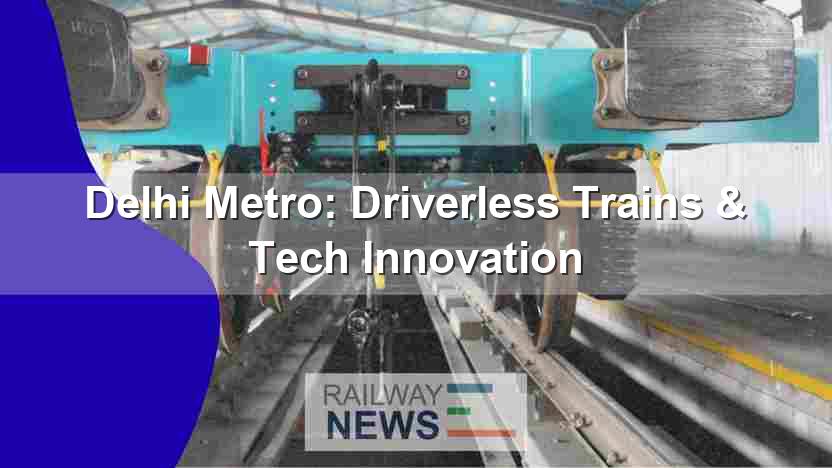
This article explores the significant advancements in Delhi’s Metro Rail Corporation (DMRC) system, focusing on the transition towards driverless train operations. We will examine the technological developments, the strategic partnerships involved, and the broader implications of this shift for the future of urban mass transit in India. The introduction of driverless trains represents a pivotal moment, not only for the DMRC but also for the global railway industry, showcasing India’s growing capabilities in advanced transportation technologies. The DMRC’s journey, from its inception in 2002 with a modest 8.2 km line connecting Shahdara and Tis Hazari, to its current extensive network spanning nearly 392 km and 286 stations, illustrates remarkable growth. This expansion has necessitated technological innovation to maintain operational efficiency and passenger safety, leading to the implementation of driverless technology and the development of sophisticated training and monitoring systems. The successful deployment of driverless trains on the Magenta Line in December 2020 and the imminent launch on the Pink Line underscores the DMRC’s commitment to technological advancement and its forward-thinking approach to urban transportation solutions.
The Inauguration of Driverless Technology on the Magenta and Pink Lines
The Delhi Metro Rail Corporation (DMRC) made history with the inauguration of driverless train operations on the Magenta Line (December 2020), followed by the upcoming launch on the 57km Pink Line. This represents a significant leap forward in the automation of metro systems, enhancing efficiency, safety, and passenger experience. The successful implementation of this technology showcases DMRC’s capability to integrate advanced signaling and control systems into its existing infrastructure. The driverless operations rely on sophisticated Automatic Train Operation (ATO) and Automatic Train Protection (ATP) systems. ATO manages the train’s acceleration, deceleration, and speed, ensuring smooth and punctual operation. Simultaneously, ATP provides crucial safety features, automatically halting the train in case of any system failures or emergency situations. This dual-system approach provides both operational efficiency and a robust safety net.
The Development of Indigenous Training and Monitoring Systems
In parallel with the deployment of driverless trains, the DMRC, in collaboration with Bharat Electronics Limited (BEL), has developed a Rolling Stock Driver Training System (RSDTS). This indigenously developed simulator provides a realistic training environment for metro train operators, allowing them to practice various scenarios and hone their skills. The RSDTS significantly enhances training efficiency and safety, allowing for the standardization of operator training across the DMRC network. The development of such a system is crucial for the efficient transition to automated operations, enabling the retraining of existing staff to support the new technology and the future training of new operators in the complexities of managing a driverless system. Alongside the RSDTS, a Super Supervisory Control and Data Acquisition (SCADA) system is implemented to monitor train operations, equipment health, and overall network performance. This real-time monitoring capability facilitates proactive maintenance and efficient resource allocation, ensuring the smooth and reliable operation of the entire metro system.
Strategic Partnerships and Technological Advancement
The success of the DMRC’s driverless initiatives is a testament to effective collaboration between public and private sectors. The partnership between DMRC and BEL for the development of the RSDTS is a prime example of such a strategic alliance. This collaboration has not only accelerated the development and deployment of advanced technologies but also promoted the growth of indigenous technological capabilities in the Indian railway sector. The MoU (Memorandum of Understanding) between the two organizations emphasizes the commitment to technological self-reliance and the creation of a robust domestic ecosystem for railway technology development and maintenance. The development of the RSDTS and the implementation of the SCADA system are key examples of this commitment. The adoption of LED lighting across DMRC facilities further showcases the initiative’s dedication to energy efficiency and environmentally sustainable practices.
Conclusion
The DMRC’s transition to driverless train operations represents a significant milestone in India’s urban transportation infrastructure development. The successful implementation of driverless technology on the Magenta and forthcoming Pink Lines demonstrates a commitment to technological advancement, safety, and efficiency. The development of the indigenous RSDTS and the integration of a detailed SCADA system underscore the DMRC’s focus on building technological capabilities and ensuring operational excellence. The strategic partnership with BEL highlights the benefits of collaboration between public and private entities in driving technological innovation. The adoption of driverless technology not only improves operational efficiency and reduces manpower requirements but also enhances passenger safety and comfort. This transition signifies a broader movement towards smarter, more sustainable, and technologically advanced urban transportation systems, setting a benchmark for other metro systems in India and globally. The DMRC’s journey from a relatively small network to a large, technologically advanced system is inspiring, showcasing the potential of careful planning, strategic partnerships, and a commitment to innovation in creating modern and efficient urban transit solutions. The future implications of this development are vast, promising increased efficiency, reduced operational costs, and a more enjoyable commuting experience for the millions of passengers using the Delhi Metro system daily. Additionally, the development of indigenous technology sets a precedent for other railway systems in India and abroad, showcasing India’s capacity for innovation in the global transportation sector.

Railway infrastructure, rolling stock and transport technologies specialist focused on global rail industry developments, high-speed rail systems, signaling technologies and freight transportation. Covering railway investments, public transport modernization, rail operations and international mobility projects across Europe, Asia and North America.
RELATED POSTS

October 8, 2026 1:15 pm
Alstom secured a €1bn contract to build 13 automated trains,...

October 4, 2026 5:14 pm
Alstom secured a CA$4.7 billion order from VIA Rail Canada...

October 1, 2026 12:13 am
Illinois approved $1.5 billion annually for the Northern Illinois Transit...

October 5, 2026 6:12 pm
AECOM and Jacobs secured a contract in September 2026 to...

October 4, 2026 11:08 pm
Sound Transit confirmed the September 30 opening of Seattle Pinehurst...

October 5, 2026 1:13 pm
New York MTA confirmed a late 2026 DEIS release for...