
Union Pacific Completes 8-Mile Rail Replacement Near Aztec Arizona
Union Pacific completed an 8-mile rail replacement near Aztec, Arizona, in 16 days, enhancing network reliability.
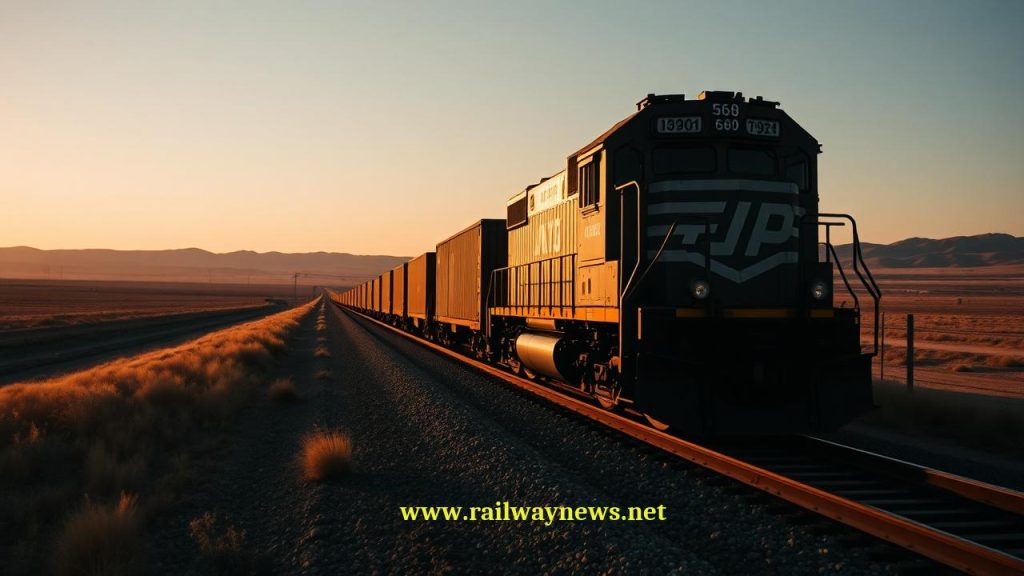
⚡ In Brief: Union Pacific’s Rail Gang 9001 completed an 8-mile rail replacement project in 16 days near Aztec, Arizona, as part of the company’s ongoing capital investments to enhance network reliability in a volatile freight market.
PHOENIX, USA – Union Pacific (UP) recently completed a key infrastructure maintenance project southwest of Phoenix, where its Engineering Rail Gang 9001 installed 8 miles of new rail in 16 days. The project near Aztec, Arizona, is a component of UP’s system-wide capital investment program aimed at improving track conditions. The specific financial value of this track segment renewal was not disclosed.
What Is the Full Scope of This Project?
The project involved the complete replacement of 8 miles (approximately 12.9 km) of mainline track, executed at an average rate of 0.5 miles per day. A team utilizing 24 pieces of heavy equipment performed the work, which included removing old rail, milling ties, and installing new tie plates before laying, spiking, and anchoring the new steel. To mitigate the effects of cool winter temperatures on the steel, crews used a rail-heating process to achieve the correct neutral temperature during installation, ensuring track integrity.
Key Project Data
| Parameter | Value |
|---|---|
| Project / Contract Name | Rail Gang 9001 Rail Replacement |
| Total Value | Not disclosed |
| Parties Involved | Union Pacific |
| Timeline / Completion | Completed in 16 days (specific 2026 dates not provided) |
| Country / Corridor | USA / Arizona |
How Does This Compare to Similar Projects?
Direct, publicly available performance metrics for comparable rail gang projects from other Class I operators are limited, making a direct efficiency comparison difficult. However, the investment in specialized engineering work aligns with broader market trends where capital is flowing into critical infrastructure. In late 2025, private equity dealmaking in the construction and engineering sector reached record levels, with a surge in activity for specialty engineering driven by demand for project management and electrification-related work (Source: PitchBook, 2025). This indicates a strong investment appetite for the type of specialized, high-capital work demonstrated in UP’s Arizona project.
Editor’s Analysis
This project highlights a core strategy for Class I railroads: prioritizing state-of-good-repair investments to bolster network efficiency and service reliability, particularly as the logistics sector navigates freight volatility. By focusing capital on core track assets, operators like Union Pacific aim to improve operational performance and capture demand as economic conditions improve. This focus on internal asset optimization comes at a time when the broader industrial market is seeing rising vacancy rates and some equipment manufacturers report declining new orders, suggesting a strategic shift from expansion to efficiency (Source: GlobeSt.com, TradingView).
FAQ
Q: What was the installation rate for UP’s rail gang on this project?
A: The crew installed 8 miles of new rail over a 16-day period. This equates to an average installation rate of 0.5 miles, or approximately 2,640 feet, of new track per day.
Q: Why did the crew need to heat the rail during installation?
A: The crew used a rail-heating process to bring the steel to its “neutral temperature.” This procedure prevents the rail from contracting excessively in the cold, which could cause tensile stress and potential fractures, ensuring the track remains stable across temperature fluctuations.
Q: How does this track maintenance fit into the current rail freight market?
A: In a market characterized by freight volatility and regulatory challenges, maintaining mainline infrastructure is critical for operational efficiency and safety. This investment by Union Pacific supports service reliability, which is essential for competing for freight volume as the logistics sector stabilizes and GDP growth continues (Source: GroundBreak Carolinas, GlobeSt.com).

Railway infrastructure, rolling stock and transport technologies specialist focused on global rail industry developments, high-speed rail systems, signaling technologies and freight transportation. Covering railway investments, public transport modernization, rail operations and international mobility projects across Europe, Asia and North America.
RELATED POSTS

October 1, 2026 7:09 am
United States regulators confirmed a September 30 deadline for the...

October 8, 2026 1:15 pm
Alstom secured a €1bn contract to build 13 automated trains,...

October 4, 2026 5:14 pm
Alstom secured a CA$4.7 billion order from VIA Rail Canada...

October 1, 2026 12:13 am
Illinois approved $1.5 billion annually for the Northern Illinois Transit...

October 6, 2026 2:14 am
Union Pacific launched export rail shipments with Ferromex to deliver...

October 1, 2026 6:10 am
Amtrak approved a System Expansion Committee on July 30 to...