
CPK Launches €2.37B HSR Train Procurement in Poland
CPK launched a €2.37B HSR train buy via its new ROSCO subsidiary Port Polska.KDP for Poland’s Warsaw–Łódź–airport corridor, with first tenders due in late 2025.
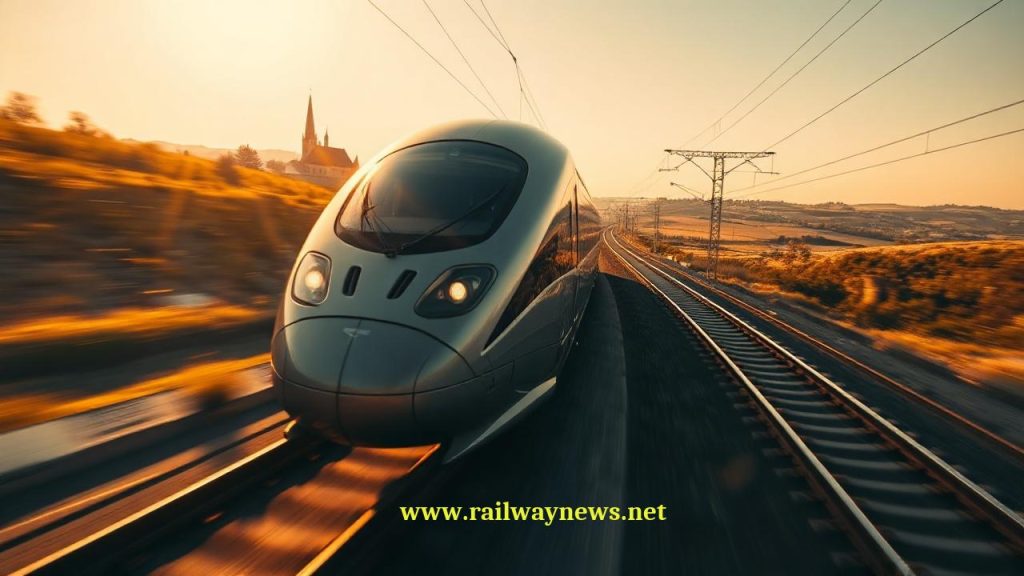
⚡ In Brief: CPK has established Port Polska.KDP, a ROSCO-type rolling stock leasing company, to procure high-speed trains with an estimated programme value exceeding €2.37 billion for Poland’s future HSR network connecting Warsaw, Łódź, and the new central airport.
WARSAW, POLAND – Centralny Port Komunikacyjny (CPK) has created a dedicated rolling stock leasing subsidiary, Port Polska.KDP, to procure trains for Poland’s planned high-speed rail lines with an estimated programme value exceeding €2.37 billion (10.1 billion zlotys). The company will operate under the ROSCO model and launch tenders for two train categories—HSR and AEX/RE—toward the end of 2025. Financing will combine €408 million in bond issuances with equity and commercial instruments, according to CPK’s 2024–2032 Multi-Year Programme.
How Is the Funding Structured?
The €2.37 billion programme divides into two streams: €408 million (1.74 billion zlotys) sourced from bond issuances, with the remaining approximately €1.96 billion coming from equity contributions and commercial financing instruments. CPK has engaged EY as a financial adviser and has already distributed an investment memorandum to potential financial partners and capital market institutions. The ROSCO structure improves credit access compared to individual rail operators, since a leasing company’s creditworthiness does not depend on winning time-limited operating contracts. The total programme cost covers both train procurement and construction of maintenance depot facilities.
Key Funding Data
| Parameter | Value |
|---|---|
| Fund / Programme Name | Port Polska.KDP Rolling Stock Procurement Programme |
| Total Value | €2.37 billion (10.1 billion zlotys) |
| Parties Involved | CPK, Port Polska.KDP, EY (financial adviser), undisclosed financial partners |
| Timeline / Completion | Tenders for both train categories expected late 2025; full procurement timeline not disclosed |
| Country / Corridor | Poland; Warsaw–Łódź–central airport HSR corridor |
How Does This Compare to Similar Funding Programs?
The €2.37 billion allocation places Port Polska.KDP among the larger single-country HSR rolling stock programmes in Central and Eastern Europe. By comparison, the Czech Republic’s 2024 framework contract with Škoda Group for 200 EMUs was valued at approximately €3.3 billion, though that covered multiple categories including regional units. In Western Europe, the UK’s three major ROSCOs—Angel Trains, Eversholt Rail Group, and Porterbrook—collectively manage rolling stock portfolios valued at over £15 billion, but individual procurement programmes typically range between £400 million and £1.2 billion per fleet order. (Source: UK Office of Rail and Road, 2024; Czech Ministry of Transport, 2024) Poland’s shift toward public-private financing partnerships mirrors the budget pressures CPK faces; the overall CPK project cost has been publicly reported as escalating from an initial $45 billion estimate to as high as $231 billion in some analyses. Specific train quantities, per-unit costs, and the split between HSR and AEX/RE categories remain undisclosed by CPK at this stage.
Editor’s Analysis
Port Polska.KDP represents a structural bet that Poland’s passenger rail market will liberalise on schedule after 2030 under the Fourth Railway Package, creating demand for a neutral rolling stock lessor unaffiliated with any single operator. The ROSCO model solves a genuine financing bottleneck: operators bidding for competitive service contracts cannot easily commit to 30-year train procurement cycles. By absorbing that risk onto a state-backed balance sheet, CPK mirrors the model that enabled UK rail privatisation in the 1990s—but with a government entity, not private capital, as the initial owner. The parallel pursuit of two train categories simultaneously suggests CPK intends to lock in pricing before further supply-chain inflation, a tactic also observed in SNCF’s TGV M order and Renfe’s Avril procurement. The undisclosed train quantity is the critical missing variable—without it, per-unit cost comparisons against similar European procurements remain impossible. (Source: European Union Agency for Railways, 2024)
FAQ
Q: What is a ROSCO and why is Poland using this model?
A: A ROSCO (Rolling Stock Operating Company) owns and leases trains to rail operators rather than operators purchasing trains directly. This structure allows easier financing and insulates train availability from changes in operating contract awards, which matters as Poland prepares for full passenger rail liberalisation after 2030 under the Fourth Railway Package.
Q: When will the first high-speed trains be ordered under this programme?
A: CPK has stated that tenders for both HSR and AEX/RE train categories will launch toward the end of 2025. No delivery timeline or in-service date has been officially confirmed by the company.
Q: Which manufacturers are expected to bid for the Port Polska.KDP tenders?
A: CPK sent a request for information to passenger rolling stock manufacturers in mid-2025 and has indicated it wants Polish manufacturers involved. However, no specific manufacturer names or bidder shortlists have been disclosed publicly.

Railway infrastructure, rolling stock and transport technologies specialist focused on global rail industry developments, high-speed rail systems, signaling technologies and freight transportation. Covering railway investments, public transport modernization, rail operations and international mobility projects across Europe, Asia and North America.
RELATED POSTS

October 8, 2026 1:15 pm
Alstom secured a €1bn contract to build 13 automated trains,...

October 1, 2026 7:09 am
United States regulators confirmed a September 30 deadline for the...

October 8, 2026 12:18 pm
Siemens Mobility signed an agreement with VinSpeed to supply 350...

October 4, 2026 5:14 pm
Alstom secured a CA$4.7 billion order from VIA Rail Canada...

October 1, 2026 12:13 am
Illinois approved $1.5 billion annually for the Northern Illinois Transit...
October 5, 2026 1:13 pm
New York MTA confirmed a late 2026 DEIS release for...