
Webuild Completes 27 km Lima Metro Tunnel Excavation
Webuild completed the 27 km tunnel excavation for Lima Metro Line 2 in Peru, reducing Ate–Callao travel time from over 2.5 hours to 45 minutes.
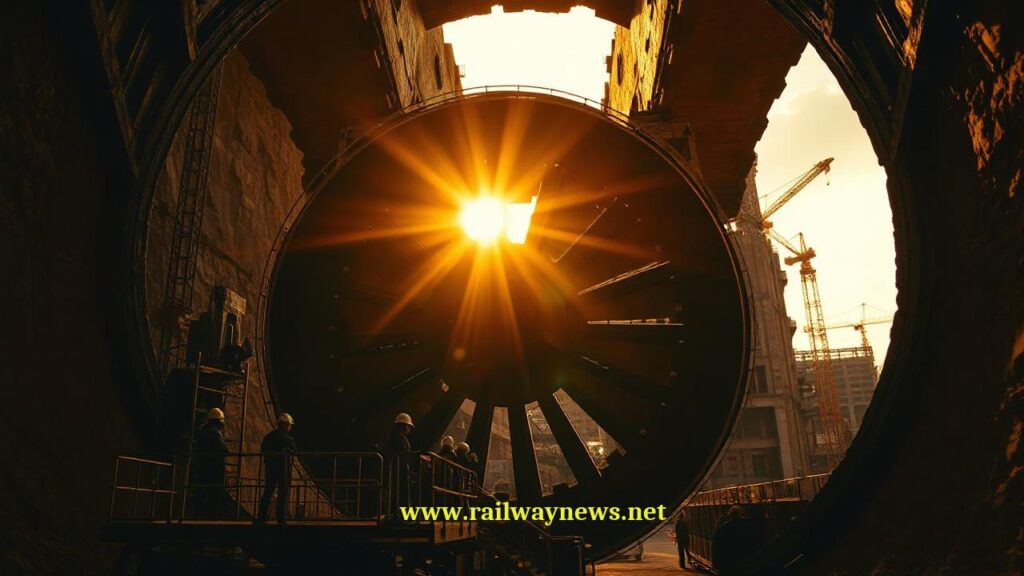
⚡ In Brief: Webuild and its partners completed excavation of 27 km of tunnels for Lima Metro Line 2, reducing the Ate–Callao travel time from over 2.5 hours to 45 minutes and serving an estimated 1 million passengers daily.
LIMA, Peru – Webuild, leading a consortium of European and Peruvian firms, finished excavating the 27 km tunnel network for Lima Metro Line 2. The milestone, marked by the breakthrough at Station 4, advances the city’s first fully underground metro line toward track laying and systems installation.
What Is the Full Scope of This Project?
The underground line extends 27 km from Ate district in the east to Callao in the west, linking residential zones, universities, logistics hubs, and Jorge Chávez International Airport. Two tunnel boring machines with cutting heads over 10 m in diameter bored at depths exceeding 12 m beneath one of Latin America’s most densely populated corridors. The contract includes construction and concession operation of Line 2 and a section of the future Line 4. Project planners estimate the metro will carry around 1 million daily riders once fully operational.
Key Project Data
| Parameter | Value |
|---|---|
| Project / Contract Name | Lima Metro Line 2 (and part of Line 4) |
| Total Value | Not disclosed |
| Parties Involved | Webuild (lead), European and Peruvian partners |
| Timeline / Completion | Tunnel excavation complete; track laying, systems and station fit-out ongoing; opening date not disclosed |
| Country / Corridor | Peru, Lima–Callao metropolitan corridor |
How Does This Compare to Similar Projects?
The 27 km twin tunnels place Lima’s new line among the longer underground metro segments in Latin America, surpassing Santiago Metro Line 7 (26 km under construction) but shorter than São Paulo Line 6–Orange (15.3 km). Webuild’s global portfolio provides a direct comparator: the company also executed 28 km of TBM-driven tunnels for the Riyadh Metro Red Line extension, bored through similarly challenging urban terrain (Source: TunnelingOnline, 2025). Beyond the scale of excavation, the Lima project stands out for its predicted passenger throughput—1 million daily riders is roughly double the current ridership of the entire Panama City Metro. Construction costs for the Lima tunnels have not been officially published, whereas comparable Latin American underground metro builds, such as Bogotá Metro Line 1, have public budgets exceeding USD 4 billion.
Editor’s Analysis
Completing the 27 km tunnel under Lima marks a turning point for Peruvian urban mobility: it shifts the project from heavy civil works to systems integration and station finishing. The 1 million-passenger-per-day forecast, if realized, would make Line 2 one of the busiest single metro lines in the Americas, placing it behind only lines in Mexico City, New York, and São Paulo. This milestone arrives as global subway infrastructure is projected to grow at a 9.8% CAGR through 2035, driven by governments seeking to offset chronic road congestion (Source: Market Research Future). With Lima’s chronic traffic costing an estimated 2–3% of GDP in lost productivity, early completion of system installation could yield outsized economic returns, though no revenue service date has been disclosed.
FAQ
Q: When will Lima Metro Line 2 open for passengers?
A: No official opening date has been announced. With tunnel excavation complete, the consortium now focuses on track laying, power, signalling, and station works; industry benchmarks suggest such phases can take 2–4 years.
Q: How many stations does the new line have?
A: The exact number of stations was not disclosed in the excavation announcement. Previous project documents indicate 27 stations along the 27 km alignment, but this was not reconfirmed by the consortium at the breakthrough milestone.
Q: What is the expected daily ridership of the line?
A: Authorities estimate the line will carry about 1 million passengers each day once fully operational, based on demand modeling for the Ate–Callao corridor.
Q: How deep are the tunnels bored?
A: The twin tunnels were bored at depths exceeding 12 metres below the surface, using two TBMs with cutting heads over 10 m in diameter.

Railway infrastructure, rolling stock and transport technologies specialist focused on global rail industry developments, high-speed rail systems, signaling technologies and freight transportation. Covering railway investments, public transport modernization, rail operations and international mobility projects across Europe, Asia and North America.
RELATED POSTS

October 8, 2026 1:15 pm
Alstom secured a €1bn contract to build 13 automated trains,...

October 8, 2026 12:18 pm
Siemens Mobility signed an agreement with VinSpeed to supply 350...

October 5, 2026 6:12 pm
AECOM and Jacobs secured a contract in September 2026 to...

October 1, 2026 12:13 am
Illinois approved $1.5 billion annually for the Northern Illinois Transit...

October 4, 2026 11:08 pm
Sound Transit confirmed the September 30 opening of Seattle Pinehurst...

October 1, 2026 6:10 am
Amtrak approved a System Expansion Committee on July 30 to...