
FS Logistix Launches Gioia Tauro-Livorno Auto Rail Corridor
FS Logistix, Automar and GTA launched a new permanent automotive rail corridor linking Livorno, Pontecagnano and Gioia Tauro cutting 4800 tons of CO₂ per year.
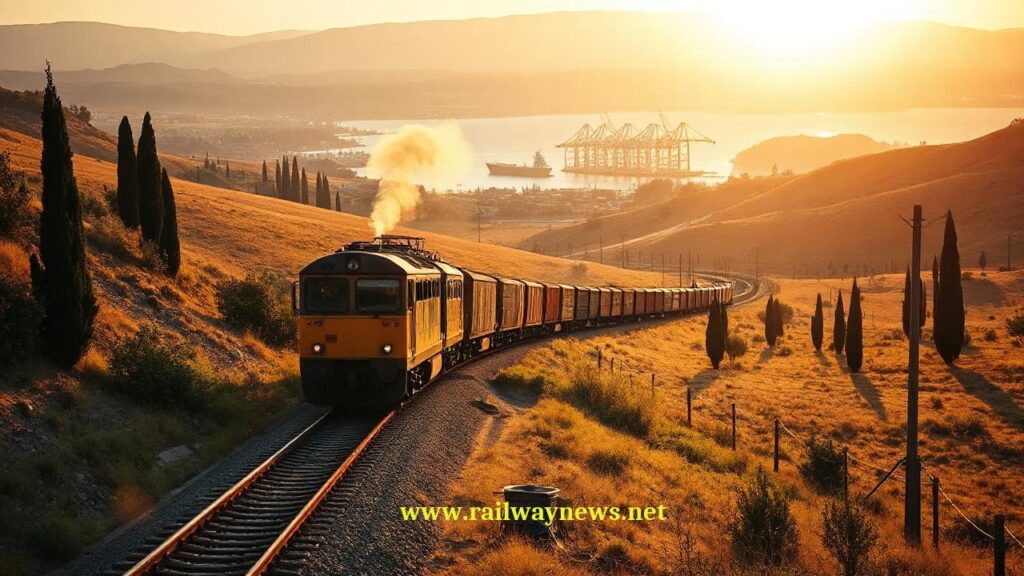
⚡ In Brief: FS Logistix, Automar, and GTA launched a permanent rail corridor linking Livorno, Pontecagnano, and Gioia Tauro for automotive logistics, projecting annual CO₂ reductions of 4,800 metric tons by shifting vehicle transport from road to rail.
ROME – FS Logistix, together with Automar—part of the Grimaldi Group—and GTA, inaugurated a new dedicated automotive rail corridor connecting the Italian cities of Livorno, Pontecagnano, and Gioia Tauro. The tripartite project will be operated by Mercitalia Rail and targets an estimated 4,800 metric tons of CO₂ reduction per year. No total project investment figure or construction timeline was disclosed by the partners.
What Is the Full Scope of This Project?
The new corridor establishes a permanent round-trip rail service across three key segments: Livorno–Pontecagnano, Pontecagnano–Gioia Tauro, and Gioia Tauro–Livorno. The Piazzale II Faldo terminal in Livorno—managed by GTA—and the Automar terminal in Gioia Tauro form the corridor’s anchor hubs, with Pontecagnano serving as an intermediate node. Beyond the headline emissions figure, the project integrates port operations with rail logistics to reduce vessel laytime at Gioia Tauro, which functions as Italy’s primary entry point for vehicle shipments from the Far East destined for Italian and broader European markets. The partners also cite reduced empty truck runs and mitigation of professional driver shortages as structural benefits, though no quantitative targets for either metric were publicly released.
Key Project Data
| Parameter | Value |
|---|---|
| Project / Contract Name | Livorno–Pontecagnano–Gioia Tauro Automotive Rail Corridor |
| Total Value | Not disclosed |
| Parties Involved | FS Logistix, Automar (Grimaldi Group), GTA; operator: Mercitalia Rail; facilitation: ALIS |
| Timeline / Completion | Not disclosed |
| Country / Corridor | Italy: Livorno (Tuscany) – Pontecagnano (Campania) – Gioia Tauro (Calabria) |
How Does This Compare to Similar Projects?
Italy’s rail freight market is projected to grow from USD 428.2 billion in 2025 to USD 680.3 billion by 2035, a compound annual growth rate of 4.8%, driven partly by demand for intermodal solutions that shift automotive and retail volumes from road to rail (Source: Market Research Future, 2025). This corridor aligns with that trajectory but enters a landscape where several European automotive logistics corridors are already mature—DB Cargo’s automotive rail network across Germany, for instance, moves over 1.5 million vehicles annually across 14 dedicated auto terminals (Source: DB Cargo, 2024). The 4,800-tonne CO₂ reduction claimed by the Italian partners represents roughly 0.3% of Italy’s total transport-sector emissions of approximately 105 MtCO₂e, based on ISPRA data. In the UK, surface transport emissions increased by 2.8 MtCO₂e in 2025, and the Department for Transport is responding with major rail electrification programs aimed at decarbonising freight corridors (Source: UK CCC Progress Report, 2026). The Italian corridor’s reliance on diesel traction—standard on most Mercitalia Rail routes—raises a question about lifecycle emissions that the partners have not publicly addressed. No comparable privately operated automotive rail corridor connecting a Mediterranean entry port to northern Italian distribution hubs exists at this scale, making the Gioia Tauro–Livorno axis structurally distinct, though direct throughput volume comparisons are unavailable.
Editor’s Analysis
The corridor’s strategic logic rests on Gioia Tauro’s position as a Mediterranean transshipment gateway for Far East vehicle imports—a routing that bypasses the congestion of northern European ports like Bremerhaven or Zeebrugge. If Mercitalia Rail can maintain schedule reliability on a corridor spanning over 800 km from Calabria to Tuscany, this model could pressure competing ports in the Tyrrhenian arc to develop similar rail-linked automotive terminals. The absence of a disclosed investment figure and volume commitments, however, leaves open the question of whether this is a commercially scalable corridor or a policy-aligned pilot. With the Italy rail freight market growing at a 4.8% CAGR through 2035, automotive logistics represents one of the few segments where shippers are actively seeking modal shift—and where port authorities can monetize quay-side space currently occupied by vehicle storage yards.
FAQ
Q: How many tonnes of CO₂ will the Livorno–Gioia Tauro rail corridor actually save?
A: The partners estimate 4,800 metric tons of CO₂ per year will be eliminated by shifting vehicle transport from road to rail. This figure has not been independently verified and no underlying methodology was published.
Q: Which company operates the trains on this new corridor?
A: Mercitalia Rail, the freight division of Ferrovie dello Stato Italiane, operates the rail service across all three route segments—Livorno–Pontecagnano, Pontecagnano–Gioia Tauro, and Gioia Tauro–Livorno.
Q: What role does the port of Gioia Tauro play in European automotive supply chains?
A: Gioia Tauro functions as Italy’s primary maritime entry point for vehicle shipments from the Far East. The new rail link allows vehicles to be unloaded at the Calabrian port and moved directly by rail to Livorno for distribution to Italian and European markets, reducing vessel laytime and road haulage.

Railway infrastructure, rolling stock and transport technologies specialist focused on global rail industry developments, high-speed rail systems, signaling technologies and freight transportation. Covering railway investments, public transport modernization, rail operations and international mobility projects across Europe, Asia and North America.
RELATED POSTS

October 1, 2026 7:09 am
United States regulators confirmed a September 30 deadline for the...

October 1, 2026 12:13 am
Illinois approved $1.5 billion annually for the Northern Illinois Transit...

October 4, 2026 5:14 pm
Alstom secured a CA$4.7 billion order from VIA Rail Canada...

October 1, 2026 6:10 am
Amtrak approved a System Expansion Committee on July 30 to...
October 1, 2026 3:12 am
Greenbrier confirmed Brian Comstock as new president and CEO effective...
October 6, 2026 2:14 am
Union Pacific launched export rail shipments with Ferromex to deliver...