
BEML-Mitsubishi: Delhi Metro’s Tech Upgrade
This article examines how BEML’s strategic partnership with Mitsubishi Electric for Delhi Metro rail propulsion equipment underscores trends in Indian railway expansion focused on energy efficiency, technological advancement, and local manufacturing under the “Make in India” initiative.
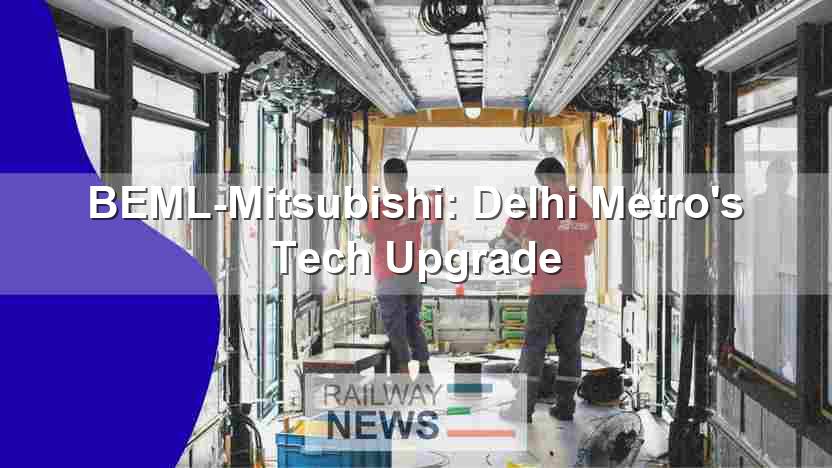
This article examines the strategic partnership between BEML (Bharat Earth Movers Limited), an Indian state-owned company, and Mitsubishi Electric, a global leader in electrical and electronic equipment. The focus is on a significant contract awarded to Mitsubishi Electric for the supply of propulsion equipment for 80 new metro cars destined for the Delhi Metro Rail Corporation (DMRC). This collaboration highlights several key trends in the Indian railway sector, including the increasing emphasis on energy efficiency, technological advancement, and the ‘Make in India’ initiative. We will explore the technical specifications of the equipment, the broader implications for the Indian metro expansion plans, and the strategic significance of local manufacturing in bolstering India’s railway infrastructure. The analysis will further delve into the global implications of this partnership and the role of such collaborations in promoting sustainable and technologically advanced public transportation systems.
BEML and Mitsubishi Electric: A Strategic Alliance for Delhi Metro
BEML’s contract with Mitsubishi Electric underscores the growing demand for advanced propulsion systems within India’s rapidly expanding metro network. The core of the contract involves the delivery of traction motors and inverters, crucial components of the metro car’s propulsion system. These components are not merely mechanical parts; they are sophisticated pieces of technology designed for optimal energy efficiency and operational reliability. The inclusion of Train Control Management Systems (TCMS) further enhances the system’s performance by providing centralized control and monitoring capabilities, improving safety and operational efficiency.
Technological Advancements and Energy Efficiency
The specified equipment is designed to withstand the demanding climatic conditions prevalent across India, including high temperatures, humidity, and dust. This robustness is crucial for ensuring the reliable and safe operation of the metro system, regardless of environmental challenges. The emphasis on energy efficiency is particularly noteworthy, aligning with the Indian government’s Smart Cities Mission and broader sustainability goals. The reduced energy consumption translates directly into lower operating costs and a smaller carbon footprint, making the metro system more environmentally friendly and economically viable.
‘Make in India’ and Local Manufacturing
The decision to manufacture the propulsion equipment at Mitsubishi Electric’s Bidadi factory in Bengaluru, Karnataka, is a significant endorsement of the Indian government’s ‘Make in India’ initiative. This initiative promotes local manufacturing to boost domestic industrial capacity and create jobs. By establishing a local manufacturing base, Mitsubishi Electric not only fulfills the contract but also strengthens its presence in the burgeoning Indian market. This localized production capacity positions the company to better meet the future demands of India’s expanding metro network and other rail projects.
Global Implications and Future Prospects
This contract represents more than just a single deal; it highlights the growing global demand for high-quality, energy-efficient railway technology. Mitsubishi Electric’s longstanding presence in the Indian railway market, with over 3,000 metro cars equipped with their propulsion systems since 2001, demonstrates their expertise and commitment to the region. The ongoing expansion plans for metro systems in approximately 20 Indian cities, combined with similar projects in other countries, indicate a robust and sustained market for advanced rail technology. This partnership serves as a model for future collaborations between international technology providers and local manufacturers, fostering technological advancement and economic development within the global railway sector.
Conclusions
The BEML-Mitsubishi Electric partnership for the Delhi Metro’s new metro cars showcases a significant development in India’s railway modernization efforts. The contract, focusing on the supply of advanced traction motors, inverters, and Train Control Management Systems (TCMS) from Mitsubishi Electric’s Bidadi facility, underscores several key aspects. First, it demonstrates a commitment to energy efficiency and environmental sustainability, aligning with India’s Smart Cities Mission. Second, the local manufacturing aspect strongly supports the ‘Make in India’ initiative, stimulating domestic industrial growth and job creation. Third, the technological sophistication of the equipment ensures reliable and safe operation even under challenging climatic conditions. The success of this collaboration is not just confined to the Delhi Metro; it serves as a blueprint for future infrastructure projects across India and globally. The continued expansion of metro networks across the country and the world indicates a strong market demand for this advanced technology. The emphasis on localized manufacturing and technological advancements underscores the growing importance of sustainable and economically viable public transportation solutions. This partnership exemplifies a strategic alliance that benefits both companies involved and serves as a crucial catalyst for India’s ongoing railway modernization and expansion.

Railway infrastructure, rolling stock and transport technologies specialist focused on global rail industry developments, high-speed rail systems, signaling technologies and freight transportation. Covering railway investments, public transport modernization, rail operations and international mobility projects across Europe, Asia and North America.
RELATED POSTS

October 8, 2026 1:15 pm
Alstom secured a €1bn contract to build 13 automated trains,...

October 1, 2026 7:09 am
United States regulators confirmed a September 30 deadline for the...

October 4, 2026 5:14 pm
Alstom secured a CA$4.7 billion order from VIA Rail Canada...

October 8, 2026 12:18 pm
Siemens Mobility signed an agreement with VinSpeed to supply 350...

October 5, 2026 6:12 pm
AECOM and Jacobs secured a contract in September 2026 to...

October 4, 2026 11:08 pm
Sound Transit confirmed the September 30 opening of Seattle Pinehurst...