
BART Reports 5.4M March Ridership High Amid SFO Fee Talks
Bay Area Rapid Transit reported 5,403,140 March 2024 ridership, confirming a post-pandemic high and renegotiating SFO airport fees.
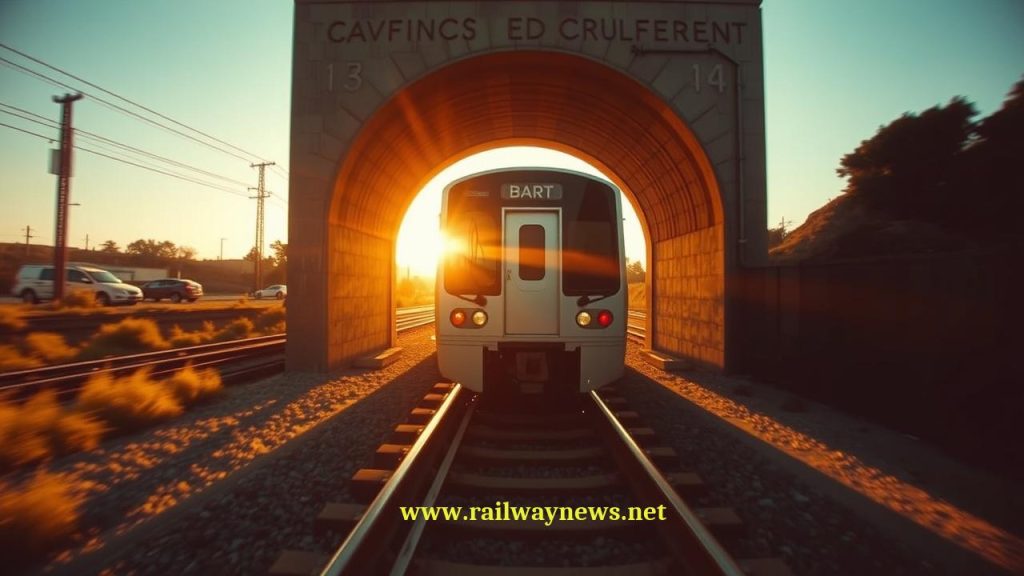
⚡ In Brief: Bay Area Rapid Transit (BART) in the USA hit a post-pandemic ridership high of 5,403,140 exits in March while pursuing financial restructuring, including renegotiating its San Francisco International Airport fee agreement to reduce costs.
SAN FRANCISCO, USA – The Bay Area Rapid Transit (BART) system recorded its highest monthly ridership since the pandemic, registering 5,403,140 passenger exits in March 2024. This operational milestone coincides with the agency’s strategic efforts to improve its financial standing through cost-saving measures. A recent financial efficiency review by the Metropolitan Transportation Commission confirms BART is exploring multiple avenues to enhance revenue and reduce expenditures.
How Is the Funding Structured?
BART’s current financial strategy is focused on improving operational solvency rather than securing new capital funding rounds. The approach combines maximizing farebox revenue from recovering ridership with actively reducing fixed operational costs. A key component of this cost-reduction effort involves renegotiating the agency’s financial agreement with San Francisco International Airport (SFO) to lessen the financial burden of operating the airport station.
Key Funding Data
| Parameter | Value |
|---|---|
| Fund / Programme Name | BART Ridership Recovery & Financial Restructuring |
| Total Value | Not disclosed |
| Parties Involved | Bay Area Rapid Transit (BART), San Francisco International Airport (SFO), Metropolitan Transportation Commission (MTC) |
| Timeline / Completion | Ridership milestone achieved March 2024; SFO negotiations ongoing |
| Country / Corridor | USA / San Francisco Bay Area |
How Does This Compare to Similar Funding Programs?
BART’s focus on operational finance and cost renegotiation contrasts with the capital-intensive investment trends seen elsewhere in the global rail sector. While BART manages its existing budget, other operators are securing substantial funds for fleet modernization. For example, Switzerland’s Gornergrat Bahn recently placed a CHF 30 million (approx. USD 33 million) order for new Stadler POLARIS trains to upgrade its Alpine route fleet (Source: Global Railway Review, 2024). This divergence is also evident in technology investment, where startups like Israel’s Voltify recently raised USD 30 million to develop technology for converting diesel trains to electric power, highlighting a market focus on long-term capital projects for sustainability (Source: Railway Supply, 2024).
Editor’s Analysis
The situation at BART exemplifies the fiscal challenge facing many legacy US transit agencies, where immediate operational survival must take precedence over long-term capital investment. The ridership recovery is a positive signal, but the simultaneous need to renegotiate foundational agreements like the one with SFO underscores a deep structural deficit. This contrasts sharply with a broader 2025 global railway investment trend that heavily favors modernization and electrification, suggesting a growing gap between the strategic priorities of US urban transit and their European or technology-focused counterparts.
FAQ
Q: What is the specific financial issue between BART and SFO?
A: BART pays a fee to San Francisco International Airport for its station access, and the transit agency is seeking to renegotiate this agreement to reduce its operational expenses. The potential savings from a new agreement have not been publicly detailed.
Q: How far is BART ridership from pre-pandemic levels?
A: While 5.4 million monthly exits is a post-pandemic high, it remains well below pre-2020 figures, which often surpassed 10 million per month. The agency’s recovery is ongoing but has not reached historical norms.
Q: Is BART investing in new trains like the European examples?
A: BART is in the multi-year process of rolling out its new “Fleet of the Future” railcars to replace its legacy fleet. However, the current financial focus highlighted in reports is on managing operational costs rather than on new large-scale procurement contracts.

Railway infrastructure, rolling stock and transport technologies specialist focused on global rail industry developments, high-speed rail systems, signaling technologies and freight transportation. Covering railway investments, public transport modernization, rail operations and international mobility projects across Europe, Asia and North America.
RELATED POSTS

October 1, 2026 7:09 am
United States regulators confirmed a September 30 deadline for the...

October 8, 2026 1:15 pm
Alstom secured a €1bn contract to build 13 automated trains,...

October 4, 2026 5:14 pm
Alstom secured a CA$4.7 billion order from VIA Rail Canada...

October 1, 2026 12:13 am
Illinois approved $1.5 billion annually for the Northern Illinois Transit...

October 6, 2026 2:14 am
Union Pacific launched export rail shipments with Ferromex to deliver...

October 1, 2026 6:10 am
Amtrak approved a System Expansion Committee on July 30 to...