
U.S. FRA Cuts 11 Deregulatory Rules for Rail Network
The U.S. Federal Railroad Administration recently finalized 11 deregulatory rules, deleting over 1,000 words to modernize operations across the U.S. rail network.
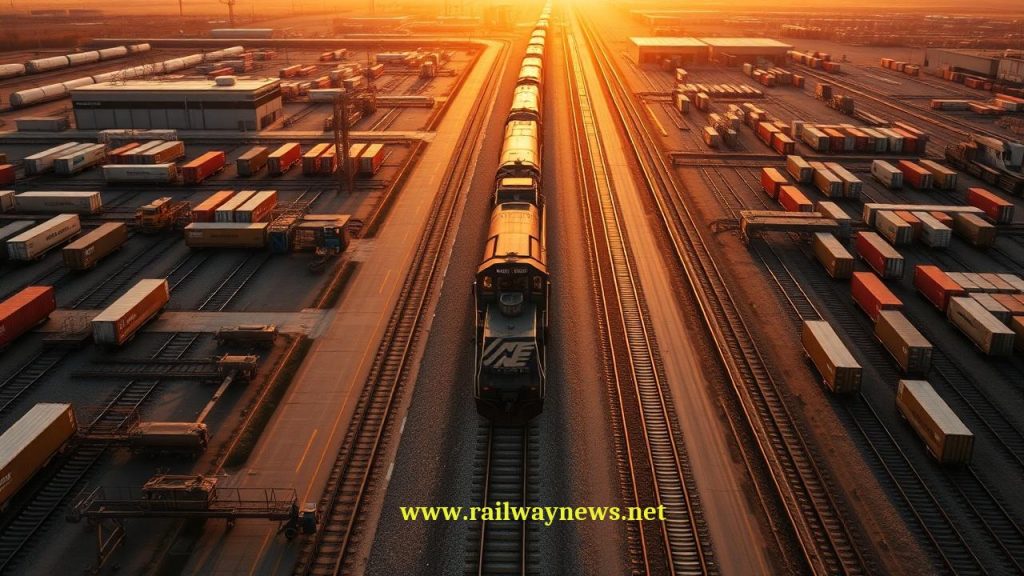
⚡ In Brief: The U.S. Federal Railroad Administration has finalized 11 deregulatory rules, removing over 1,000 words from the Federal Register to streamline operations and safety practices for the nation’s largely private freight rail network.
WASHINGTON D.C. – The U.S. Federal Railroad Administration (FRA) has officially finalized a package of 11 deregulatory actions aimed at modernizing the rail industry. The changes involve the deletion of more than 1,000 words from the Federal Register. The FRA stated the goal is to reduce regulatory burdens, enhance efficiency, and bolster safety across the network.
What Does This Regulation Cover?
The initiative focuses on streamlining existing rules to provide U.S. railroads with greater operational flexibility and to update outdated safety practices. While the action targets 11 distinct rules, the specific content and scope of each individual rule were not detailed in the initial announcement. The primary objective is to eliminate obsolete or redundant requirements that may hinder the adoption of modern technologies and operational methods.
Key Regulatory Data
| Parameter | Value |
|---|---|
| Regulation / Policy Name | FRA Deregulatory Action Package |
| Total Value | Not Applicable |
| Parties Involved | U.S. Federal Railroad Administration (FRA), U.S. Railroads |
| Timeline / Completion | Recently Finalized |
| Country / Corridor | United States |
How Does This Compare to Global Standards?
The U.S. focus on deregulation for its privately-owned freight network contrasts sharply with government-led investment and integration frameworks in Europe. For instance, the UK’s Network Rail is executing its Control Period 7 (CP7), a £5.2 billion five-year investment program for its Wales & Western region alone, managed through delivery partnerships such as a £9m contract with AtkinsRéalis for project controls and commercial management (Source: Insider Media, 2024). Similarly, the European Union is pursuing regulatory integration with plans for a single ticketing system by 2026 to simplify cross-border passenger travel, rather than focusing on deregulation (Source: Reuters, 2024).
Editor’s Analysis
This FRA action underscores the unique structure of the U.S. rail market, where policy often prioritizes the efficiency of private freight carriers who own the vast majority of the infrastructure. This deregulatory push occurs while U.S. passenger rail sees large but often troubled public and private investment. High-profile projects like Florida’s Brightline have faced significant financial underperformance, while California’s public high-speed rail initiative continues to grapple with massive costs and delays, highlighting a deep strategic divide between freight and passenger rail policy in the country (Source: Gizmodo, 2024).
FAQ
Q: What specific rules were changed by the FRA?
A: The initial announcement did not detail the content of the 11 individual rules. The FRA stated the changes are designed to modernize practices and remove obsolete language from the Federal Register.
Q: Does this deregulation affect passenger rail?
A: While the rules apply broadly, the primary impact is on the U.S. freight rail industry, which operates most of the nation’s track. The FRA’s stated goal is to enhance efficiency and safety for all operators using the network.
Q: Is reducing regulation a common trend in the US rail industry?
A: Yes, there has been a long-term policy trend toward reducing certain regulatory burdens on the freight rail industry to promote competition and efficiency. This action by the FRA is consistent with that broader policy direction.

Railway infrastructure, rolling stock and transport technologies specialist focused on global rail industry developments, high-speed rail systems, signaling technologies and freight transportation. Covering railway investments, public transport modernization, rail operations and international mobility projects across Europe, Asia and North America.
RELATED POSTS

October 8, 2026 1:15 pm
Alstom secured a €1bn contract to build 13 automated trains,...

October 1, 2026 7:09 am
United States regulators confirmed a September 30 deadline for the...

October 8, 2026 12:18 pm
Siemens Mobility signed an agreement with VinSpeed to supply 350...

October 4, 2026 5:14 pm
Alstom secured a CA$4.7 billion order from VIA Rail Canada...

October 5, 2026 6:12 pm
AECOM and Jacobs secured a contract in September 2026 to...

October 1, 2026 12:13 am
Illinois approved $1.5 billion annually for the Northern Illinois Transit...