
Athens Metro Line 1 Launches First Refurbished Train July
Greece’s Athens Metro Line 1 launches its first of 14 refurbished 40-year-old trains in July, extending fleet life by 25 years.
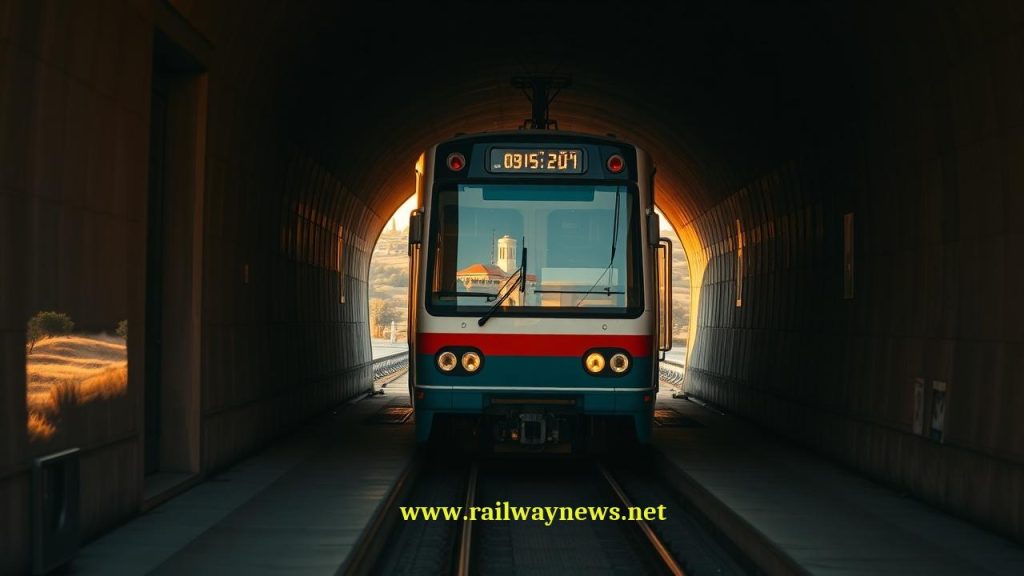
⚡ In Brief: The first of 14 refurbished 40-year-old trains for the Athens Metro’s Line 1 is set to enter passenger service in July, launching a modernization program designed to extend the fleet’s operational life by an additional 25 years.
ATHENS, GREECE – The first fully modernized train for Line 1 of the Athens Metro is scheduled to begin commercial service in July following the completion of static and dynamic testing. The train is the first of a 14-train fleet, originally built in the early 1980s, undergoing a complete rebuild to extend its service life by 25 years. The modernization program, which has faced delays and cost increases, is being carried out in Volos, Greece.
What Is the Full Scope of This Project?
The project covers the complete reconstruction of 14 eighth-series trainsets, which have each traveled an average of 2.9 million kilometers. Key upgrades include new door mechanisms, modern air conditioning systems for both passenger cars and driver cabs, new seating, security cameras, and digital information screens. For the first time on Line 1, each train will feature three dedicated spaces for wheelchair users, while drivers will gain new touchscreen controls and platform monitoring systems. The project is the first phase of a wider fleet modernization strategy that will subsequently include 10 trains from the 1990s and 12 trains from 2000.
Key Project Data
| Parameter | Value |
|---|---|
| Project / Contract Name | Athens Metro Line 1 Rolling Stock Refurbishment (Series 8) |
| Total Value | Not disclosed (Source confirms a 9.5% cost increase was applied) |
| Parties Involved | Athens Metro (STASY S.A.), Greek Ministry of Infrastructure and Transport, Unnamed rolling stock manufacturer |
| Timeline / Completion | Original: End of 2025; Revised: May 2027 |
| Country / Corridor | Greece / Athens Metro Line 1 |
How Does This Compare to Similar Projects?
The strategy of refurbishing rolling stock to extend its operational life by 20-25 years is a common global practice for managing aging fleets while controlling capital expenditure. While the total contract value for the Athens project has not been disclosed, such heavy overhaul programs are typically pursued when costs are 50-60% less than procuring new trains. Other major transit authorities, such as Transport for London with its Central Line fleet and the Toronto Transit Commission (TTC), have undertaken similar large-scale refurbishment programs to improve reliability and passenger amenities without the lead time and higher expense of a completely new fleet order. The 1.5-year delay experienced in Athens is also not uncommon for complex rebuilds, which have been widely affected by post-pandemic supply chain issues. (Source: International Association of Public Transport, 2023).
Editor’s Analysis
This project highlights a pragmatic approach to fleet modernization, prioritizing service continuity and reliability on a legacy line over more costly new procurement. The decision to perform the work domestically in Volos indicates a strategic interest in retaining and developing sovereign industrial capacity in the Greek railway sector. As European operators face mounting budget pressures and volatile supply chains for new equipment, extending the life of existing, structurally sound assets is becoming a critical and widespread fleet management strategy. (Source: European Union Agency for Railways, 2023 Market Report).
FAQ
Q: Why are the trains being refurbished instead of replaced with new ones?
A: Refurbishment was chosen primarily for cost-effectiveness, as purchasing new trains would have been several times more expensive. The approach also extends the fleet’s life by 25 years while allowing the majority of the construction work to be completed within Greece.
Q: What caused the project’s delay and cost increase?
A: The project’s completion was extended from late 2025 to May 2027 due to unspecified execution delays. The cost was increased by 9.5% to account for rising material prices and supply chain disruptions that emerged after the start of the war in Ukraine.
Q: How will this project improve service for passengers on Line 1?
A: The increased availability of reliable rolling stock is expected to reduce train intervals to under 6 minutes by the end of 2026 for the first time in two decades. The project will also allow for the introduction of 24-hour service on Saturday nights, planned to begin in approximately one year.

Railway infrastructure, rolling stock and transport technologies specialist focused on global rail industry developments, high-speed rail systems, signaling technologies and freight transportation. Covering railway investments, public transport modernization, rail operations and international mobility projects across Europe, Asia and North America.
RELATED POSTS

October 8, 2026 1:15 pm
Alstom secured a €1bn contract to build 13 automated trains,...

October 1, 2026 7:09 am
United States regulators confirmed a September 30 deadline for the...

October 8, 2026 12:18 pm
Siemens Mobility signed an agreement with VinSpeed to supply 350...

October 4, 2026 5:14 pm
Alstom secured a CA$4.7 billion order from VIA Rail Canada...

October 5, 2026 6:12 pm
AECOM and Jacobs secured a contract in September 2026 to...

October 1, 2026 12:13 am
Illinois approved $1.5 billion annually for the Northern Illinois Transit...