
Alstom Upgrades 43 km Ratingen-Leverkusen Line by 2029
Alstom secured a contract to upgrade 43 km of Germany’s Deutsche Bahn Ratingen–Leverkusen line with ETCS Level 2 signaling by late 2029.
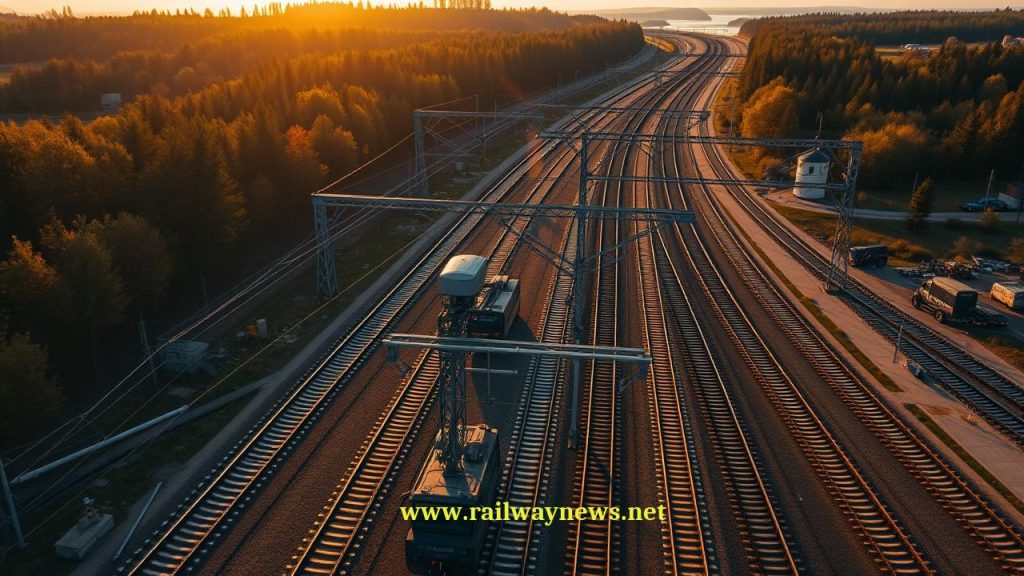
⚡ In Brief: Alstom has been awarded a contract to install ETCS Level 2 on a 43 km section of the Ratingen–Leverkusen line in Germany, part of a €6.3 billion national rail digitalization framework, with completion scheduled for the end of 2029.
COLOGNE, GERMANY – Alstom will equip 43 km of the Ratingen–Leverkusen railway line with its ETCS Level 2 signaling technology, with work scheduled for completion by the end of 2029. The contract is part of a broader €6.3 billion framework agreement aimed at digitizing Germany’s rail network. This project targets a key segment of a major European transport corridor running from Oberhausen-Sterkrade to Haltingen.
What Does This Contract Cover?
The contract covers the design, installation, and commissioning of ETCS Level 2 with signals, including the construction of two Radio Block Centres (RBCs) to manage data exchange. The initial phase involves equipping 43 km of track controlled by an RBC in Düsseldorf-Rath, followed by a 21 km extension managed by a second RBC. The specific financial value of this individual contract awarded to Alstom has not been disclosed by the parties involved.
Key Contract Data
| Parameter | Value |
|---|---|
| Contract Name | ETCS Implementation: Ratingen–Leverkusen Line |
| Total Value | Not disclosed (Part of a €6.3 billion framework agreement) |
| Parties Involved | Alstom, Deutsche Bahn (Network Manager) |
| Timeline / Completion | End of 2029 (Initial 43 km section) |
| Country / Corridor | Germany / Oberhausen-Sterkrade to Haltingen |
How Does This Compare to Similar Contracts?
This signaling contract is an individual award under Germany’s massive €6.3 billion national digitalization framework, which distributes work among several major suppliers. For a scale comparison on major rail infrastructure investment, Skanska recently secured a single $1 billion design-build contract in the United States to replace a rail bridge and modernize associated systems in Massachusetts, with a completion target of 2032 (Source: Construction Dive, 2024). While the Skanska project focuses on civil infrastructure and the Alstom contract on digital signaling, the comparison highlights the significant capital required to modernize legacy rail networks. The German approach utilizes a broad framework agreement for phased rollouts, whereas the U.S. example is a single, large-scale contract.
Editor’s Analysis
This award to Alstom is a tactical execution within Germany’s larger strategic goal of nationwide ETCS implementation. The project’s location on a key European freight corridor, which is also receiving €1 billion for electric truck charging infrastructure, underscores a multimodal government strategy to decarbonize and modernize critical trade routes (Source: German Ministry of Transport). This incremental, corridor-by-corridor approach to ETCS deployment is central to boosting capacity and safety on existing lines, a key driver of the German signaling market’s projected growth through 2035.
FAQ
Q: What is ETCS Level 2?
A: ETCS (European Train Control System) Level 2 is a digital signaling system that uses radio communication between the train and a Radio Block Centre (RBC). This allows for continuous train supervision and cab-based signaling, increasing line capacity and safety by reducing reliance on fixed lineside signals.
Q: Why is this project important for the European rail network?
A: It replaces a national German train control system with the standardized European ETCS, which is crucial for interoperability. This allows trains from other countries to operate seamlessly on this line without needing to change locomotives or onboard signaling systems, improving the efficiency of international freight and passenger traffic.
Q: What is the total value of this specific Alstom contract?
A: The value for the Ratingen–Leverkusen section has not been publicly disclosed. The project is funded as part of a much larger €6.3 billion framework agreement for digital signaling technology that involves several major railway industry suppliers.

Railway infrastructure, rolling stock and transport technologies specialist focused on global rail industry developments, high-speed rail systems, signaling technologies and freight transportation. Covering railway investments, public transport modernization, rail operations and international mobility projects across Europe, Asia and North America.
RELATED POSTS

October 8, 2026 1:15 pm
Alstom secured a €1bn contract to build 13 automated trains,...

October 1, 2026 7:09 am
United States regulators confirmed a September 30 deadline for the...

October 8, 2026 12:18 pm
Siemens Mobility signed an agreement with VinSpeed to supply 350...

October 4, 2026 5:14 pm
Alstom secured a CA$4.7 billion order from VIA Rail Canada...

October 1, 2026 12:13 am
Illinois approved $1.5 billion annually for the Northern Illinois Transit...

October 5, 2026 6:12 pm
AECOM and Jacobs secured a contract in September 2026 to...