
CPK Completes 2035 High-Speed Acoustic Tests in Spain
CPK confirmed completion of acoustic tests in Spain during July 2024 to set noise mitigation rules for Poland’s 249 km/h passenger rail network by 2035.
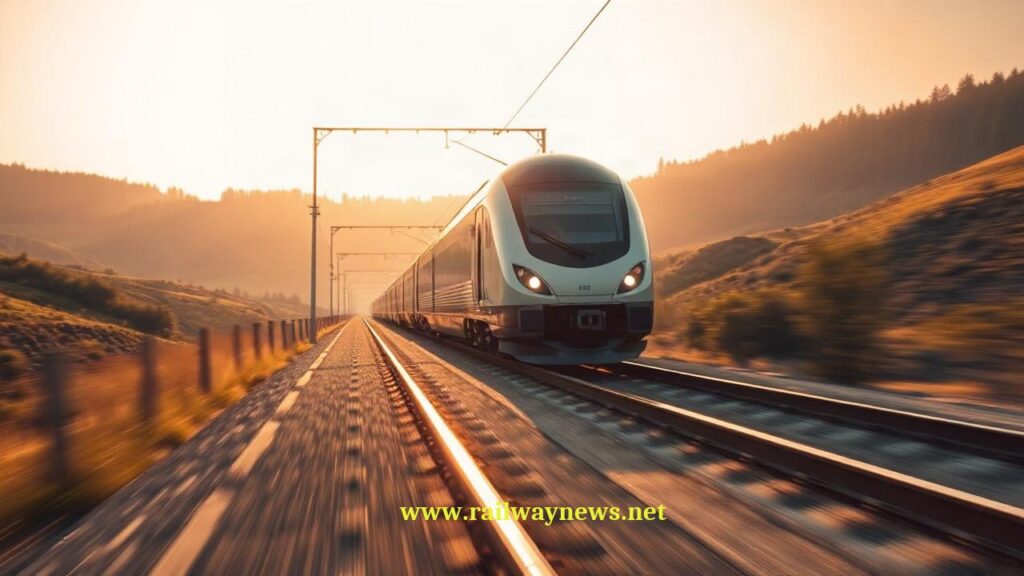
⚡ In Brief: Poland’s CPK completed acoustic field trials on Spain’s 300 km/h rail network in July 2024 to engineer noise mitigation for its planned 2035 high-speed passenger network.
WARSAW, Poland – Centralny Port Komunikacyjny (CPK) completed field acoustic evaluations alongside Adif and Ineco along Spain’s Alicante high-speed corridor to set noise mitigation criteria for Poland’s planned 2035 high-speed rail network. Field testing focused on track sections accommodating over 50 daily trains operating at speeds up to 300 km/h behind 5-to-6-metre acoustic barriers. Poland is targeting operational speeds of up to 249 km/h (155 mph) for initial passenger services as part of its multi-billion-euro railway buildout.
What Is the Full Scope of This Project?
Poland’s high-speed rail investment programme encompasses building a nationwide passenger network targeting full deployment by 2035 alongside substantial rolling stock acquisitions. CPK plans capital expenditures exceeding EUR 4.7 billion (PLN 20 billion) between 2026 and 2030 dedicated primarily to high-speed rolling stock and technical maintenance facilities (Source: Railway Pro, 2024). To establish regulatory acoustic baseline designs before track laying begins, CPK and Spanish state rail infrastructure manager Adif examined acoustic propagation at La Encina in Alicante across ballasted tracks, tunnels, and retaining structures. The specific unit expenditure per kilometre for Poland’s projected acoustic barrier installations was not disclosed by project officials.
Key Project Data
| Parameter | Value |
|---|---|
| Project / Contract Name | CPK High-Speed Rail Environmental & Acoustic Design Programme |
| Total Value | EUR 4.7bn+ (PLN 20bn) planned for 2026–2030 fleet and facilities; total civil works budget not disclosed |
| Parties Involved | Centralny Port Komunikacyjny (CPK), Adif, Ineco, Europe’s Rail Joint Undertaking |
| Timeline / Completion | Commercial network opening targeted for 2035; baseline acoustic trials concluded July 2024 |
| Country / Corridor | Poland (Warsaw–Łódź–Poznań/Wrocław corridor) / Spain (Alicante testing corridor) |
How Does This Compare to Similar Projects?
Poland’s phased engineering schedule aligns with technical benchmarks established by Europe’s Rail Joint Undertaking while maintaining lower operational thresholds than international long-distance corridors. While Poland is designing its infrastructure for passenger trains operating at speeds up to 249 km/h (155 mph), China debuted commercial prototypes of its CR450 bullet train in 2025 capable of commercial service speeds reaching 400 km/h (Source: People’s Daily, 2025). Funding for Poland’s network depends on structured European co-financing mechanisms, with CPK securing over PLN 500 million in direct European Union grants and filing 2025 Connecting Europe Facility (CEF2) applications worth PLN 1.18 billion (Source: Railway Pro, 2024). In contrast, intercity high-speed infrastructure in the United States faces severe governance hurdles; California’s high-speed rail authority faced administrative criticism in fiscal year 2024–25 after state audits revealed $680,500 in unapproved travel expenses (Source: Fox40, 2025). Domestically, vehicle production capacity is consolidating ahead of state tenders, exemplified by the strategic alliance between Hitachi Rail and PESA to jointly supply Poland’s high-speed fleet (Source: Global Railway Review, 2024).
Editor’s Analysis
CPK’s alignment with Spanish operational data provides critical noise-deflection modeling that reduces the risk of expensive remedial construction on high-density corridors like the Warsaw–Łódź route. Securing nearly PLN 1 billion in requested EU co-financing under CEF2 confirms that European transit authorities view Poland’s high-speed lines as critical components of the Trans-European Transport Network (TEN-T). Operating lines at 249 km/h allows Polish infrastructure authorities to balance capital outlay with domestic rolling stock manufacturing partnerships between PESA and Hitachi Rail.
FAQ
Q: Why did CPK conduct acoustic trials in Spain instead of Poland?
A: Poland does not yet have an active high-speed rail line operating at 300 km/h, whereas Spain manages nearly 4,000 km of commercial high-speed infrastructure. Testing in Alicante permitted CPK engineers to collect direct decibel readings across lines handling more than 50 daily trains.
Q: What is the operating speed and delivery timeline for Poland’s high-speed network?
A: Poland plans to commission its primary passenger high-speed rail corridors by 2035, featuring trains running at speeds up to 249 km/h (155 mph). CPK has outlined capital outlays exceeding EUR 4.7 billion between 2026 and 2030 to finance rolling stock and maintenance facilities.
Q: Who will manufacture the trainsets running on Poland’s high-speed lines?
A: Hitachi Rail and Polish rail vehicle manufacturer PESA formed a strategic partnership to jointly submit bids for Poland’s upcoming high-speed rolling stock procurement. Specific fleet quantities and contract awards have not been officially confirmed.

Railway infrastructure, rolling stock and transport technologies specialist focused on global rail industry developments, high-speed rail systems, signaling technologies and freight transportation. Covering railway investments, public transport modernization, rail operations and international mobility projects across Europe, Asia and North America.
RELATED POSTS
September 6, 2026 5:19 am
Hitachi delivered Taiwan's first N700ST high-speed train from Japan in...

September 6, 2026 6:17 am
Hungary ordered a national ban on most freight trains from...
September 6, 2026 1:17 am
Hitachi Toshiba Supreme Consortium confirmed the first of 12 N700ST...

September 5, 2026 4:19 pm
CPK launched formal tender talks with four consortia to design...

September 5, 2026 7:14 pm
HS2 Ltd signed renegotiated civils contracts with EKFB and Align...
September 7, 2026 8:16 am
Midea, Gree and TCL shipped air conditioners via China Railway...