
Nithe Station Opens Research Window in Thailand July 2026
Thailand opened a research window at the 415 km Death Railway’s Nithe Station in July 2026, enabling documentation of the site before August rains resubmerge it.
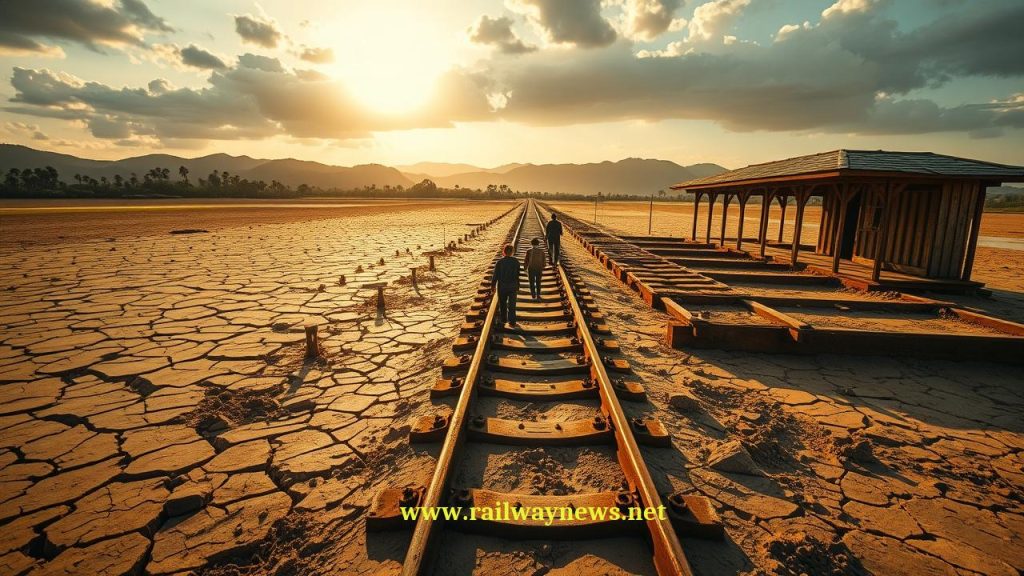
⚡ In Brief: The remains of Nithe Station on the Thailand–Burma “Death Railway” resurfaced from a drained reservoir in Kanchanaburi province in July 2026, opening a time-limited research window before monsoon rains submerge the site again in August.
KANCHANABURI, THAILAND – The partially drained Vajiralongkorn Dam reservoir exposed the long-submerged Nithe Station in July 2026, revealing infrastructure from the 415 km World War II forced-labor railway. Researchers have a narrow window to document the site before dam maintenance ends and seasonal rains refill the lake, with over 12,500 Allied prisoners of war and an estimated 75,000 Asian labourers having perished during the original construction.
What Is the Full Scope of This Research Project?
The temporary exposure of Nithe Station’s foundations, track remnants, and possible adjacent prisoner-of-war camp sites allows documentation that has not been possible for decades. Independent researcher Martyn Fryer and Thailand–Burma Railway Centre specialist Andrew Snow are using wartime aerial photographs from the UK National Archives, hand-drawn maps, and metal-detected artifacts such as spikes and fasteners to precisely locate infrastructure and camp layouts. The work must be completed before dam maintenance ends and the monsoon season returns water levels to normal, which historically overtops the site quickly.
Key Project Data
| Parameter | Value |
|---|---|
| Project / Research Name | Nithe Station emergency documentation and artifact recovery |
| Total Value | Not disclosed |
| Parties Involved | Martyn Fryer (independent researcher), Andrew Snow (Thailand–Burma Railway Centre), Electricity Generating Authority of Thailand (dam operator) |
| Timeline / Completion | Fieldwork must conclude before dam maintenance finishes in August 2026; exact end date not fixed due to weather |
| Country / Corridor | Thailand, Thailand–Burma Railway (Death Railway) corridor, Kanchanaburi province |
How Does This Compare to Modern Railway Projects?
New railway infrastructure activity in some regions is contracting sharply, contrasting with the forced-pace construction of the Death Railway. According to industry data, underlying project starts for railway contracts in the South East of England fell 15% year-on-year in Q1 2025, following a 2% decline in Q1 2024 (Source: Construction News, April 2026). By contrast, Australia—a nation deeply connected to the railway’s history through its POWs—has committed A$12 billion over 15 years to establish a train manufacturing hub in the Hunter region, a move designed to revive domestic industrial capacity and create hundreds of jobs (Source: ABC News, July 2026). The Death Railway’s 415 km line, built in roughly 12 months under brutal conditions with a death toll exceeding 87,000 people, dwarfs the scale of human cost in any present-day rail project, while modern metrics track investment dollars, not lives lost.
Editor’s Analysis
The Nithe Station exposure joins a pattern of climate- or maintenance-driven reappearances of submerged heritage that pressure researchers to balance speed with thoroughness. The site’s limited visibility period reflects a broader tension between energy infrastructure operations and historical preservation, especially for World War II forced-labor sites that lack permanent protection. The simultaneous decline in UK rail project starts and Australia’s reindustrialisation push in rail manufacturing underline that contemporary railway development is shaped by economic strategy, not wartime exigency—yet the Death Railway remains the extreme historical benchmark when projects disregard human cost.
FAQ
Q: Why did the station reappear now?
A: The Electricity Generating Authority of Thailand partially drained the Vajiralongkorn Dam reservoir for planned maintenance, and the water level dropped unusually rapidly, preventing vegetation from obscuring the remains. The site had been submerged for decades before July 2026.
Q: How long will Nithe Station remain accessible to researchers?
A: Accessibility is tied to the dam maintenance schedule, which is expected to end in August 2026; monsoon rains could refill the reservoir sooner. No official extension of the low-water period has been announced.
Q: What specific artifacts have been recovered?
A: Researchers using metal detectors have located railway spikes, fasteners, and other track-related metal artifacts. They are also working to pinpoint the locations of former prisoner-of-war camps using archival aerial imagery and maps.

Railway infrastructure, rolling stock and transport technologies specialist focused on global rail industry developments, high-speed rail systems, signaling technologies and freight transportation. Covering railway investments, public transport modernization, rail operations and international mobility projects across Europe, Asia and North America.
RELATED POSTS

September 6, 2026 5:19 am
Hitachi delivered Taiwan's first N700ST high-speed train from Japan in...

September 5, 2026 4:19 pm
CPK launched formal tender talks with four consortia to design...

September 5, 2026 7:14 pm
HS2 Ltd signed renegotiated civils contracts with EKFB and Align...

September 6, 2026 1:17 am
Hitachi Toshiba Supreme Consortium confirmed the first of 12 N700ST...

September 6, 2026 6:17 am
Hungary ordered a national ban on most freight trains from...

September 6, 2026 8:17 am
DB InfraGO reopened the Nuremberg-Regensburg line in Bavaria on 31...