
PKP PLK Launches EUR 575 Million Tender for Gdów–Szczyrzyc
PKP Polskie Linie Kolejowe launched a EUR 575 million tender for the 16 km Gdów–Szczyrzyc section requiring 2.4 km of tunnels and a 27-metre-high viaduct.
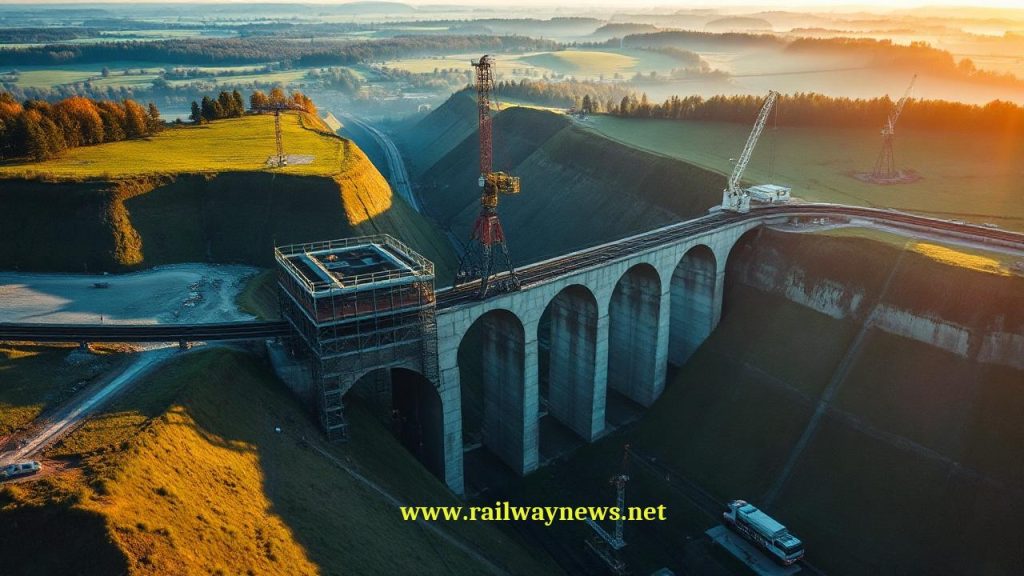
⚡ In Brief: PKP Polskie Linie Kolejowe launched a EUR 575 million tender for the 16 km Gdów–Szczyrzyc railway section near Kraków, the final segment of the Podłęże–Piekiełko programme requiring 2.4 km of tunnels and structures reaching 27 metres above ground.
KRAKÓW, POLAND – PKP Polskie Linie Kolejowe (PLK) opened a tender on 3 July 2026 for construction of the 16 km Gdów–Szczyrzyc railway line, the concluding section of the Podłęże–Piekiełko programme. The contract carries an estimated value of EUR 575 million (PLN 2.5 billion) and a construction timeline of approximately 38 months. No specific tender submission deadline was disclosed in the procurement notice.
What Does This Contract Cover?
The Gdów–Szczyrzyc section requires two tunnels totalling 2.4 km, multiple viaducts, bridges, and trestles including an 850-metre-long structure and a 27-metre-high elevated crossing. A new station at Szczyrzyc and passenger stops at Zręczyce and Gruszów—all with accessible platforms and elevator-equipped underground passages—form the civil works scope alongside grade-separated road crossings and local intersection upgrades. This contract completes the 58 km new-build segment between Podłęże, Tymbark, and Mszana Dolna within a broader programme that also modernises and electrifies 75 km of existing track on the Chabówka–Nowy Sącz route. Once operational, trains will run at speeds of up to 160 km/h on the new alignment.
Key Contract Data
| Parameter | Value |
|---|---|
| Contract Name | Gdów–Szczyrzyc railway line construction (Podłęże–Piekiełko programme, final section) |
| Total Value | EUR 575 million (PLN 2.5 billion) |
| Parties Involved | Contracting authority: PKP Polskie Linie Kolejowe (PLK); bidders not yet disclosed |
| Timeline / Completion | Approximately 38 months from contract award; tender submission deadline not disclosed |
| Country / Corridor | Poland – Lesser Poland Voivodeship; Kraków–Nowy Sącz–Zakopane corridor |
How Does This Compare to Similar Contracts?
The EUR 575 million Gdów–Szczyrzyc tender sits in the same value band as the approximately USD 570 million Boskalis–Van Oord joint-venture dredging contract for expansion of the Port of Luleå in Sweden (Source: MarineLink, 2026). By contrast, NYSE-listed Greenbrier Companies—a major railcar manufacturer and lessor—reported total contract liabilities of just USD 40.1 million as of 31 May 2026, up from USD 22.7 million on 31 August 2025 (Source: Greenbrier 10-Q, 2026). A single Polish rail infrastructure civil works tender thus exceeds an entire global rolling stock lessor’s contract liability balance by more than a factor of fourteen, underscoring the capital intensity gap between infrastructure construction and rolling stock manufacturing. The full Podłęże–Piekiełko programme cost of EUR 2.7 billion is co-financed through the EU National Recovery and Resilience Plan, though the exact co-financing ratio for this specific contract was not publicly detailed.
Editor’s Analysis
PLK’s decision to tender the Gdów–Szczyrzyc section as a single package—rather than splitting tunnels and above-ground works into separate lots—signals a procurement philosophy favouring integrated design-and-build delivery for technically complex alignments. The 38-month timeline implies the Kraków–Nowy Sącz–Zakopane corridor could open for 160 km/h passenger service by late 2029 or early 2030, reshaping tourism access to the Tatra region. Poland’s concurrent surge in industrial capital deployment—KGHM alone announced a USD 8.55 billion investment programme in July 2026 with nearly 80 percent directed to domestic operations (Source: Kitco/Mining.com, 2026)—suggests rail infrastructure spending is competing for the same contractor and materials resources, which may place upward pressure on bid prices for this tender.
FAQ
Q: How much will travel times improve on the Kraków–Nowy Sącz–Zakopane route?
A: Kraków to Nowy Sącz will take approximately 60 minutes and Kraków to Zakopane about 90 minutes once the full Podłęże–Piekiełko programme is complete. Current road travel times between Kraków and Zakopane typically exceed two hours under normal traffic conditions.
Q: What makes the Gdów–Szczyrzyc section the most technically challenging part of the project?
A: The 16 km section includes two tunnels with a combined length of 2.4 km, an 850-metre-long elevated structure, and a viaduct reaching 27 metres above ground—making it the only segment of the programme that combines extensive tunnelling with major bridge engineering on a single alignment.
Q: Who is financing the Podłęże–Piekiełko programme?
A: The EUR 2.7 billion total programme cost is co-financed by European funds through Poland’s National Recovery and Resilience Plan. The specific EU contribution share for the Gdów–Szczyrzyc tender has not been officially confirmed.

Railway infrastructure, rolling stock and transport technologies specialist focused on global rail industry developments, high-speed rail systems, signaling technologies and freight transportation. Covering railway investments, public transport modernization, rail operations and international mobility projects across Europe, Asia and North America.
RELATED POSTS

October 1, 2026 7:09 am
United States regulators confirmed a September 30 deadline for the...

October 1, 2026 12:13 am
Illinois approved $1.5 billion annually for the Northern Illinois Transit...

October 1, 2026 6:10 am
Amtrak approved a System Expansion Committee on July 30 to...

October 1, 2026 4:10 am
DART launched two public ridership dashboards in March 2026 to...

October 1, 2026 3:12 am
Greenbrier confirmed Brian Comstock as new president and CEO effective...
October 1, 2026 5:14 am
Siemens confirmed delivery of the first new S200 train to...