
São Paulo Metro Line 6 Opens First Six Stations Free Trial
São Paulo launched a 180-day free trial of six stations on Metro Line 6 on July 3, reducing bus commute times from 90 to 23 minutes on the new route.
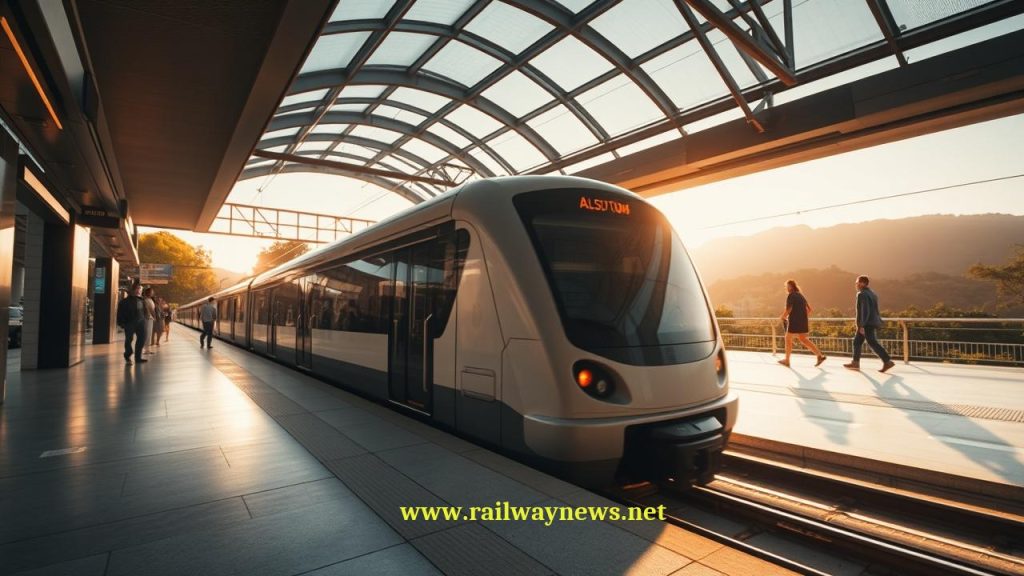
⚡ In Brief: São Paulo opened the first six stations of metro Orange Line 6 on July 3, launching 180 days of free trial operations that cut bus commute times from 90 to 23 minutes on the new route.
São Paulo, Brazil – The São Paulo state government and concessionaire LinhaUni inaugurated the first section of metro Line 6 (Orange) on 3 July 2026, opening six stations between Brasilândia and Perdizes and beginning 180 days of fare-free trial operations, Monday to Friday from 10:00 to 15:00. The partial opening forms part of a USD 3.5 billion (BRL 19 billion) public-private partnership that will eventually deliver a 15 km, 15-station line from Brasilândia to São Joaquim, now 83 % complete.
What Is the Full Scope of This Project?
Line 6 is a new high-capacity metro corridor that will link the northern Brasilândia district to São Joaquim station in the city centre, with direct connections to Lines 1 (Blue), 4 (Yellow) and 7 (Ruby). The completed line will carry an estimated 633 000 passengers per day, with a travel time of 23 minutes over the full route compared to 90 minutes by bus. The infrastructure is being built by ACCIONA under a PPP with the state government, and operations will be managed by concessionaire Linha Universidade for 19 years after construction. Alstom is supplying 22 six-car Metropolis trains built at its Taubaté plant in São Paulo state; 12 of these have already been delivered and tested. The project has generated more than 11 000 direct construction jobs and an additional 5 000 roles within Alstom’s Brazilian supply chain, involving over 120 domestic suppliers.
Key Project Data
| Parameter | Value |
|---|---|
| Project / Contract Name | Line 6 (Orange) – University Line |
| Total Value | USD 3.5 billion (BRL 19 billion) |
| Parties Involved | São Paulo state government (grantor), LinhaUni/Linha Universidade (concessionaire), ACCIONA (construction), Alstom (rolling stock) |
| Timeline / Completion | First section opened July 2026; full line scheduled for 2027 |
| Country / Corridor | Brazil, São Paulo – Brasilândia to São Joaquim (northern zone to city centre) |
How Does This Compare to Similar Projects?
Line 6’s estimated cost of roughly USD 233 million per km places it among the most capital-intensive metro projects in Brazil. São Paulo’s earlier PPP metro, Line 4 (Yellow), delivered 12.8 km and 11 stations for approximately BRL 8.2 billion (around USD 1.5 billion at the time), equating to about USD 117 million per km when it opened in 2010. More recently, Rio de Janeiro’s Line 4 (16 km, USD 1.9 billion) cost about USD 119 million per km in 2016. The higher per-kilometre outlay for Line 6 reflects deeper station excavations, denser urban surroundings, and inflation over the intervening decade. Globally, underground metro construction in dense city centres typically ranges from USD 100 million to USD 300 million per km according to UITP industry benchmarks (UITP, 2024). The specific split between public and private capital within the PPP contract was not disclosed by the concessionaire, nor have operational start dates for full revenue service after the trial period been announced.
Editor’s Analysis
Opening the first segment of Line 6 signals that São Paulo is leaning heavily on PPPs to accelerate metro delivery after the model proved workable on Line 4. The rollout also illustrates how Brazil’s infrastructure push is targeting both mobility outcomes and industrial policy: Alstom’s Taubaté plant supplied the trains, sustaining over 5 000 local jobs and reinforcing a broader trend of multinational suppliers expanding local assembly to serve Brazilian and Latin American markets. Even so, the 2027 completion target remains contingent on maintaining current construction momentum, which has already produced near-total civil completion at several stations on the open section. The project’s cost premium will likely refocus attention on whether underground metro remains the best-value solution for future corridors or whether alternatives such as elevated light metro can deliver capacity at lower capital intensity.
FAQ
Q: How many passengers will Line 6 carry daily once fully open?
A: The line is designed for 633 000 passengers per day, making it one of São Paulo’s busiest public transport corridors.
Q: What trains are being used on the Orange Line?
A: Alstom ‘Metropolis’ trains, built in Taubaté, Brazil. Each six-car set holds up to 2 044 passengers and has a maximum operating speed of 80 km/h.
Q: When will the full line between Brasilândia and São Joaquim be operational?
A: The São Paulo state government and concessionaire target completion in 2027, pending the remaining civil works and systems integration tests on the southern stations.

Railway infrastructure, rolling stock and transport technologies specialist focused on global rail industry developments, high-speed rail systems, signaling technologies and freight transportation. Covering railway investments, public transport modernization, rail operations and international mobility projects across Europe, Asia and North America.
RELATED POSTS

October 8, 2026 1:15 pm
Alstom secured a €1bn contract to build 13 automated trains,...

October 8, 2026 12:18 pm
Siemens Mobility signed an agreement with VinSpeed to supply 350...

October 5, 2026 6:12 pm
AECOM and Jacobs secured a contract in September 2026 to...

October 1, 2026 12:13 am
Illinois approved $1.5 billion annually for the Northern Illinois Transit...

October 4, 2026 11:08 pm
Sound Transit confirmed the September 30 opening of Seattle Pinehurst...

October 5, 2026 1:13 pm
New York MTA confirmed a late 2026 DEIS release for...