
Portugal Invests €200M in Northern and Minho Lines
Infraestruturas de Portugal launched two contracts worth EUR 200 million on 4 July 2026 to modernize the Northern Line and eliminate 11 Minho Line crossings.
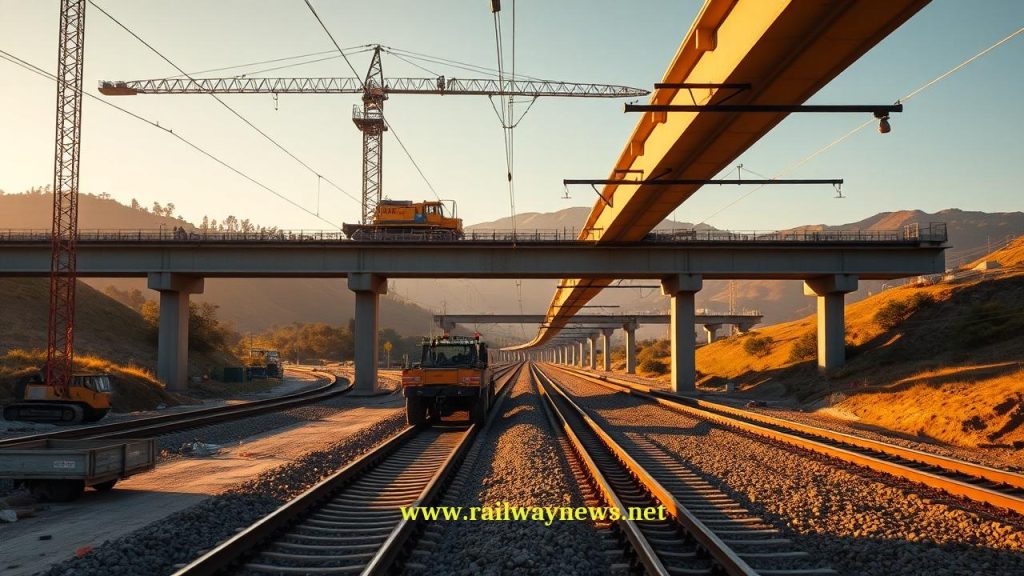
⚡ In Brief: Infraestruturas de Portugal launched two contracts worth EUR 200 million to modernize the Northern Line and Minho Line, targeting grade-separation, capacity upgrades, and safety improvements under the National Investment Program 2030.
LISBON, PORTUGAL – Infraestruturas de Portugal (IP) announced the launch of two major rail infrastructure contracts on 4 July 2026, committing EUR 200 million to modernize sections of the Northern Line and Minho Line. The Northern Line contract, valued at EUR 160 million, covers the Ovar (Válega)–Espinho section, while the Minho Line contract allocates EUR 40 million to eliminate 11 at-grade crossings between Nine and Barroselas. An additional EUR 95 million has been earmarked separately for signaling modernization on the Northern Line, bringing the total Northern Line investment envelope to EUR 255 million.
What Is the Full Scope of This Project?
The EUR 160 million Northern Line contract encompasses complete rehabilitation of railway superstructure on the Ovar–Espinho segment, reorganization of station infrastructure at Ovar and Esmoriz, and construction of grade-separated road and pedestrian crossings to eliminate at-grade intersections. Capacity increases for both freight and passenger trains are embedded in the design. The Minho Line component, covering a 20-kilometer stretch between Nine and Barroselas, funds overpass construction at 11 level crossings alongside local infrastructure modernization, with a 38-month execution window designed to minimize traffic disruption. IP confirmed the Northern Line section is scheduled for completion by 2029. No contractor names were disclosed at the time of the announcement.
Key Project Data
| Parameter | Value |
|---|---|
| Project / Contract Name | Northern Line Modernization (Ovar–Espinho) & Minho Line Grade-Separation (Nine–Barroselas) |
| Total Value | EUR 200 million (EUR 160M Northern + EUR 40M Minho); additional EUR 95M for Northern Line signaling |
| Parties Involved | Infraestruturas de Portugal (procuring authority); contractors not yet disclosed |
| Timeline / Completion | Northern Line: 2029; Minho Line: 38 months from contract award |
| Country / Corridor | Portugal; Northern Line (Lisbon–Porto, ~336 km) and Minho Line (Porto–Valença, ~134 km, Iberian border connection) |
How Does This Compare to Similar Projects?
Portugal’s combined EUR 255 million Northern Line allocation (modernization plus signaling) sits within a broader European pattern of intensified rail infrastructure spending. Germany’s cabinet approved a draft budget on 4 July 2026 with more than EUR 203 billion in borrowing for 2026, with infrastructure and defense identified as primary recipients, signaling sustained public capital deployment across EU member states (Source: Reuters, 2026). Within Portugal itself, the National Investment Program 2030 frames these contracts as part of a systematic corridor-by-corridor upgrade cycle rather than a one-off intervention. IP’s parallel national program to eliminate and automate over 200 level crossings nationwide provides further scale reference — the 11 crossings addressed on the Minho Line represent roughly 5% of that total target. Portugal’s rail freight market entered 2025 with modest traffic and intermodal volume increases, with growth broadening across commodity groups after a challenging 2024, and the sector entered 2026 cautiously optimistic (Source: Logistics Management, 2025). Capacity enhancements on the Northern Line — the country’s highest-density rail corridor — directly address freight bottlenecks that have constrained intermodal growth on the Iberian peninsula axis.
Editor’s Analysis
IP’s decision to bundle civil works (grade-separation, superstructure rehabilitation) with station reorganization on the Northern Line indicates a whole-segment approach rather than incremental patchwork — consistent with the agency’s 2030 corridor strategy. The separate EUR 95 million signaling contract on the same line suggests IP is sequencing physical track work ahead of digital control-layer upgrades, a pattern observed across multiple European infrastructure managers seeking to minimize simultaneous service disruption on critical freight-passenger arteries. The Minho Line’s focus on crossing elimination, while smaller in absolute euros, addresses a persistent safety and speed-restriction drag on the Porto–Valença–Galicia corridor, where cross-border freight volumes showed nascent recovery entering 2025 after a difficult preceding year (Source: Logistics Management, 2025).
FAQ
Q: Which companies will execute the EUR 200 million in contracts?
A: Infraestruturas de Portugal has not publicly named the awarded contractors. The announcement covers the contract launch; bidders or selected consortia have yet to be disclosed as of publication.
Q: Will rail services be disrupted during the Northern Line modernization?
A: IP specified that the Minho Line work is scheduled to minimize impact on rail traffic, but equivalent operational detail for the Northern Line Ovar–Espinho section — including any temporary speed restrictions or single-line working — has not been officially confirmed.
Q: How does EUR 160 million for one Northern Line section compare to overall Portuguese rail investment?
A: The EUR 160 million Ovar–Espinho contract, combined with the separate EUR 95 million Northern Line signaling program, represents a EUR 255 million concentration on a single corridor segment. For context, the broader National Investment Program 2030 encompasses multiple corridors; the Northern Line alone connects Portugal’s two largest cities over 336 km and carries the highest share of national rail traffic.

Railway infrastructure, rolling stock and transport technologies specialist focused on global rail industry developments, high-speed rail systems, signaling technologies and freight transportation. Covering railway investments, public transport modernization, rail operations and international mobility projects across Europe, Asia and North America.
RELATED POSTS

October 8, 2026 1:15 pm
Alstom secured a €1bn contract to build 13 automated trains,...

October 1, 2026 7:09 am
United States regulators confirmed a September 30 deadline for the...

October 8, 2026 12:18 pm
Siemens Mobility signed an agreement with VinSpeed to supply 350...

October 4, 2026 5:14 pm
Alstom secured a CA$4.7 billion order from VIA Rail Canada...

October 5, 2026 6:12 pm
AECOM and Jacobs secured a contract in September 2026 to...

October 1, 2026 12:13 am
Illinois approved $1.5 billion annually for the Northern Illinois Transit...