
Rail Baltica Confirms Draft Interface Spec by Year-End
Rail Baltica and CPK confirmed a draft interface spec by year-end, aligning high-speed rail standards at the Lithuania-Poland border for the 870 km corridor.
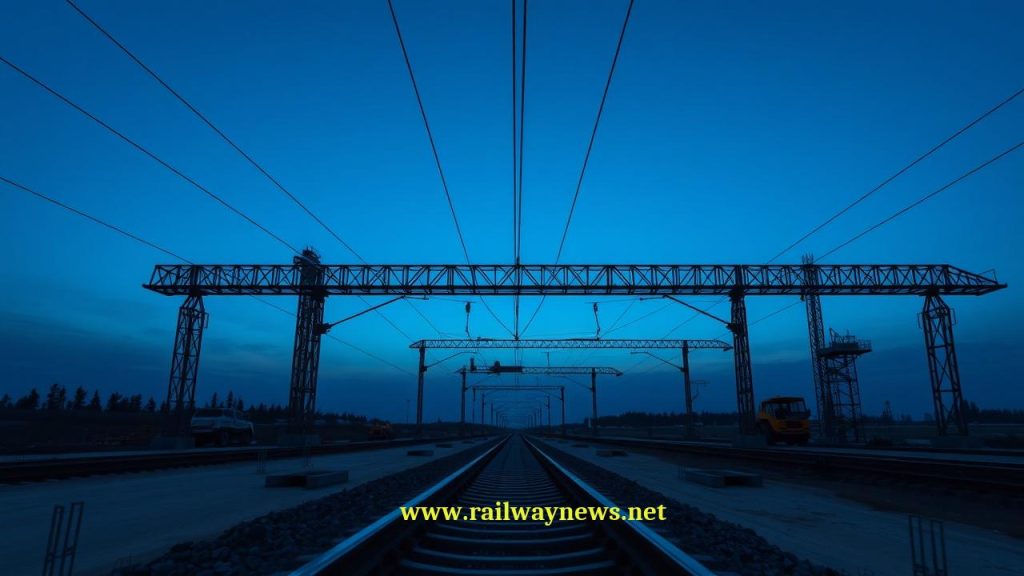
⚡ In Brief: Rail Baltica and Poland’s Port Polska program held a joint technical workshop in Vilnius to align high-speed rail engineering standards at the Lithuanian-Polish border, targeting a draft interface specification by the end of this year.
VILNIUS, Lithuania – Technical experts from Rail Baltica and Poland’s Centralny Port Komunikacyjny (CPK) convened at RB Rail AS headquarters in Vilnius for a workshop focused on aligning engineering and operational requirements for high-speed rail infrastructure at the Lithuanian-Polish border. The meeting included a site visit to the Palemonas intermodal terminal and active construction areas in Lithuania where track superstructure installation is underway. The parties confirmed they are working through regular electrification and signaling working groups to agree on a draft interface specification by year-end.
What Is the Full Scope of This Project?
The technical cooperation spans two distinct but interconnecting infrastructure programs: Rail Baltica, the 870 km high-speed rail corridor linking Estonia, Latvia, and Lithuania to the European network, and Poland’s Port Polska program — the largest combined railway and airport investment in Polish history, coordinated by CPK. Port Polska includes a new central airport between Warsaw and Łódź and a national high-speed rail network anchored by a 480 km “Y” line connecting Warsaw, Łódź, Poznań, and Wrocław. The workshop examined turnout solutions, catenary system technologies, driven pile versus cast-in-place bored pile foundations, frame-type structure design, transverse superelevation, track stiffness management in transition zones, counter-rail use on high-speed lines, hydraulic calculation methods for drainage, fire-resistant concrete fiber properties, noise barrier materials, emergency exit configurations, and cable route cross-sections. Both programs fall within the European North Sea–Baltic Sea corridor.
Key Project Data
| Parameter | Value |
|---|---|
| Project / Contract Name | Rail Baltica–Port Polska Cross-Border Technical Cooperation |
| Total Value | Not disclosed |
| Parties Involved | RB Rail AS, Centralny Port Komunikacyjny (CPK), PKP PLK (Polish infrastructure manager) |
| Timeline / Completion | Draft interface specification targeted by end of 2024; ongoing working groups for electrification and signaling |
| Country / Corridor | Lithuania–Poland border; North Sea–Baltic Sea TEN-T corridor |
How Does This Compare to Similar Projects?
CPK’s Port Polska program represents the single largest transport investment in Poland’s history, with the “Y” line alone spanning 480 km — comparable in ambition to France’s LGV Sud-Est (409 km) or Germany’s Erfurt–Leipzig/Halle high-speed line (123 km, but part of the broader 500 km German Unity Transport Project). Concurrent Polish rail modernization activity includes the Lublin Główny station redevelopment, which entered public consultation in mid-2024 and is part of a broader wave of EU-funded station upgrades across Poland. (Source: Global Railway Review, 2024) According to market analysis, the Poland rail freight sector is projected to see substantial investment through 2025, driven by EU funding instruments directed at both station modernization and strategic rail infrastructure enhancement — a funding environment that benefits both the Polish domestic network and cross-border linkages like the Rail Baltica interface. (Source: IndexBox, 2024) However, specific cost figures for the technical alignment work between Rail Baltica and CPK were not disclosed by either party.
Editor’s Analysis
The Vilnius workshop signals a shift from high-level political declarations to granular operational coordination between Rail Baltica and its Polish counterparts — a transition that historically separates corridors that achieve interoperability from those that remain paper agreements. CPK deputy design director David Pozo Rubio’s call for annual technical workshops indicates that both sides recognize the gap between design-phase alignment and construction-phase execution. With PKP PLK simultaneously building the Polish-side line to the border and Rail Baltica advancing track installation in Lithuania, the year-end interface specification deadline carries operational weight: any delay in agreeing electrification and signaling parameters could create costly retrofitting requirements once physical track meets at the border. The broader Polish rail market context — with EU funding accelerating both freight and passenger modernization — suggests that Warsaw has institutional incentives to ensure the Baltic link does not become a bottleneck on the North Sea–Baltic corridor. (Source: IndexBox, 2024; Global Railway Review, 2024)
FAQ
Q: What specific technical parameters are being aligned at the Lithuanian-Polish border?
A: The working groups cover electrification systems, signaling compatibility, track gauge requirements, catenary support structures, turnout specifications, and drainage hydraulic calculations. The detailed technical values under discussion were not publicly released.
Q: When will trains be able to run at high speed across the Lithuania-Poland border?
A: No operational start date has been confirmed. Both Rail Baltica and PKP PLK are still in construction and design phases, with a draft interface specification targeted by the end of 2024. Full high-speed cross-border service will depend on completion of infrastructure on both sides.
Q: Does the dual-use infrastructure requirement mean military applications are being considered?
A: The workshop included discussion of “requirements related to the potential dual use of the infrastructure,” but neither RB Rail AS nor CPK specified whether this refers to military mobility, civil defense, or freight-passenger dual use. Further details were not officially confirmed.

Railway infrastructure, rolling stock and transport technologies specialist focused on global rail industry developments, high-speed rail systems, signaling technologies and freight transportation. Covering railway investments, public transport modernization, rail operations and international mobility projects across Europe, Asia and North America.
RELATED POSTS

October 8, 2026 1:15 pm
Alstom secured a €1bn contract to build 13 automated trains,...

October 1, 2026 7:09 am
United States regulators confirmed a September 30 deadline for the...

October 8, 2026 12:18 pm
Siemens Mobility signed an agreement with VinSpeed to supply 350...

October 4, 2026 5:14 pm
Alstom secured a CA$4.7 billion order from VIA Rail Canada...

October 1, 2026 12:13 am
Illinois approved $1.5 billion annually for the Northern Illinois Transit...

October 1, 2026 6:10 am
Amtrak approved a System Expansion Committee on July 30 to...