
DB InfraGO Upgrades 260 km Berlin-Hanover Corridor
DB InfraGO will modernise 260 km of track and 175 switches on the Berlin–Hanover corridor between October 2026 and December 2027, with 25 station upgrades.
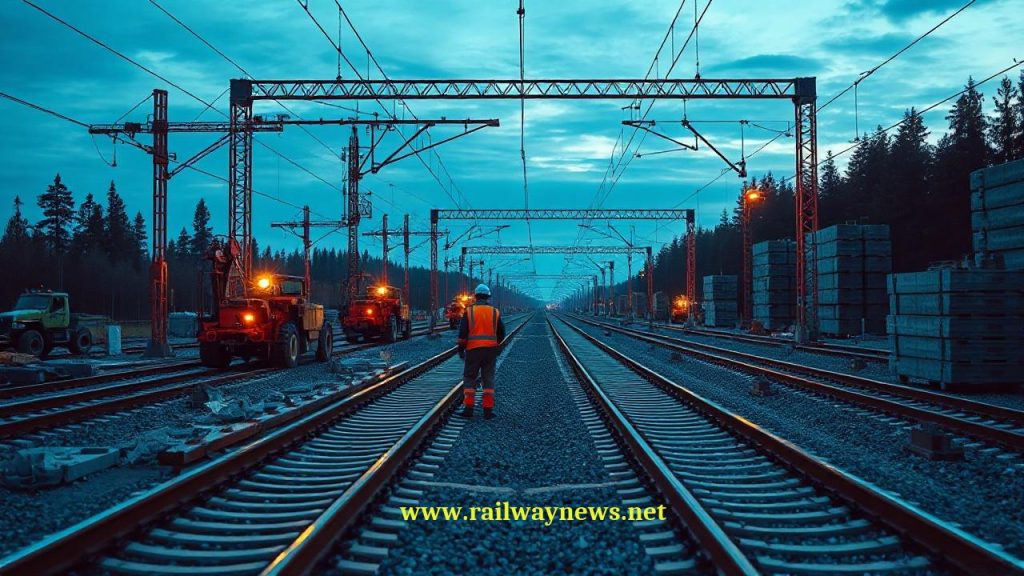
⚡ In Brief: DB InfraGO will modernise the 221-km Berlin–Hanover corridor from October 2026, replacing over 175 switches, 260 km of track and upgrading 25 stations, with phased closures through end of 2027.
BERLIN, GERMANY – DB InfraGO will begin a comprehensive modernisation of the 221-km Berlin–Hanover rail corridor in October 2026, replacing over 175 switches and 260 km of track while upgrading 25 stations by the end of 2027. The programme covers the route from Berlin to Lehrte, a key rail hub near Hanover, and includes electrification of the parallel Lehrter Stammbahn line.
What Is the Full Scope of This Project?
The project encompasses all major rail infrastructure elements along the entire corridor, including 13 km of sound-absorbing panels, rehabilitation of bridges, footbridges, switch heating systems, and maintenance of power supply, signalling and traffic control systems. Sections of fixed track infrastructure on the high-speed line near Stendal will also be modernised. The work will be executed in four main phases: complete closure of the eastern section (Fallersleben to Berlin-Spandau) from October to December 2026, partial single-track service via the Lehrter Stammbahn from December 2026 to October 2027, complete closure of the western section (Lehrte to Fallersleben) from February to July 2027, and a final complete closure of the eastern section from October to December 2027. Exactly how many of the 25 stations will be made fully accessible was not specified.
Key Project Data
| Parameter | Value |
|---|---|
| Project / Contract Name | Berlin–Hanover Corridor Modernisation |
| Total Value | Not disclosed |
| Parties Involved | DB InfraGO (client); contractor details not publicly released |
| Timeline / Completion | October 2026 – December 2027 |
| Country / Corridor | Germany, Berlin–Hanover |
How Does This Compare to Similar Projects?
While DB InfraGO has not disclosed the total investment for this corridor, projects of comparable linear-infrastructure scale are advancing elsewhere in Europe. In Poland, the Lublin Główny station modernisation entered public consultation in 2025, focusing on a single historic station rather than a complete corridor, with no cost announced (Source: Global Railway Review, 2025). In the energy sector, National Grid appointed five contractors for a £1.2 billion programme of overhead line upgrades across England and Wales, scheduled to start in 2026, illustrating the financial scale typical for long-distance infrastructure renewals (Source: Construction News, 2026). The Berlin–Hanover project is the eighth comprehensive corridor renewal in Germany and the second-longest after Hamburg–Berlin; bundling all rail systems into phased closures contrasts with the sequential approach often seen elsewhere.
Editor’s Analysis
The simultaneous modernisation of track, signalling, power supply and electrification under a single coordinated closure strategy marks a further step in Germany’s shift towards bundling infrastructure works to minimise long-term disruption. With over 400 daily passenger trains and 90 freight trains on the route, maintaining single-track capacity via the Lehrter Stammbahn during phase two is a pragmatic move that echoes the industry’s broader push for construction-phase redundancy. Electrification of the Lehrter Stammbahn also reinforces the corridor’s role in decarbonising freight, a priority underscored by the 51% rise in EU registrations of battery-electric trucks above 16 tonnes in 2025 (Source: Mercedes-Benz Trucks via Automotive World, 2025), and comes as rail operators increasingly pair electrified long-haul with zero-emission last-mile solutions.
FAQ
Q: When does the Berlin–Hanover corridor modernisation start and how long will it last?
A: Work begins in October 2026 and runs until December 2027, with phased closures throughout. The first complete closure (eastern section) takes place from October to December 2026.
Q: How many railway stations are being upgraded and will they become step-free?
A: 25 stations will be modernised, and some of these will become fully accessible to passengers with limited mobility. The exact number of stations receiving full step-free access was not disclosed.
Q: Will trains continue to operate during the construction work?
A: Yes, through staged closures. From December 2026 to October 2027, trains will use the parallel Lehrter Stammbahn on certain sections via single track, allowing service continuation for the approximately 490 trains that use the corridor daily.

Railway infrastructure, rolling stock and transport technologies specialist focused on global rail industry developments, high-speed rail systems, signaling technologies and freight transportation. Covering railway investments, public transport modernization, rail operations and international mobility projects across Europe, Asia and North America.
RELATED POSTS

October 8, 2026 1:15 pm
Alstom secured a €1bn contract to build 13 automated trains,...

October 1, 2026 7:09 am
United States regulators confirmed a September 30 deadline for the...

October 8, 2026 12:18 pm
Siemens Mobility signed an agreement with VinSpeed to supply 350...

October 4, 2026 5:14 pm
Alstom secured a CA$4.7 billion order from VIA Rail Canada...

October 5, 2026 6:12 pm
AECOM and Jacobs secured a contract in September 2026 to...

October 1, 2026 12:13 am
Illinois approved $1.5 billion annually for the Northern Illinois Transit...