
SWR Transfers 130-Year-Old Haslemere Signal Box to Museum
South Western Railway transferred the 130-year-old Haslemere Signal Box to a trust on 13 June 2026, opening a railway museum after 35 volunteers restored it.
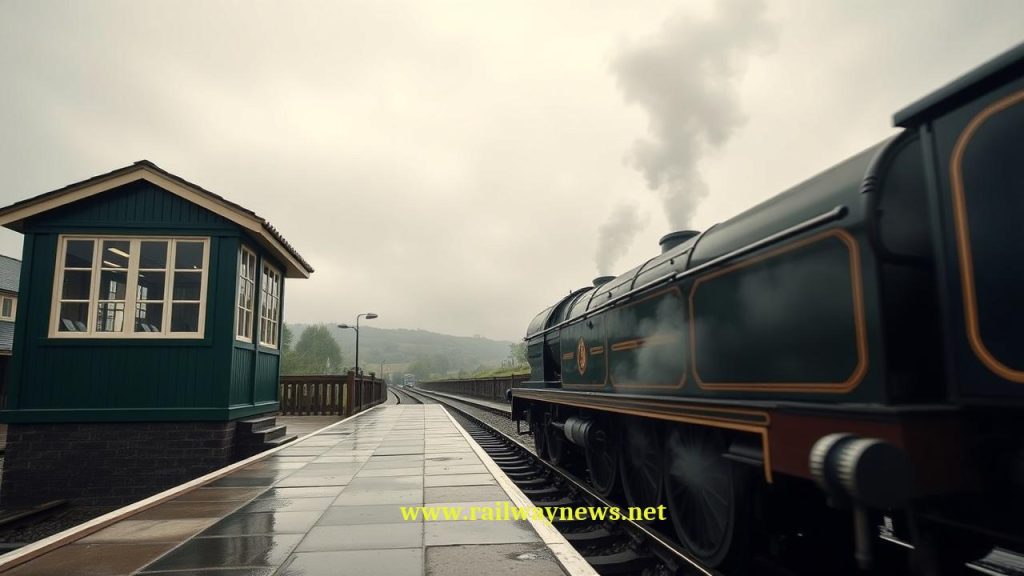
⚡ In Brief: South Western Railway and Network Rail Wessex handed over the decommissioned 1895 Haslemere Signal Box to the Haslemere Signal Box Trust on 13 June 2026, converting it into a railway museum after a three-month restoration involving more than 35 volunteers and specialist contractor Octavius.
HASLEMERE, UK – South Western Railway (SWR) and Network Rail Wessex formally transferred ownership of the 130-year-old Haslemere Signal Box to a community trust during a ceremony on Saturday 13 June 2026, capping a three-month volunteer restoration effort and opening a new railway memorabilia museum on the station’s second floor.
What Is the Full Scope of This Project?
The Haslemere Signal Box restoration and handover forms part of a wider SWR and Network Rail Wessex programme that has repurposed 32 station building locations into community spaces, including cafes, meeting rooms, art studios, and food repurposing centres. Built in 1895, the platform-level signal box guided its last train in October 2025 before decommissioning under the Farncombe to Petersfield resignalling programme. Over the three months preceding the handover, more than 35 volunteers from SWR and Network Rail carried out internal refurbishment, while contractor Octavius completed external repainting to restore the structure to its traditional Southern Railway appearance. The Haslemere Signal Box Trust secured the site at a peppercorn rent from Network Rail and simultaneously opened a railway memorabilia museum on the second floor of the main station building. Rail Minister Lord Hendy attended the ceremony, which coincided with a scheduled water stop by the Clan Line steam locomotive operated by the Railway Touring Company.
Key Project Data
| Parameter | Value |
|---|---|
| Project / Contract Name | Haslemere Signal Box Restoration & Museum Conversion |
| Total Value | Not disclosed; peppercorn rent arrangement with Network Rail |
| Parties Involved | South Western Railway, Network Rail Wessex, Haslemere Signal Box Trust, Octavius (external works contractor), Friends of Haslemere Signal Box |
| Timeline / Completion | Built 1895; decommissioned October 2025; restoration March–June 2026; handover 13 June 2026 |
| Country / Corridor | United Kingdom; Portsmouth Direct Line, Farncombe to Petersfield section |
How Does This Compare to Similar Projects?
Within SWR and Network Rail Wessex’s own portfolio, two other community conversions provide direct comparison. At Camberley station, the former booking hall and two unused offices were adopted by the Autism Trust to operate the Station Stop Kiosk and Polly’s Place, a training and support space for people with autism. A separate disused railway parcel near Brookwood Cemetery was converted into a reflective garden adjacent to the former London Necropolis Railway terminus. The Haslemere project differs from both in retaining the original operational structure intact as a heritage asset rather than repurposing it for an unrelated community function. The decommissioning itself reflects a global acceleration in resignalling investment: the railway signalling market is projected to grow at a compound annual growth rate of 5.8% from 2026 to 2035, with integrated smart networks incorporating wireless condition monitoring expected to capture more than 40% of new installations by 2030, up from 20% in 2025. (Source: IndexBox, 2025) Each resignalling programme of this type inherently renders legacy mechanical signal boxes redundant, creating preservation challenges that the Haslemere model addresses through direct community asset transfer at nominal cost.
Editor’s Analysis
The Haslemere handover demonstrates a replicable model for preserving mechanically signalled heritage infrastructure that would otherwise face demolition following electronic resignalling. The 32-location community conversion programme by SWR and Network Rail Wessex signals an operator-level strategy to offset public-sector asset disposal pressures through peppercorn-rent transfers to local trusts, avoiding contentious building sales while maintaining operational goodwill along the corridor. As resignalling investment accelerates globally — driven by infrastructure safety mandates and smart network adoption at a projected 5.8% CAGR through 2035 — other infrastructure managers in Europe and Asia-Pacific will face a rising volume of redundant signal boxes, making the Haslemere template increasingly relevant beyond the UK market. (Source: IndexBox, 2025)
FAQ
Q: Why was the Haslemere Signal Box decommissioned after 130 years?
A: The signal box was taken out of service in October 2025 as part of the Farncombe to Petersfield resignalling programme, which replaced legacy mechanical signalling with modern electronic systems along the Portsmouth Direct Line. The building itself was preserved rather than demolished due to its platform-level location and historical significance.
Q: What does a peppercorn rent mean for the Haslemere Signal Box Trust?
A: A peppercorn rent is a nominal or token rental payment — effectively zero commercial cost — that allows the Trust to occupy and operate the signal box as a museum without bearing a market-rate lease burden. The specific annual figure was not disclosed, but the arrangement ensures long-term community custody of the asset.
Q: When can the public visit the museum?
A: The railway memorabilia museum on the second floor of Haslemere station opened to invited guests during the 13 June 2026 ceremony. Regular public opening hours and admission arrangements have not been officially confirmed by the Trust at time of publication.

Railway infrastructure, rolling stock and transport technologies specialist focused on global rail industry developments, high-speed rail systems, signaling technologies and freight transportation. Covering railway investments, public transport modernization, rail operations and international mobility projects across Europe, Asia and North America.
RELATED POSTS

October 1, 2026 7:09 am
United States regulators confirmed a September 30 deadline for the...

October 1, 2026 12:13 am
Illinois approved $1.5 billion annually for the Northern Illinois Transit...

October 4, 2026 5:14 pm
Alstom secured a CA$4.7 billion order from VIA Rail Canada...

October 6, 2026 2:14 am
Union Pacific launched export rail shipments with Ferromex to deliver...

October 1, 2026 6:10 am
Amtrak approved a System Expansion Committee on July 30 to...
October 1, 2026 3:12 am
Greenbrier confirmed Brian Comstock as new president and CEO effective...