
Hitachi Rail Signs Contract for 20 High-Speed Trains in Poland
Hitachi Rail and PESA Bydgoszcz formed a consortium to bid for 20 high-speed trains in Poland, with an option for 35 more and a 30-year maintenance deal.
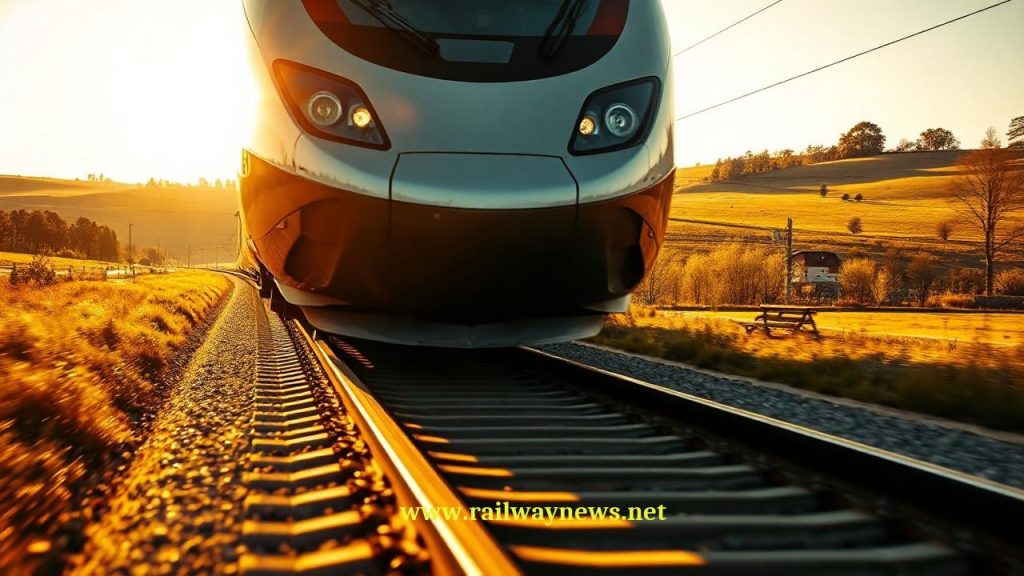
⚡ In Brief: Hitachi Rail and PESA Bydgoszcz formed a consortium to bid for PKP Intercity’s tender for 20 very high-speed trains, with an option for 35 additional units and a 30-year maintenance agreement, including technology transfer to Poland.
WARSAW, POLAND – Hitachi Rail and Polish rolling stock manufacturer PESA Bydgoszcz signed a strategic cooperation agreement to jointly bid for PKP Intercity’s tender to supply 20 electric trains capable of operating at a minimum speed of 320 km/h. The contract includes an option for 35 additional units and a 30-year maintenance provision. The agreement, announced in June 2026, establishes a two-stage production plan beginning at Hitachi’s Italian facilities before transitioning partial manufacturing to Poland.
What Does This Contract Cover?
The consortium will propose Hitachi Rail’s ETR1000 platform for the PKP Intercity tender, a model already certified for operation across Germany, Austria, Italy, and France. Beyond the initial 20-unit order, the framework accommodates 35 optional additional trainsets. A two-phase production strategy mandates that the first 20 trains be built at Hitachi Rail’s Italian manufacturing sites, after which PESA assumes progressively greater involvement with the objective of localizing production in Bydgoszcz, Poland. PESA will assume full technical maintenance responsibilities for all trains operating within Poland. The agreement also encompasses technology transfer covering aluminum car body welding and double-decker train construction, with new production facilities to be established in Bydgoszcz as a center of excellence for these competencies.
Key Contract Data
| Parameter | Value |
|---|---|
| Contract Name | PKP Intercity Very High-Speed Train Tender (Consortium Bid) |
| Total Value | Not disclosed |
| Parties Involved | Hitachi Rail, PESA Bydgoszcz, PKP Intercity (buyer), Polish Development Fund (PFR, PESA shareholder) |
| Timeline / Completion | 30-year maintenance provision; manufacturing timeline not disclosed |
| Country / Corridor | Poland, with Central/Eastern European and Scandinavian export potential |
How Does This Compare to Similar Contracts?
No directly comparable tender for 320 km/h trainsets in Central Europe during 2024–2025 was publicly available at time of publication. The broader Polish railway market does provide relevant procurement context: the market for railway signaling systems in Poland is projected to expand considerably, driven by government infrastructure spending and modernization programs aligned with European Union co-financing cycles (Source: IndexBox, 2024). PKP Intercity’s tender forms part of a national high-speed rail development strategy that parallels large-scale civil engineering framework procurements observed elsewhere in European infrastructure markets during the same period, including a £560 million building works framework by the Met Police in the UK and a five-year civil engineering framework engagement by National Grid (Source: Construction News, June 2026). The Hitachi-PESA consortium’s ETR1000 platform competes against established high-speed platforms: Siemens’ Velaro platform offers service-proven 320 km/h operation across multiple European networks with Deutsche Bahn and Renfe as reference operators, while Alstom’s Avelia Horizon (new-generation TGV) provides 350 km/h maximum operating speed with SNCF as anchor customer. The ETR1000 differentiates through its multi-system compatibility covering German, Austrian, Italian, and French infrastructure from a single homologation baseline (Source: Hitachi Rail, 2025).
Editor’s Analysis
The alignment of this consortium bid with PFR’s ownership of PESA signals a deliberate industrial policy maneuver rather than a standalone commercial arrangement. By structuring production as a phased localization rather than a one-off import, Poland positions its domestic manufacturing base to capture value beyond this single tender — specifically in aluminum carbody competence, which represents a structural barrier to entry for rolling stock exporters globally. The mention of double-decker trains and potential expansion into metro multiple units suggests this consortium intends to compete across multiple PKP and municipal operator procurement categories, not merely the high-speed segment. This multi-platform localization model mirrors the strategy Japanese industrial groups have deployed in Southeast Asian rail markets, where technology transfer agreements serve as market-access instruments for follow-on orders.
FAQ
Q: What type of train is the ETR1000 and where does it currently operate?
A: The ETR1000 is Hitachi Rail’s high-speed electric multiple unit capable of commercial operation at 320 km/h. It is certified and in service across Italy, France, Germany, and Austria, with multi-system compatibility for various European power supply and signaling configurations.
Q: How many total trains could be ordered under this PKP Intercity tender?
A: The base tender covers 20 trainsets, with a contractual option for an additional 35 units, bringing the potential total to 55 very high-speed trains. If exercised, this would represent one of Central Europe’s largest single high-speed fleet deployments.
Q: What maintenance obligations are included in the agreement?
A: PESA Bydgoszcz will hold responsibility for the technical maintenance of all trains operating in Poland under a 30-year maintenance provision. The specific depot locations and maintenance workforce ramp-up timeline have not been publicly disclosed.

Transport and railway industry editor covering global rail infrastructure, sustainable mobility, urban transit systems and next-generation railway technologies with a focus on accessible and industry-focused reporting.
RELATED POSTS

October 1, 2026 7:09 am
United States regulators confirmed a September 30 deadline for the...

October 8, 2026 1:15 pm
Alstom secured a €1bn contract to build 13 automated trains,...

October 4, 2026 5:14 pm
Alstom secured a CA$4.7 billion order from VIA Rail Canada...

October 1, 2026 12:13 am
Illinois approved $1.5 billion annually for the Northern Illinois Transit...
October 6, 2026 2:14 am
Union Pacific launched export rail shipments with Ferromex to deliver...

October 1, 2026 6:10 am
Amtrak approved a System Expansion Committee on July 30 to...