
Turkey Confirms Bursa-Osmaneli High-Speed Rail by 2025
Turkey confirmed the 106-km Bursa–Osmaneli high-speed rail section will enter service in H2 2025, linking Bursa to the new Ankara–Istanbul HSR line at 250 km/h.
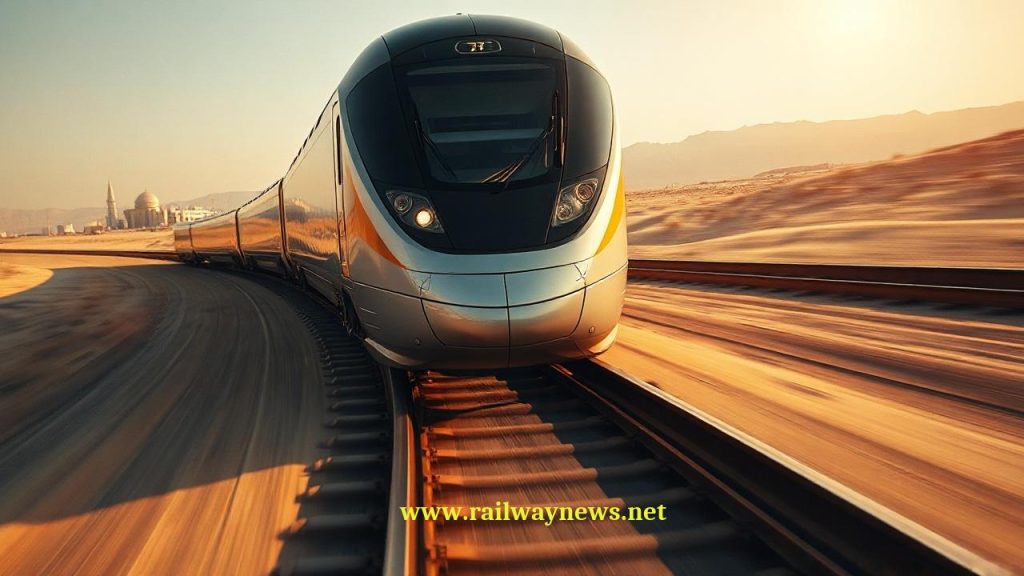
⚡ In Brief: Turkey’s Bursa–Osmaneli high-speed rail section enters final superstructure phase, targeting H2 2025 completion to connect Bursa to the national network at 250 km/h with 2h15m travel times to both Ankara and Istanbul.
ANKARA, Turkey – Minister of Transport and Infrastructure Abdulkadir Uraloğlu confirmed the 106-km Bursa–Osmaneli high-speed rail section has reached its final superstructure phase, with completion scheduled for the second half of 2025. The segment forms part of the broader 201-km Bandırma–Bursa–Yenişehir–Osmaneli corridor, designed for 250 km/h operation and projected to serve 30 million passengers annually alongside 59 million tons of freight capacity.
What Is the Full Scope of This Project?
The Bursa–Osmaneli section spans 106 km with stations at Osmaneli, Yenişehir, Yenişehir Airport, Gürsu, and Bursa, where earthworks, tunnels, and all engineering structures are already complete and railway superstructure installation is underway. Once operational, trains from Bursa will join the Ankara–Istanbul high-speed line at the Osmaneli junction, cutting travel time to both metropolitan centres to approximately 2 hours and 15 minutes—down from significantly longer road journeys. The western extension through Teknosab, Karacabey, Dağkadı, and Kuşcenneti is slated for 2028 completion, linking industrial zones and Marmara Sea ports directly to the high-speed backbone. Engineering firms Jacobs, Sener, and Steer have provided consultancy support to maintain project momentum amid rising construction costs, according to entity verification data reviewed by this publication. Total project cost for the full 201-km corridor was not disclosed by Turkish authorities.
Key Project Data
| Parameter | Value |
|---|---|
| Project / Contract Name | Bandırma–Bursa–Yenişehir–Osmaneli High-Speed Rail Project (Bursa–Osmaneli Section) |
| Total Value | Not disclosed |
| Parties Involved | Ministry of Transport and Infrastructure (Turkey); consultancy support from Jacobs, Sener, Steer; TÜRASAŞ (rolling stock) |
| Timeline / Completion | Bursa–Osmaneli section: H2 2025; Western extension (Teknosab–Kuşcenneti): 2028 |
| Country / Corridor | Turkey / Marmara Region – Ankara–Istanbul HSR corridor |
How Does This Compare to Similar Projects?
Turkey’s current high-speed and rapid rail network totals approximately 2,251 km, concentrated along the Ankara–Istanbul axis and serving 20 cities covering 51% of the population. The official target of 6,000 km by 2035 represents a near-tripling of track length within roughly a decade—an expansion pace that exceeds most European peers. Spain, holder of the EU’s largest HSR network at approximately 4,000 km, required over 30 years to reach that figure. France operates roughly 2,800 km of high-speed lines (Source: UIC High-Speed Atlas, 2024). Turkey’s 1,720 km currently under construction—confirmed by UIC 2024 data—surpasses all active European HSR builds combined. An additional 2,186 km of lines designed for speeds exceeding 200 km/h are in planning stages, including the 428-km Eskişehir–Antalya and 541-km Kayseri–Antalya connections. Germany, by comparison, aims to cut transport emissions 65% by 2030 under its climate neutrality framework (Source: Clean Energy Wire, 2024), yet its HSR network remains limited to approximately 1,600 km, underscoring the scale gap between Turkish infrastructure ambitions and Western European expansion rates. Private investor involvement and engineering consultancy partnerships—including the Jacobs-Sener-Steer consortium flagged in verification data—mirror the financing models used in Spanish and French HSR rollouts during the 2000s, though Turkish authorities have not disclosed the proportion of private versus public funding for the Bursa corridor.
Editor’s Analysis
Turkey’s simultaneous push on infrastructure expansion and domestic rolling stock manufacturing—TÜRASAŞ recently clocked 240 km/h with its first indigenous high-speed train at the new Sakarya facility—signals a deliberate decoupling from foreign supply chains. This dual-track strategy, combining 6,000 km of electrified rail by 2035 with in-country train production, positions Ankara to offer an integrated rail export package to neighbouring markets in the Middle East, Central Asia, and the Balkans. The 59-million-ton annual freight capacity on the Bursa corridor also aligns with the 2025 rail freight trend toward carbon-efficient logistics documented in Covenant Logistics Group’s latest CSR report, which targets carbon neutrality across significant asset portions by 2045 (Source: Covenant Logistics Group, 2025). If Turkey executes the 2028 western extension to Marmara ports on schedule, the corridor could capture modal shift from road freight at a scale that materially alters the regional logistics cost structure.
FAQ
Q: When will high-speed trains start running between Bursa and Istanbul?
A: The Bursa–Osmaneli section is scheduled for completion in the second half of 2025. Once operational, Bursa–Istanbul travel time will be approximately 2 hours and 15 minutes via the Osmaneli junction connecting to the existing Ankara–Istanbul high-speed line.
Q: How many kilometres of high-speed rail does Turkey currently operate?
A: Turkey operates approximately 2,251 km of high-speed and rapid rail lines as of 2025, with direct service to 20 cities. Authorities target expansion to 4,100 km by 2027 and 6,000 km by 2035.
Q: Is Turkey manufacturing its own high-speed trains or importing them?
A: State-owned TÜRASAŞ is developing Turkey’s first domestically designed high-speed train at a 15,000-square-metre facility in Sakarya. During recent testing, the prototype reached 240 km/h, exceeding the design specification of 225 km/h, though commercial deployment timelines have not been officially confirmed.

Railway infrastructure, rolling stock and transport technologies specialist focused on global rail industry developments, high-speed rail systems, signaling technologies and freight transportation. Covering railway investments, public transport modernization, rail operations and international mobility projects across Europe, Asia and North America.
RELATED POSTS

October 1, 2026 12:13 am
Illinois approved $1.5 billion annually for the Northern Illinois Transit...
October 1, 2026 1:10 am
Georgia Ports Authority confirmed a $181 billion economic impact for...
October 1, 2026 3:12 am
Greenbrier confirmed Brian Comstock as new president and CEO effective...
October 1, 2026 4:10 am
DART launched two public ridership dashboards in March 2026 to...
October 1, 2026 5:14 am
Siemens confirmed delivery of the first new S200 train to...

October 1, 2026 6:10 am
Amtrak approved a System Expansion Committee on July 30 to...