
Korail Wins Approval for $3.3B EMU-320 Fleet Order
Korail secured the South Korean government approval for a $3.3B order to buy 49 Hyundai Rotem EMU-320 high-speed trainsets, replacing 46 KTX-I units from 2032.
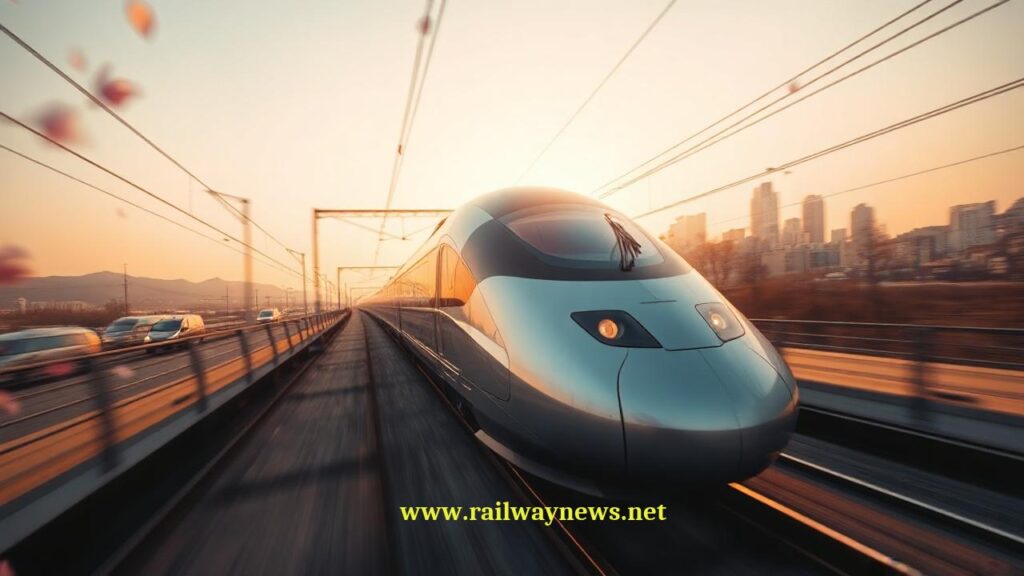
⚡ In Brief: South Korea’s Ministry of Economy and Finance approved Korail’s feasibility study to procure 49 Hyundai Rotem EMU-320 high-speed trainsets for $3.3 billion, replacing 46 French-derived KTX-I units starting in 2032.
SEOUL, South Korea – Korail has received preliminary feasibility approval from the Ministry of Economy and Finance for a $3.3 billion (5 trillion won) program to acquire 49 EMU-320 high-speed trainsets from Hyundai Rotem. The first firm order covering 28 trainsets is expected in 2027, with deliveries commencing in 2032. The procurement launches the final phase of retiring 46 KTX-I trains that have operated since the network’s April 2004 inauguration using Alstom-derived TGV technology.
What Does This Contract Cover?
The approved program covers 49 EMU-320 trainsets—marketed as KTX-CheongRyong—configured with distributed traction across 16 railcars, carrying approximately 1,000 passengers at a maximum speed of 320 km/h. Each trainset gains 45 seats over the 20-car KTX-I while using four fewer railcars, an advantage on South Korea’s network where short inter-station distances demand frequent acceleration and braking. The fleet will be equipped with the domestically developed KTCS-2 train control system, which uses LTE-R radio for real-time position tracking, automatic speed control, and emergency braking. KTCS-2 entered commercial service on the Jeolla Line in October 2023 and is projected to increase Gyeongbu high-speed line capacity by approximately 20 percent. Onboard systems include continuous component-condition monitoring via sensor networks, a derailment detection system, and an energy-consumption optimization suite. This program adds to 17 EMU-320 units Korail ordered in 2023 and 14 units ordered by operator Supreme Railways (SR), with the first of those trains undergoing testing for a 2027 service entry.
Key Contract Data
| Parameter | Value |
|---|---|
| Contract Name | Korail EMU-320 Fleet Renewal Program |
| Total Value | Approximately $3.3 billion (5 trillion won) |
| Parties Involved | Korail (buyer), Hyundai Rotem (manufacturer), Ministry of Economy and Finance (approval authority) |
| Timeline / Completion | First firm order: 2027; Deliveries begin: 2032; KTX-I phase-out: first half of 2030s |
| Country / Corridor | South Korea; Gyeongbu and Honam high-speed lines confirmed, additional corridors anticipated |
How Does This Compare to Similar Contracts?
At roughly $67 million per trainset, the EMU-320 unit cost sits below comparable European high-speed procurements. SNCF’s 2018 order for 100 Alstom Avelia Horizon (TGV M) trainsets carried an approximate unit cost of €27 million ($29 million at 2018 rates) for double-deck configurations, though these serve different capacity and operational profiles (Source: SNCF, 2018). The broader market context reinforces the scale of South Korea’s commitment: France’s railway signalling market alone is projected to grow from $1,601 million in 2025 to $2,397 million by 2030 at a 5.9 percent compound annual growth rate, driven by government-backed high-speed rail modernization across the European Union (Source: MarketsandMarkets, 2025). South Korea’s parallel $3.3 billion rolling stock investment, combined with the EMU-320’s September 2024 EU Technical Specifications for Interoperability design certification, positions Hyundai Rotem to compete for European contracts—a reversal of the technology flow that began when the first 12 KTX-I trainsets were built by Alstom in France. The detailed funding structure splitting national budget allocations from Korail’s own financing was not disclosed in the feasibility approval documentation.
Editor’s Analysis
This procurement closes a 30-year technology transfer cycle that began when South Korea imported French TGV technology and progressed through the KTX-Sancheon (2010), the 421.4 km/h HEMU-430X prototype (2013), and now the fully indigenous EMU-320 platform. The EU interoperability certification obtained in 2024 converts Hyundai Rotem from a domestic supplier into a credible export contender for European high-speed tenders—a market the French signalling data confirms is entering a substantial investment cycle. Korail’s decision to pair the fleet renewal with KTCS-2 deployment suggests the operator is prioritizing line capacity gains alongside rolling stock modernization, with the 20 percent capacity uplift on the Gyeongbu corridor potentially deferring or eliminating the need for separate infrastructure expansion on that route.
FAQ
Q: When will passengers actually board the new EMU-320 trains from this order?
A: Deliveries from the first firm order of 28 trainsets begin in 2032, meaning revenue service is likely in 2032–2033 after commissioning and testing. Two pre-production EMU-320 units already carry passengers on the Gyeongbu and Honam lines as of May 2024.
Q: What happens to the 46 KTX-I trains being replaced?
A: The oldest KTX-I units reach their designed 30-year service life starting in 2033. Korail plans a gradual phase-out through the first half of the 2030s; specific retirement or disposal plans beyond this timeline have not been officially confirmed.
Q: How does the EMU-320’s distributed traction benefit passengers compared to the KTX-I?
A: Distributed traction places motors across multiple railcars instead of concentrating them in two end power cars, delivering faster acceleration and shorter braking distances. On routes with frequent stops, this reduces journey times. The 16-car EMU-320 also seats 45 more passengers than the 20-car KTX-I despite the shorter consist.

Railway infrastructure, rolling stock and transport technologies specialist focused on global rail industry developments, high-speed rail systems, signaling technologies and freight transportation. Covering railway investments, public transport modernization, rail operations and international mobility projects across Europe, Asia and North America.
RELATED POSTS

October 8, 2026 1:15 pm
Alstom secured a €1bn contract to build 13 automated trains,...

October 1, 2026 7:09 am
United States regulators confirmed a September 30 deadline for the...

October 8, 2026 12:18 pm
Siemens Mobility signed an agreement with VinSpeed to supply 350...

October 4, 2026 5:14 pm
Alstom secured a CA$4.7 billion order from VIA Rail Canada...

October 5, 2026 6:12 pm
AECOM and Jacobs secured a contract in September 2026 to...

October 1, 2026 12:13 am
Illinois approved $1.5 billion annually for the Northern Illinois Transit...