
Fortescue Awards Knorr-Bremse 760 km Pilbara Signalling Deal
Fortescue awarded Knorr-Bremse a contract to digitise signalling across its 760 km Pilbara rail network, enabling real-time remote route updates, with phased completion by mid-2027.
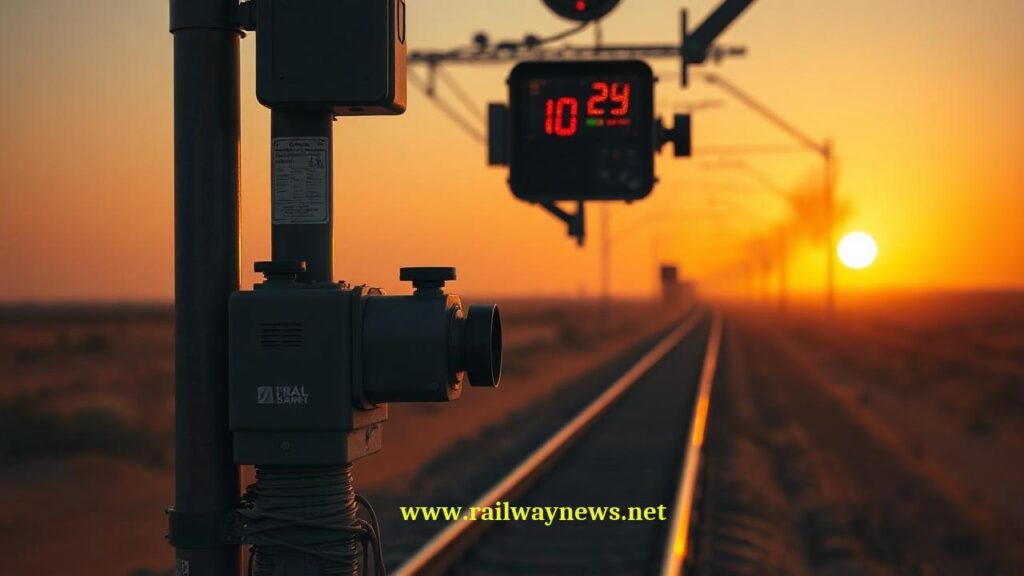
⚡ In Brief: Fortescue awarded Knorr-Bremse a contract to digitise signalling across its 760 km Pilbara heavy-haul rail network, with phased completion by mid-2027, enabling real-time remote route updates for ore trains weighing up to 5,000 metric tons.
PERTH, AUSTRALIA – Fortescue Metals Group has contracted German rail technology group Knorr-Bremse to modernise signalling and train control infrastructure across its 760-kilometre Pilbara iron ore network. The contract, valued in the upper double-digit million-euro range, will migrate key systems to the ElectroLogIXS electronic platform developed by U.S.-based subsidiary KB Signaling. Phased implementation runs through mid-2027, targeting the network that hauls nearly 200 million metric tons of iron ore annually to Port Hedland.
What Does This Contract Cover?
The contract upgrades Fortescue’s existing Incremental Train Control System (ITCS) by migrating infrastructure components to the ElectroLogIXS platform, enabling real-time monitoring and remote modification of traffic parameters without stopping trains. Currently, 5,000-metric-ton ore trains must pull onto sidings to receive updated route data when track conditions change. The upgrade eliminates this requirement, allowing dispatchers to push updates remotely while trains remain in motion. Knorr-Bremse and Fortescue are also evaluating Electro Code 6 (EC6) digital track circuits for precise train detection and the Rail TempEst system for real-time rail temperature monitoring, a critical variable in the Pilbara where extreme heat forces speed reductions.
Key Contract Data
| Parameter | Value |
|---|---|
| Contract Name | Fortescue Rail Signalling Modernisation |
| Total Value | Not disclosed; upper double-digit EUR million range |
| Parties Involved | Fortescue Metals Group (operator); Knorr-Bremse / KB Signaling (supplier) |
| Timeline / Completion | Phased implementation through mid-2027 |
| Country / Corridor | Australia – Pilbara region (Christmas Creek, Cloudbreak, Solomon, Eliwana to Port Hedland) |
How Does This Compare to Similar Contracts?
The Fortescue-Knorr-Bremse contract mirrors a broader industry push toward digitising heavy-haul mining railways. Brazil’s Estrada de Ferro Carajás (EFC), which transported 153.4 million tonnes of iron ore in 2024, is undergoing $1.2 billion in digitalisation and automation investments, including signalling upgrades aimed at increasing throughput on the single-track corridor (Source: Discovery Alert, 2025). By comparison, Fortescue’s 760 km network moves nearly 200 million tonnes annually—roughly 30% more volume on a similarly remote heavy-haul system. The contract value, while undisclosed in precise terms, sits below the capital scale of the Brazilian programme but targets a more focused signalling layer rather than full corridor automation. Rio Tinto’s AutoHaul system, which automated driverless train operations across approximately 1,700 km of Pilbara track at a reported cost exceeding $940 million, represents the upper bound of Pilbara rail investment; the Fortescue contract addresses a different operational problem—dynamic route data updates—rather than full autonomy (Source: Rio Tinto, 2018 baseline).
Where Does This Technology Stand in the Market?
KB Signaling’s ElectroLogIXS platform enters a competitive signalling market in Australia, where the overall railway signalling sector is projected to reach an index value of approximately 160 by 2035 from a 2025 baseline of 100 (Source: IndexBox, 2025). Alstom’s Smartlock 400 interlocking system, deployed on multiple Australian freight and passenger corridors, offers object-controller-based distributed architecture with integrated condition monitoring. Siemens Mobility’s Trainguard solutions, including its Westrace interlocking platform, are operational in Australian heavy-haul and urban networks, providing SIL 4 safety integrity with centralised traffic control interfaces. Hitachi Rail and Thales Group also maintain active Australian signalling footprints through legacy and ETCS-related contracts. The ElectroLogIXS differentiator in the Fortescue deployment is its tight integration with ITCS migration and real-time rail temperature monitoring via Rail TempEst, a feature set targeting operational continuity under extreme desert conditions rather than CBTC or ETCS compliance.
Editor’s Analysis
Fortescue’s signalling investment reflects a narrower operational logic than rival Rio Tinto’s full-automation strategy: rather than removing drivers, it removes the stop-and-wait friction that erodes cycle times across a network moving nearly 200 million tonnes annually. The exploration of Rail TempEst and EC6 digital track circuits signals that temperature-driven speed restrictions—an acute Pilbara operational constraint—are being pulled into the digital control layer, a shift with direct tonnage-throughput implications. The Australian rail industry generated $38.8 billion in economic contribution and nearly 200,000 jobs in 2025, with the Australasian Railway Association prioritising productivity improvements and net-zero pathways; digitisation contracts of this type align with both objectives by reducing idling and enabling more precise energy management (Source: ARA / Rail Express, 2025). The exact contract value remains undisclosed, which limits per-kilometre cost comparisons with publicly funded signalling programmes.
FAQ
Q: How much is the Fortescue-Knorr-Bremse signalling contract worth?
A: The exact value was not disclosed. Knorr-Bremse stated only that it falls in the upper range of the double-digit million-euro bracket, suggesting a figure between approximately €50 million and €99 million.
Q: When will the signalling upgrade on Fortescue’s Pilbara network be completed?
A: Implementation will proceed in phases through mid-2027. No specific completion date for individual line segments has been publicly confirmed.
Q: Which mines will be affected by the signalling modernisation?
A: The 760 km network connects the Christmas Creek, Cloudbreak, Solomon, and Eliwana mining operations to Port Hedland. All four corridors fall within the scope of the upgrade programme.
Q: Will Fortescue trains become driverless as part of this contract?
A: No. The contract covers remote route data updates, infrastructure monitoring, and digital track circuits—not autonomous train operations. Driverless operation is not within the stated scope of this project.

Railway infrastructure, rolling stock and transport technologies specialist focused on global rail industry developments, high-speed rail systems, signaling technologies and freight transportation. Covering railway investments, public transport modernization, rail operations and international mobility projects across Europe, Asia and North America.
RELATED POSTS

October 1, 2026 7:09 am
United States regulators confirmed a September 30 deadline for the...

October 8, 2026 1:15 pm
Alstom secured a €1bn contract to build 13 automated trains,...

October 4, 2026 5:14 pm
Alstom secured a CA$4.7 billion order from VIA Rail Canada...

October 1, 2026 12:13 am
Illinois approved $1.5 billion annually for the Northern Illinois Transit...

October 6, 2026 2:14 am
Union Pacific launched export rail shipments with Ferromex to deliver...

October 1, 2026 6:10 am
Amtrak approved a System Expansion Committee on July 30 to...