
TÜRASAŞ Tests Domestic High-Speed Train at 240 km/h
TÜRASAŞ achieved 240 km/h with its first domestic high-speed electric train in Türkiye, with ASELSAN co-developing traction and control systems.
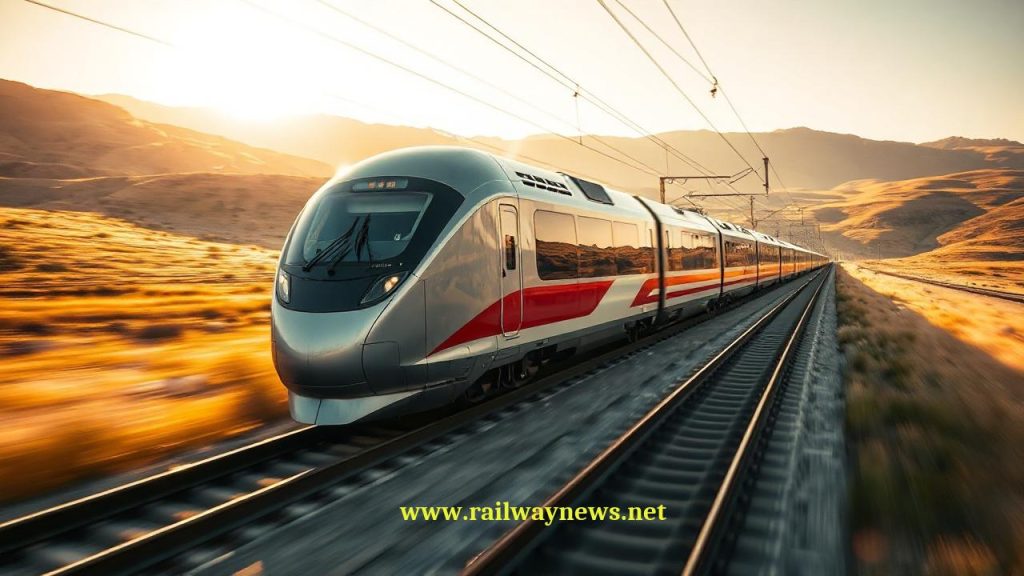
⚡ In Brief: TÜRASAŞ’s first domestically manufactured high-speed electric train achieved 240 km/h during dynamic testing in Türkiye, with traction and control systems co-developed by defence contractor ASELSAN.
ANKARA, TÜRKİYE – Türkiye’s state-owned rail manufacturer TÜRASAŞ has pushed its first indigenously produced high-speed electric train to 240 km/h during an ongoing test programme, Minister of Transport and Infrastructure Abdulkadir Uraloğlu confirmed. The eight-car aluminum-bodied train, seating 577 passengers, previously reached 225 km/h during dynamic braking trials. No final maximum design speed or in-service date has been disclosed by the ministry.
What Are the Technical Specifications?
The train’s traction system and train control and management system (TCMS) were designed and manufactured domestically by TÜRASAŞ in partnership with ASELSAN, a Turkish defence electronics firm whose involvement signals a cross-sector technology transfer strategy. The eight-car aluminum-bodied configuration accommodates 577 passengers including two wheelchair-accessible compartments with dedicated platform-to-vehicle elevators. Onboard systems include fully automatic air conditioning, electromechanical passenger doors, an automatic train stop system, fire detection sensors, audio-visual passenger information displays, surveillance cameras, and vending machines with kitchen-style service areas. The maximum design speed, total programme cost, and projected certification timeline were not disclosed by the ministry.
Key Technical Data
| Parameter | Value |
|---|---|
| Technology / System Name | National High-Speed Electric Train (Milli Yüksek Hızlı Elektrikli Tren) |
| Maximum Test Speed Achieved | 240 km/h |
| Consist Configuration | 8 cars, aluminum body |
| Passenger Capacity | 577 seats |
| Traction & Control Systems | TÜRASAŞ / ASELSAN (domestic design and manufacture) |
| Maximum Design Speed | Not disclosed |
| Programme Cost | Not disclosed |
| Target Service Entry | Not disclosed |
Where Does This Technology Stand in the Market?
TÜRASAŞ’s 240 km/h test benchmark places the Turkish domestic train in a modest position relative to established high-speed platforms. Siemens’ Velaro TR, which Türkiye State Railways (TCDD) already operates on the Ankara–Konya and Ankara–Istanbul corridors, delivers a service speed of 300 km/h with 516 seats in an eight-car formation (Source: Siemens Mobility, 2023). Alstom’s TGV Duplex, operating in France at 320 km/h, carries approximately 509 to 545 passengers in a bi-level eight-car configuration (Source: Alstom, 2024). CRRC’s Fuxing series, in service across China since 2017, reaches 350 km/h with eight-car capacity of 556 to 576 seats depending on configuration (Source: CRRC, 2024). The Turkish train’s passenger count of 577 in eight cars suggests a high-density interior layout, but the absence of a declared maximum design speed leaves its competitive positioning incomplete. For regional context, Türkiye has concurrently signed a 10-year rail wheelset supply agreement with Tatravagonka, backed by a Rs 3,000 crore investment, signalling a parallel strategy to localise rolling stock component supply chains while continuing to import critical sub-systems (Source: Manufacturing Today India, 2025). In the broader market, California’s high-speed rail programme offers a counterpoint on procurement strategy: the California High-Speed Rail Authority awarded a $3.5 billion contract in 2025 for a 119-mile Central Valley segment, with total project costs now estimated at $34.76 billion for the scaled-back Valley portion alone — a figure that underscores the capital intensity of greenfield HSR infrastructure versus rolling stock development (Source: Construction Dive, June 2025).
Editor’s Analysis
TÜRASAŞ’s programme is less about matching the 300–350 km/h benchmarks set by Siemens or Alstom and more about establishing an indigenous design-to-manufacture capability that reduces long-term dependency on foreign rolling stock suppliers. The ASELSAN partnership is the programme’s most strategically revealing element: it repurposes defence-sector expertise in power electronics and embedded control systems for rail traction and TCMS applications, a model that has precedent in South Korea’s HYUNDAI Rotem but remains uncommon in Europe. The undisclosed maximum speed and absence of a certification timeline suggest the programme is still at an early maturity stage relative to export-ready platforms. For Türkiye’s growing 1,200 km-plus high-speed network, a domestically sourced train — even one operating at 250–280 km/h — could alter fleet procurement economics if serial production costs undercut imported alternatives. The parallel Tatravagonka wheelset deal reinforces this reading: Ankara is building a vertically integrated rail supply base, not merely assembling a single prototype.
FAQ
Q: What is the maximum design speed of Türkiye’s domestic high-speed train?
A: The ministry has not publicly disclosed the target maximum speed. Testing is ongoing and Minister Uraloğlu stated trials will continue until the train reaches its intended maximum velocity and satisfies all safety criteria.
Q: When will the TÜRASAŞ high-speed train enter passenger service?
A: No entry-into-service date has been officially confirmed. The train must complete the full verification programme covering speed, braking, running performance, and infrastructure compatibility before regulatory approval.
Q: How does this train compare to the Siemens Velaro trains already operating in Türkiye?
A: The Siemens Velaro TR achieves 300 km/h in revenue service with 516 seats. TÜRASAŞ’s prototype has reached 240 km/h in testing with 577 seats in an eight-car layout, but its final service speed and operational performance relative to the Velaro cannot be determined until the test programme concludes and specifications are published.
Q: Which routes will the domestic high-speed train serve?
A: The ministry has not specified initial route assignments. TCDD’s existing high-speed corridors include Ankara–Istanbul, Ankara–Konya, and Ankara–Sivas, with extensions under construction to İzmir and Bursa.
Q: What role did ASELSAN play in the train’s development?
A: ASELSAN co-designed and manufactured the traction system and the train control and management system (TCMS), the two most critical electromechanical and software subsystems on the train. Both were produced domestically, marking the first time a Turkish company has delivered these systems for a high-speed rail application.

Railway infrastructure, rolling stock and transport technologies specialist focused on global rail industry developments, high-speed rail systems, signaling technologies and freight transportation. Covering railway investments, public transport modernization, rail operations and international mobility projects across Europe, Asia and North America.
RELATED POSTS

October 1, 2026 7:09 am
United States regulators confirmed a September 30 deadline for the...

October 1, 2026 12:13 am
Illinois approved $1.5 billion annually for the Northern Illinois Transit...
October 1, 2026 5:14 am
Siemens confirmed delivery of the first new S200 train to...

October 1, 2026 6:10 am
Amtrak approved a System Expansion Committee on July 30 to...
October 1, 2026 3:12 am
Greenbrier confirmed Brian Comstock as new president and CEO effective...
October 1, 2026 4:10 am
DART launched two public ridership dashboards in March 2026 to...