
PT KAI Indonesia Launches 5G AI Railway Integration
Indonesia’s PT KAI launched 5G AI railway integration with Huawei and PT Solusi Sinergi Digital Tbk on one pilot line for automated defect detection and safety.
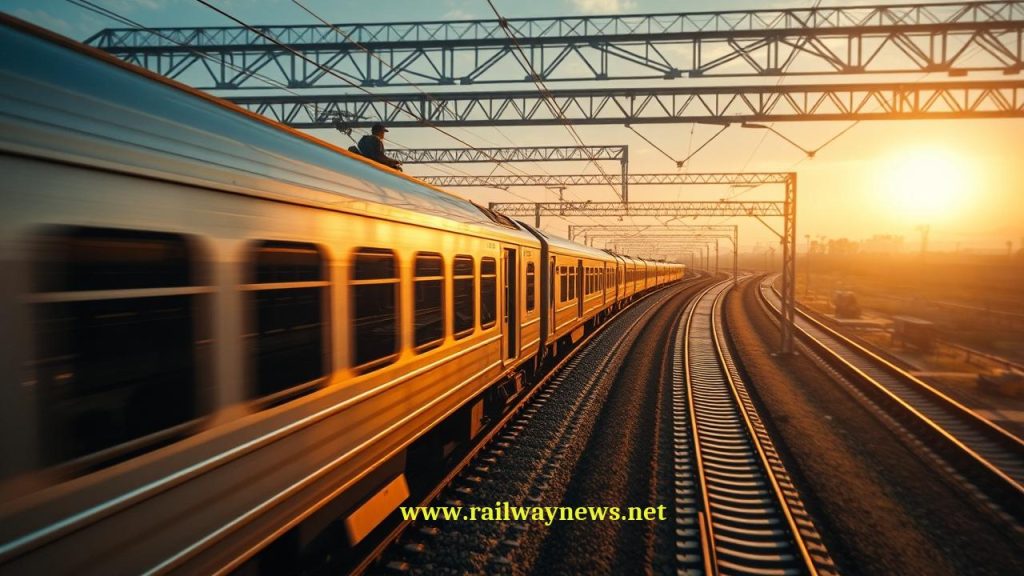
⚡ In Brief: PT Kereta Api Indonesia, PT Solusi Sinergi Digital Tbk, and Huawei have partnered to integrate 5G and AI technologies into Indonesia’s national railway, focusing on automated defect detection and enhancing level crossing safety on a pilot line.
JAKARTA, INDONESIA – Indonesia’s national railway operator, PT Kereta Api Indonesia (Persero), has entered a strategic agreement with PT Solusi Sinergi Digital Tbk and Huawei to deploy 5G and artificial intelligence technologies across its network. The collaboration will establish modern ICT infrastructure and pilot AI-driven safety systems on the Rangkasbitung–Tanah Abang line. This initiative follows a recent fatal train accident in the country which resulted in 14 fatalities, adding urgency to the network’s modernization.
What Are the Technical Specifications?
The agreement outlines a multi-faceted technology deployment centered on 5G communications and AI-powered analytics. The project includes the establishment of a railway-specific 5G network adhering to the Future Railway Mobile Communication System (FRMCS) standard, which supports high-bandwidth applications for safety and operations. A key application will be the use of AI for automated video analysis to detect defects on freight trains, aiming to replace manual inspections and provide real-time alerts. A pilot project on the Rangkasbitung–Tanah Abang line will test solutions for level crossing safety and intelligent rail traffic control, with future plans for intelligent dispatching and predictive maintenance systems.
Key Technical Data
| Parameter | Value |
|---|---|
| Technology / System Name | 5G & AI Railway Integration Initiative |
| Total Value | Not disclosed |
| Parties Involved | PT Kereta Api Indonesia (Persero), PT Solusi Sinergi Digital Tbk, Huawei |
| Timeline / Completion | Not disclosed |
| Country / Corridor | Indonesia / Pilot on Rangkasbitung–Tanah Abang line |
Where Does This Technology Stand in the Market?
The application of AI in Asian railways is growing, though focused on different operational areas. In a comparable regional deployment, Indian Railways is implementing its DRISHTI system, which uses AI-driven facial recognition and blockchain for workforce verification among its 1.2 million employees, focusing on HR efficiency rather than infrastructure monitoring. (Source: The Tribune India). Globally, established technology providers offer competing platforms for asset management. Siemens Mobility’s “Railigent” platform and Alstom’s “HealthHub” both use AI to provide predictive maintenance for rolling stock by analyzing data from onboard sensors to anticipate component failures. The Indonesian project’s focus on FRMCS-standard 5G and video-based freight defect detection represents a modern approach, leapfrogging older systems by targeting communications infrastructure and trackside analytics simultaneously.
Editor’s Analysis
This partnership signals Indonesia’s strategic intent to modernize its rail network by adopting next-generation standards directly, rather than through incremental upgrades of legacy systems. The adoption of the 5G-based FRMCS standard is particularly forward-looking, positioning the network for future automation and data-intensive applications. This move aligns with the rapid expansion of the global intelligent traffic management market, which is forecast to reach US$ 106.8 billion by 2032, driven by the need for safer and more efficient transport systems. (Source: Persistence Market Research).
FAQ
Q: What is the FRMCS standard mentioned in the project?
A: FRMCS stands for Future Railway Mobile Communication System, the global successor to the current GSM-R standard. It utilizes 5G technology to provide higher data throughput and lower latency for critical railway communications, enabling advanced applications like real-time video monitoring and autonomous train control.
Q: What specific safety issues will the pilot project address?
A: The pilot on the Rangkasbitung–Tanah Abang line will specifically test solutions to improve safety at level crossings, a common site of accidents, and to implement intelligent rail traffic control. The goal is to create automated warning and intervention systems to prevent collisions and optimize train movements.
Q: Will this technology be deployed on all of Indonesia’s railway lines?
A: The initial phase is a pilot project on the Rangkasbitung–Tanah Abang line to evaluate the solutions. While the long-term goal is to support the digital transformation of the entire national rail network, a timeline for a system-wide rollout has not been officially confirmed.

Railway infrastructure, rolling stock and transport technologies specialist focused on global rail industry developments, high-speed rail systems, signaling technologies and freight transportation. Covering railway investments, public transport modernization, rail operations and international mobility projects across Europe, Asia and North America.
RELATED POSTS

October 1, 2026 7:09 am
United States regulators confirmed a September 30 deadline for the...

October 1, 2026 12:13 am
Illinois approved $1.5 billion annually for the Northern Illinois Transit...
October 1, 2026 5:14 am
Siemens confirmed delivery of the first new S200 train to...

October 1, 2026 6:10 am
Amtrak approved a System Expansion Committee on July 30 to...
October 1, 2026 3:12 am
Greenbrier confirmed Brian Comstock as new president and CEO effective...
October 1, 2026 4:10 am
DART launched two public ridership dashboards in March 2026 to...