
Italo Invests €3.6 Billion for Germany High-Speed Launch
Italo invested €3.6 billion to launch German high-speed rail, connecting 18 cities with 26 Siemens trains by 2028.
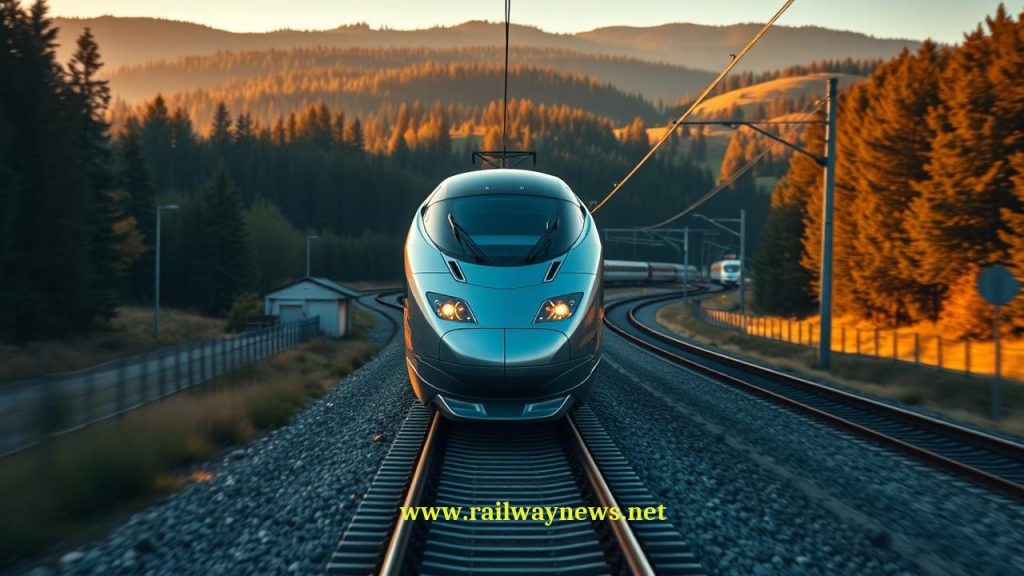
⚡ In Brief: Italian private operator Italo plans a EUR 3.6 billion investment to enter Germany’s high-speed rail market by 2028, aiming to connect 18 cities with 26 new Siemens trains and challenge incumbent Deutsche Bahn on major commercial corridors.
ROME – Italian private high-speed rail operator Italo has announced a EUR 3.6 billion plan to launch services in Germany, with the first trains scheduled to enter service in 2028. The project includes the purchase of 26 new Siemens trains to serve 18 cities across approximately 1,300 kilometers of network. This move marks a direct challenge to the incumbent operator, Deutsche Bahn.
What Is the Full Scope of This Project?
The total investment of EUR 3.6 billion is allocated across rolling stock, long-term operations, and market entry costs. Approximately EUR 1.2 billion is earmarked for the acquisition of 26 Siemens Velaro high-speed trains, with an option for 14 more. The remaining funds will cover a 30-year maintenance contract, staff training, station investments, and the establishment of necessary IT systems. The planned network will initially focus on Germany’s busiest corridors, including Munich–Cologne–Dortmund and Munich–Berlin–Hamburg, with an intended service level of up to 50 trains per day.
Key Project Data
| Parameter | Value |
|---|---|
| Project / Contract Name | Italo German High-Speed Network Expansion |
| Total Value | EUR 3.6 Billion (over 30 years) |
| Parties Involved | Italo, Siemens, MSC (shareholder) |
| Timeline / Completion | First services scheduled for 2028 |
| Country / Corridor | Germany / Munich–Cologne–Dortmund, Munich–Berlin–Hamburg |
How Does This Compare to Similar Projects?
Italo’s planned investment is significantly larger than other recent private-led, open-access entries into European high-speed markets. For comparison, the Iryo consortium (including Trenitalia) invested approximately EUR 1 billion to launch its services in Spain in 2022, primarily covering the acquisition of 20 ETR 1000 trains and initial operational costs (Source: Iryo, 2022). Italo’s EUR 3.6 billion figure covers a much longer 30-year operational timespan, but its initial capital outlay for trains (EUR 1.2 billion) is comparable. The project mirrors the strategy of Italo’s state-owned Italian rival, Trenitalia, which entered the French market in 2021 on the Paris-Milan corridor, becoming the first competitor to SNCF on its domestic high-speed lines.
Editor’s Analysis
This move represents one of the most significant tests of the EU’s Fourth Railway Package, which mandates open access to domestic passenger rail markets. While Italo has proven its competitive model in Italy, its success in Germany will depend almost entirely on securing predictable, long-term track access from infrastructure manager DB InfraGO. The German annual capacity allocation process is a known barrier for new entrants requiring multi-decade investment security, making this project a critical case study for market liberalisation. The choice of a Siemens train platform identical to DB’s ICE 3neo is a strategic decision to mitigate technical and certification risks, placing the focus squarely on the regulatory and infrastructure access challenges.
FAQ
Q: Which train model will Italo use in Germany?
A: Italo plans to purchase 26 high-speed trains from the Siemens Velaro family, which is the same technical platform as Deutsche Bahn’s ICE 3neo. These trains are designed to operate at speeds of up to 320 km/h and their similarity to the existing DB fleet is expected to simplify the regulatory approval process.
Q: What are the biggest obstacles to Italo’s German launch?
A: The primary obstacle is securing clear and predictable long-term access to track paths and station capacity from the German infrastructure manager. Without this guarantee, Italo cannot finalize its EUR 1.2 billion train order with Siemens, which would directly delay the planned 2028 service start.
Q: Will this make train travel cheaper in Germany?
A: Based on Italo’s experience in Italy, where its entry led to a sharp drop in fares and an increase in overall ridership, the operator aims to replicate this effect in Germany. Final pricing structures have not been disclosed and will depend on market conditions and operating costs at the time of launch.

Railway infrastructure, rolling stock and transport technologies specialist focused on global rail industry developments, high-speed rail systems, signaling technologies and freight transportation. Covering railway investments, public transport modernization, rail operations and international mobility projects across Europe, Asia and North America.
RELATED POSTS

September 6, 2026 5:19 am
Hitachi delivered Taiwan's first N700ST high-speed train from Japan in...

September 6, 2026 6:17 am
Hungary ordered a national ban on most freight trains from...

September 6, 2026 1:17 am
Hitachi Toshiba Supreme Consortium confirmed the first of 12 N700ST...

September 5, 2026 4:19 pm
CPK launched formal tender talks with four consortia to design...
September 7, 2026 8:16 am
Midea, Gree and TCL shipped air conditioners via China Railway...

September 5, 2026 7:14 pm
HS2 Ltd signed renegotiated civils contracts with EKFB and Align...