
Siemens Mobility Secures €229.3M Romania Hydrogen Train Contract
Siemens Mobility signed a €229.3 million contract with Romania’s Railway Reform Authority on April 28 for 12 Mireo Plus H hydrogen trains and 15 years of maintenance.
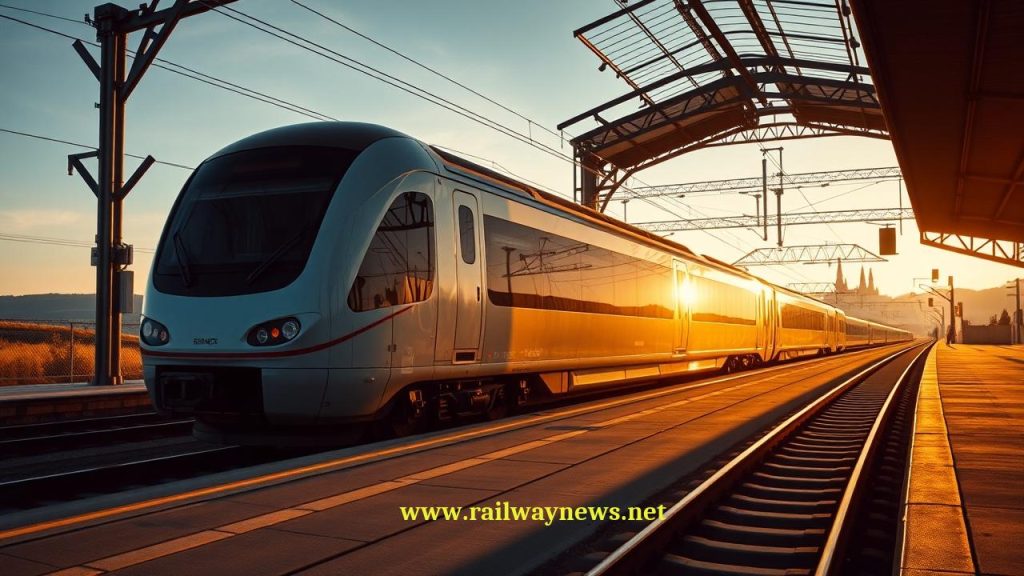
⚡ In Brief: Siemens Mobility will supply 12 Mireo Plus H hydrogen trains and 15 years of maintenance services to Romania’s Railway Reform Authority (RRA) under a €229.3 million contract signed on April 28.
BUCHAREST, ROMANIA – Romania’s Railway Reform Authority (RRA) and Siemens Mobility have finalized a contract valued at €229.3 million for hydrogen-powered trains. Signed on April 28, the agreement covers the delivery of 12 Mireo Plus H trainsets and includes full maintenance and repair services for a 15-year period. The first unit is scheduled for delivery within 24 months, with passenger service expected to begin in spring 2029.
What Does This Contract Cover?
The agreement encompasses the procurement of 12 Siemens Mireo Plus H articulated two-car trainsets and a corresponding 15-year full-service maintenance package performed locally by Siemens personnel. The project is financed through the European Union’s Transport Programme 2021–2027, with co-financing from the Romanian state budget. The specific cost allocation between the rolling stock purchase and the long-term maintenance services was not disclosed in the announcement.
Key Contract Data
| Parameter | Value |
|---|---|
| Contract Name | Supply and Maintenance of 12 Hydrogen-Powered Trainsets |
| Total Value | €229.3 million |
| Parties Involved | Romania’s Railway Reform Authority (RRA), Siemens Mobility, CFR Călători, Transferoviar |
| Timeline / Completion | First unit in 24 months; passenger service starts spring 2029 |
| Country / Corridor | Romania (non-electrified routes, including Bucharest–Târgoviște & Bucharest–Airport) |
How Does This Compare to Similar Contracts?
This contract positions Romania among the early adopters of hydrogen rail technology in Europe, a field led by Germany. For comparison, in 2022, Alstom signed a contract to supply 27 Coradia iLint hydrogen trains to the Frankfurt metropolitan area for approximately €500 million, a deal that also included 25 years of maintenance. While the Romanian contract is smaller in scale, its implied value per trainset (approx. €19.1M including maintenance) is within a similar range, reflecting the current market value for hydrogen technology combined with long-term service agreements. This investment is part of a wider government-backed push for railway modernization in Romania. (Source: Alstom, 2022).
Editor’s Analysis
This procurement marks a strategic pivot for Romania, using EU funding to adopt hydrogen traction directly on non-electrified lines, bypassing potential interim solutions like battery or diesel-hybrid trains. The decision to allocate units to both state-owned CFR Călători and private operator Transferoviar suggests a policy to foster innovation across the entire market rather than confining it to the incumbent. This approach aligns with a broader trend of increasing private sector participation in the Romanian rail sector, which is forecast to drive market growth of 5-7% annually over the next decade. (Source: Market Context Data).
FAQ
Q: Which specific routes will these new hydrogen trains serve?
A: The trains are intended for non-electrified lines. Two units operated by Transferoviar are specifically assigned to the Bucharest North – Târgoviște and Bucharest North – Henri Coandă Airport routes, while the ten CFR Călători units will be deployed on other regional lines.
Q: What is the cost breakdown between the trains and the 15-year maintenance plan?
A: The total contract value is €229.3 million for the 12 trains and associated maintenance. However, an official breakdown separating the cost of the rolling stock from the long-term service agreement was not provided.
Q: How does the Mireo Plus H compare to other hydrogen trains on the market?
A: The Siemens Mireo Plus H is a direct competitor to Alstom’s Coradia iLint, which was the first hydrogen train to enter commercial passenger service. Both are designed for similar operational profiles on non-electrified routes, though the Mireo platform is newer and utilizes a lightweight, articulated aluminum construction to optimize energy efficiency.

Railway infrastructure, rolling stock and transport technologies specialist focused on global rail industry developments, high-speed rail systems, signaling technologies and freight transportation. Covering railway investments, public transport modernization, rail operations and international mobility projects across Europe, Asia and North America.
RELATED POSTS
October 1, 2026 1:10 am
Georgia Ports Authority confirmed a $181 billion economic impact for...

October 1, 2026 12:13 am
Illinois approved $1.5 billion annually for the Northern Illinois Transit...
October 1, 2026 3:12 am
Greenbrier confirmed Brian Comstock as new president and CEO effective...
October 1, 2026 4:10 am
DART launched two public ridership dashboards in March 2026 to...
October 1, 2026 5:14 am
Siemens confirmed delivery of the first new S200 train to...

October 1, 2026 6:10 am
Amtrak approved a System Expansion Committee on July 30 to...