
Leo Express Launches 350 Passenger Talgo Czech Slovakia April 30
Leo Express launched refurbished 350-passenger Talgo intercity trainsets, sourced from Spanish national operator Renfe, on routes connecting Prague, Bratislava, and Prešov from April 30.
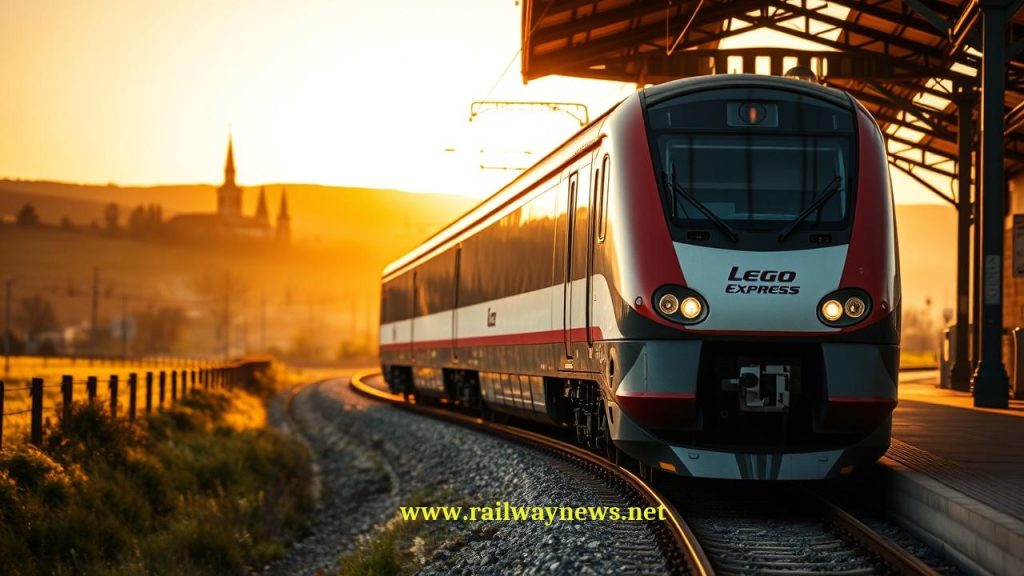
⚡ In Brief: Private operator Leo Express is launching refurbished Spanish-built Talgo trainsets, supplied by Renfe and hauled by Siemens Vectron locomotives, on services connecting the Czech Republic and Slovakia, offering a capacity of approximately 350 passengers per train starting April 30.
PRAGUE/BRATISLAVA – Czech private operator Leo Express unveiled its Talgo rolling stock on April 23, ahead of the fleet’s entry into service on April 30. The trains, sourced from Spanish national operator Renfe, will operate on routes connecting Prague with Bratislava and Prešov, featuring a capacity of around 350 passengers across 13 cars.
What Are the Technical Specifications?
The service utilises locomotive-hauled Talgo intercity trainsets, known for their passive tilting system and articulated single-axle bogies. While the units are capable of speeds up to 200 km/h, traction is provided by separate Siemens Vectron multi-system locomotives, a common arrangement for cross-border operations in Europe. The trains have undergone a complete interior modernization to meet Leo Express brand standards, including two classes of service and a bistro car.
Key Technical Data
| Parameter | Value |
|---|---|
| Technology / System Name | Talgo passive-tilting articulated trainsets |
| Total Value | Not disclosed |
| Parties Involved | Leo Express (Operator), Talgo (Manufacturer), Renfe (Supplier), Siemens Mobility (Locomotive Supplier) |
| Timeline / Completion | Unveiled April 23; Service start April 30 |
| Country / Corridor | Czech Republic – Slovakia |
Where Does This Technology Stand in the Market?
The deployment of Talgo’s passive-tilting technology by Leo Express introduces a unique service proposition in the Central European market. Its primary competitor on these corridors, the Siemens Viaggio Comfort (branded as Railjet), is a non-tilting, high-speed push-pull train capable of 230 km/h. While Railjet offers higher top speeds on high-speed lines, the Talgo’s tilting system is designed to provide superior comfort and potentially faster journey times on conventional, winding routes. Additionally, the Talgo design provides a continuous low floor throughout the train’s length, a significant accessibility advantage over competitors like the Railjet, which requires steps for boarding. Other modern rolling stock in the region, such as Stadler’s FLIRT units, offer low-floor access but are typically configured for regional or shorter inter-city services and lack tilting technology. (Source: Siemens Mobility, 2023; Stadler Rail, 2023).
Editor’s Analysis
Leo Express’s strategy of deploying refurbished, high-quality rolling stock from Western Europe reflects a pragmatic approach to competing in the open-access market. This model allows for quicker service expansion with lower capital expenditure compared to ordering a new fleet, focusing investment on passenger-facing features like interior comfort and onboard services. The partnership with Renfe to bring Spanish-proven technology to Central Europe underscores a growing trend of a pan-European secondary market for rolling stock, enabling private operators to challenge state incumbents with differentiated product offerings. (Source: International Railway Journal, 2023).
FAQ
Q: Are these brand new trains?
A: No, the Talgo units are refurbished rolling stock supplied by the Spanish national railway, Renfe. Leo Express has modernized the interiors with its own branding, seating, and onboard services.
Q: What is a passive tilting system?
A: It is a mechanical system that allows the train’s carriage to lean into curves, counteracting centrifugal force to improve passenger comfort. This can also permit slightly higher speeds on conventional, non-high-speed tracks.
Q: How does this service impact passengers and competitors?
A: Passengers gain a new travel option with features like exceptional legroom and low-floor accessibility. The launch increases pressure on state-owned carriers České dráhy (ČD) and ZSSK Slovakia, forcing them to compete on price and service quality on these key international routes.

Railway infrastructure, rolling stock and transport technologies specialist focused on global rail industry developments, high-speed rail systems, signaling technologies and freight transportation. Covering railway investments, public transport modernization, rail operations and international mobility projects across Europe, Asia and North America.
RELATED POSTS

October 4, 2026 5:14 pm
Alstom secured a CA$4.7 billion order from VIA Rail Canada...

October 1, 2026 12:13 am
Illinois approved $1.5 billion annually for the Northern Illinois Transit...

October 4, 2026 11:08 pm
Sound Transit confirmed the September 30 opening of Seattle Pinehurst...

October 1, 2026 6:10 am
Amtrak approved a System Expansion Committee on July 30 to...

October 5, 2026 3:13 pm
DART launched a 90-day fare enforcement pilot across 5 light-rail...

October 7, 2026 1:16 pm
APTA confirmed a $17.45 billion US transit funding gap on...