
LTG Infra Awards €900,000 Hazardous Waste Contract Lithuania
LTG Infra awarded €900,000 in contracts to Žalvaris and Sanresa for managing up to 5,000 tons of hazardous creosote sleepers in Lithuania over three years.
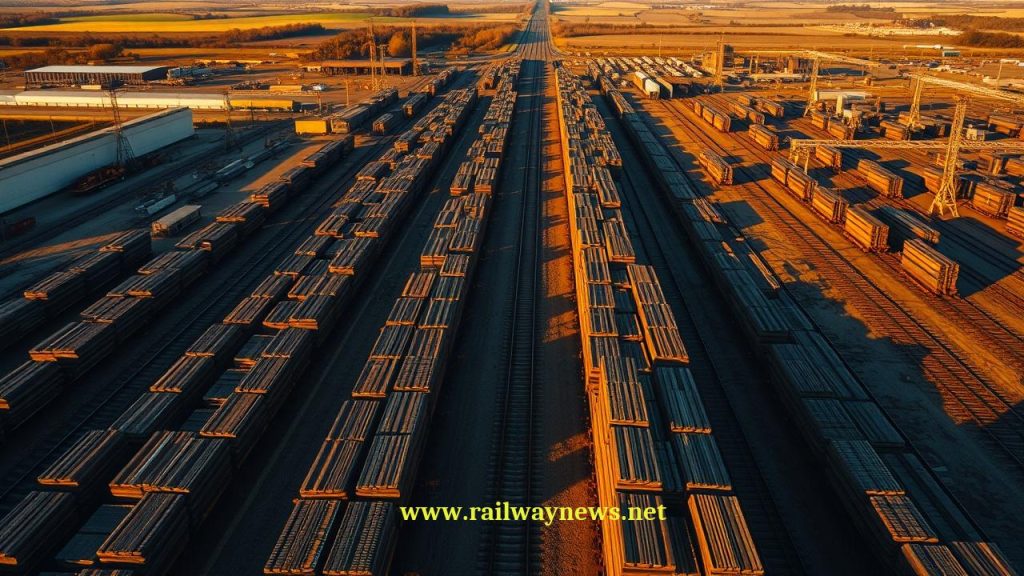
⚡ In Brief: Lithuanian Railways’ infrastructure arm, LTG Infra, has awarded contracts totaling €900,000 to manage up to 5,000 tons of hazardous, creosote-treated wooden sleepers over a three-year period as it transitions to more sustainable materials.
VILNIUS, LITHUANIA – Lithuanian Railways’ infrastructure company, LTG Infra, has finalized three-year contracts valued at €900,000 for the management of hazardous waste. The agreements with waste management firms Žalvaris and Sanresa cover the treatment and disposal of up to 5,000 tons of historical creosote-impregnated wooden sleepers.
What Does This Contract Cover?
The agreements task the specialized firms with the treatment of a legacy stockpile of hazardous materials, clearing historical accumulations from the network. The scope covers up to 5,000 tons of wooden sleepers over the three-year implementation period, equating to an approximate disposal cost of €180 per ton. This initiative is designed to manage accelerating removal rates, with LTG having processed 1,925 tons in 2024 and 2,880 tons in 2025.
Key Contract Data
| Parameter | Value |
|---|---|
| Contract Name | Hazardous Waste Management (Creosote Sleepers) |
| Total Value | €900,000 |
| Parties Involved | LTG Infra, Žalvaris, Sanresa |
| Timeline / Completion | 3 years |
| Country / Corridor | Lithuania |
How Does This Compare to Similar Contracts?
This €900,000 contract is a targeted operational expenditure focused on environmental remediation, differing in scale from major capital infrastructure projects in the region. For context, the Port of Gothenburg in neighbouring Sweden recently awarded a significantly larger contract worth approximately €18 million for dredging works as part of its fairway deepening project (Source: Maritime Executive). The financial breakdown of the LTG Infra contract between the two awarded companies, Žalvaris and Sanresa, was not disclosed.
Editor’s Analysis
This initiative reflects a broader European regulatory push to phase out carcinogenic creosote from railway networks, a substance whose authorisation for use has been under tight restriction. LTG Infra’s move to address its “historical legacy” aligns with EU-wide sustainability goals and the transition toward recycled composite or concrete sleepers. This type of environmental liability management is becoming a standard, non-discretionary operational cost for infrastructure managers across the continent (Source: European Chemicals Agency).
FAQ
Q: Why are creosote-impregnated sleepers being removed?
A: Creosote contains polycyclic aromatic hydrocarbons which are classified as carcinogenic, making used sleepers hazardous waste. European regulations strictly control their use and mandate responsible disposal to protect human health and the environment.
Q: What is replacing the old wooden sleepers in Lithuania?
A: LTG is transitioning to modern alternatives, including a pilot project testing German-made composite sleepers. These are lighter, made from recycled materials, and better suited for specific locations like bridges where heavy concrete sleepers cannot be used.
Q: What is the estimated cost per ton for this disposal service?
A: Based on the total contract value of €900,000 for up to 5,000 tons, the approximate cost is €180 per ton. The final cost per ton may vary based on the total volume processed over the three-year period.

Railway infrastructure, rolling stock and transport technologies specialist focused on global rail industry developments, high-speed rail systems, signaling technologies and freight transportation. Covering railway investments, public transport modernization, rail operations and international mobility projects across Europe, Asia and North America.
RELATED POSTS

October 1, 2026 7:09 am
United States regulators confirmed a September 30 deadline for the...

October 4, 2026 5:14 pm
Alstom secured a CA$4.7 billion order from VIA Rail Canada...
October 6, 2026 2:14 am
Union Pacific launched export rail shipments with Ferromex to deliver...

October 1, 2026 12:13 am
Illinois approved $1.5 billion annually for the Northern Illinois Transit...

October 1, 2026 6:10 am
Amtrak approved a System Expansion Committee on July 30 to...
October 1, 2026 3:12 am
Greenbrier confirmed Brian Comstock as new president and CEO effective...